

Smart Accounts und Governance
Governance checkpoints: whose votes counted, and when?
Delegation, historical voting weight and proposal timing determine more than a current token balance.
Artikeltexte und technische Grafiken sind auf Englisch. Die Navigation ist in 7 Sprachen verfügbar.
Fachartikel
Balance and voting power differ
A governance token can track delegated voting power separately from ordinary token balances. ERC-5805 standardises interfaces for current and historical voting weight. The relevant question for a proposal may be how much weight an account had at an earlier timepoint, not how many tokens it holds when somebody opens the explorer. 1
The clock must be named
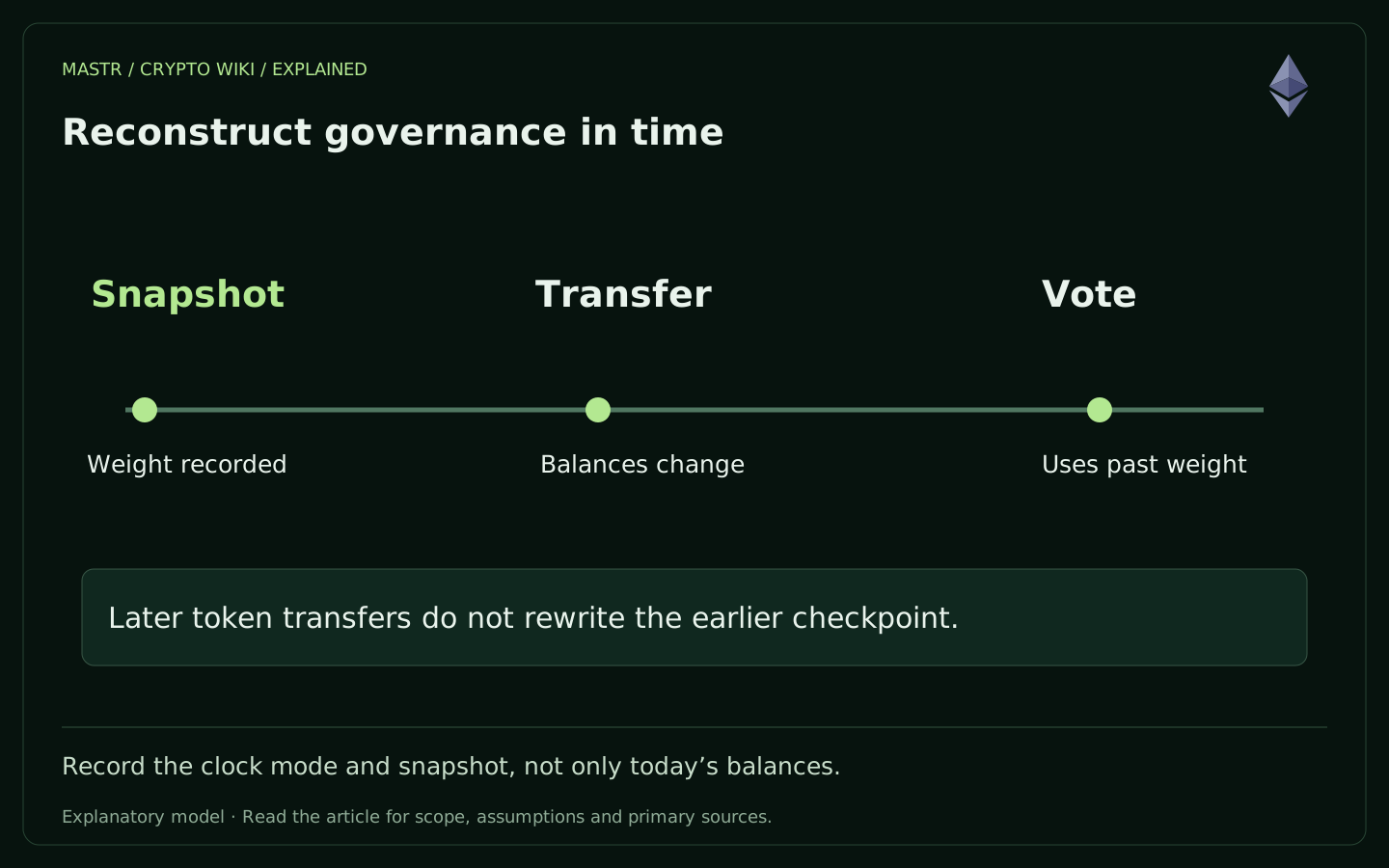
ERC-6372 provides a way for contracts to describe their clock. Some systems use block numbers; others use timestamps. A raw numeric snapshot without the clock mode is ambiguous. A compatible governance system must interpret the voting token’s timepoints correctly. Historical queries are intended to represent past checkpoints rather than values that silently change with present balances. 2
Delegation does not transfer ownership
Assigning voting power to another address is not necessarily a token transfer. A delegate may speak for many holders, while the tokens remain with their owners. This can make a holder-distribution chart a poor substitute for a governance-control map. Inspect delegation, proposal thresholds, quorum, the vote snapshot and the route from a successful vote to execution.
How to reconstruct a decision
Preserve the proposal identifier, clock mode, snapshot timepoint, voting totals and execution result. A passed vote is not always an executed change: timelocks, cancellations and additional permissions may sit downstream. If discussing influence, distinguish delegated voting power from proven common ownership. The record can show which addresses voted; attributing those addresses to people requires more evidence.
Konkretes Beispiel
At a proposal’s snapshot, Alice has delegated 100 votes to Bob. Alice transfers her tokens later. Under the historical checkpoint model, that later transfer does not rewrite Bob’s voting weight at the earlier snapshot. The proposal’s actual governor rules still determine which checkpoint it uses.