

Solana: vom Quote zur Ausführung
Jito bundles: ordering, tips and the limits of protection
A preferred submission path is useful infrastructure, not a universal guarantee against adverse execution.
Artikeltexte und technische Grafiken sind auf Englisch. Die Navigation ist in 7 Sprachen verfügbar.
Fachartikel
What a bundle requests
Jito’s block engine accepts bundles of up to 5 signed transactions intended to execute sequentially and atomically within one slot through the bundle path. A bundle is different from a single transaction containing several instructions. The distinction matters when describing ordering guarantees, failure conditions and what an explorer can show. 1
The tip is not the network priority fee
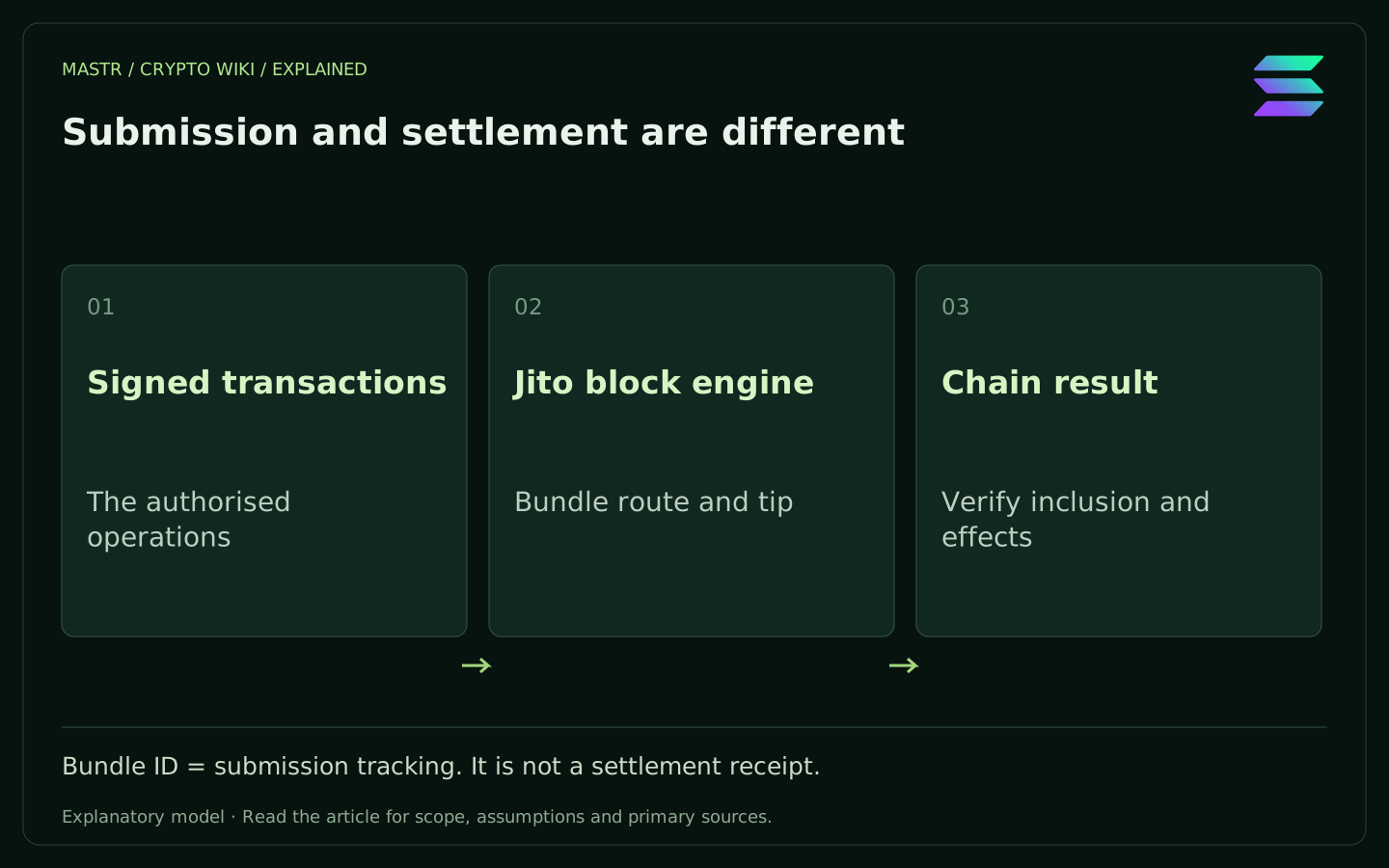
A Jito tip participates in the block engine’s inclusion incentives. Solana’s prioritisation fee belongs to the network fee mechanism. Paying one does not make the other concept disappear. An accepted submission or returned bundle identifier is not proof that the bundle landed. Applications still need to observe its outcome and the relevant on-chain transactions.
Atomicity has a documented boundary
Jito documents an important limitation around blocks that do not become part of the accepted chain. Transactions exposed from such blocks may be rebroadcast through ordinary processing, which does not enforce the original bundle’s atomicity rules. This is why a product should not describe a bundle route as unconditional execution insurance. The contents of each authorised transaction and its own protections remain important.
What a trader should compare
Understand which route is selected, which tip and network costs are proposed, what slippage bound is signed and how completion is reported. Routing through infrastructure designed to reduce harmful ordering does not repair a malicious token, an excessive slippage setting or a poor liquidity pool. Keep the claim narrow: the submission path is one part of a transaction’s risk profile.
Konkretes Beispiel
An interface receives a bundle identifier and immediately displays ‘sent’. The correct next question is whether the intended transactions were included and what balance changes actually settled. A submission acknowledgement cannot be used as a receipt for a completed swap.