

MASTR · CRYPTO & WEB3
NFTs after the boom: the token, the artwork and the permission
An ownership record, an image file and a licence are different objects. A durable reference follows all three.
Kapiteltexte und technische Grafiken sind auf Englisch. Die Navigation ist in sieben Sprachen verfügbar.
What exactly changes hands when the token is transferred?
The token is a record under contract rules
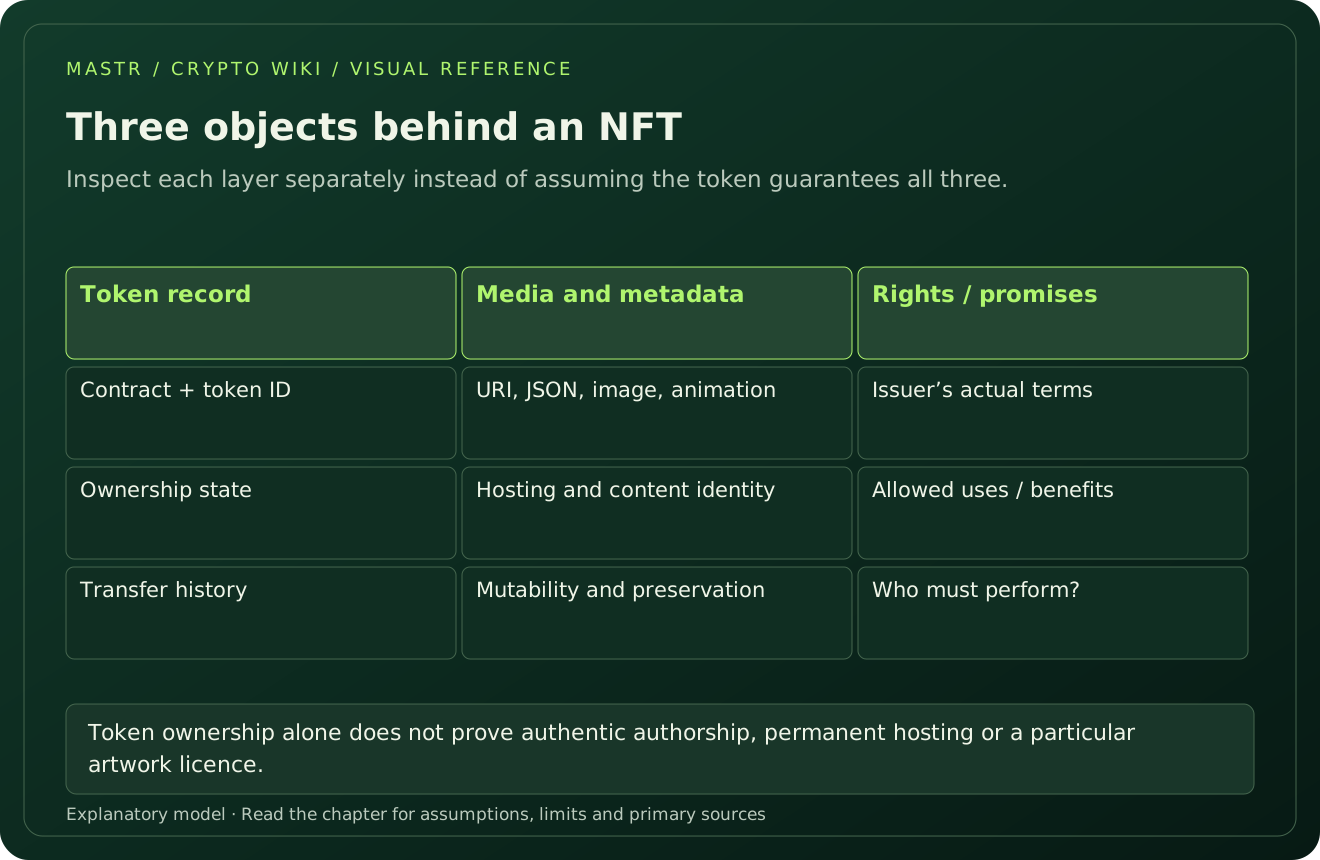
A non-fungible token has an identifier and an ownership relationship defined by its contract. The token may refer to an artwork, a membership, a game item or another claim. Its uniqueness within the contract does not prove that the associated image is unique, original or authorised. Another contract can issue a visually identical object. Contract identity and provenance remain essential.
Metadata introduces another dependency
The ERC-721 metadata extension can expose a URI associated with a token. That resource may be stored onchain, on a conventional server or through a content-addressed system. It may in turn point to an image or animation. Administrative controls can affect whether references remain changeable. A marketplace’s cached thumbnail can hide those dependencies until an original endpoint stops responding.
Provenance is a chain of evidence
The first mint, later transfers and the creator’s association with the contract can contribute to provenance. They answer different questions. A transfer history may be perfectly authentic while the claim that a particular artist authorised the collection is false. A verified social profile, an issuer statement or a signed publication can help connect the record to the creator, but each has its own limitations and date.
Permissions are separate from possession
Owning a token does not by itself specify the permitted uses of associated artwork. Read the actual licence or agreement and preserve the version that accompanied the purchase. A token interface cannot decide every rights question merely by exposing an owner address. This chapter identifies the separation; it does not classify any particular collection’s legal rights or replace its terms.
The historical lesson is useful beyond art
The NFT boom made digital provenance visible to a broad audience, while also encouraging the assumption that a token automatically guaranteed scarcity, authenticity and permanence. The same confusion can recur with tokenised tickets, credentials and real-world asset claims. Ask what the token verifies, what remains an offchain promise and who must perform for the promised benefit to exist.
Erklärendes Beispiel
A wallet can prove that an address owns token 42 in a specified contract. It cannot derive from that fact alone that the owner may print the artwork on merchandise, that the artist approved the mint or that the image will be hosted indefinitely.
Fragen zum Mitnehmen
- Identify the contract and token ID.
- Trace metadata and media separately.
- Preserve the issuer’s actual terms.