

MASTR · CRYPTO & WEB3
Staking receipts and restaking: one asset, several dependencies
A tradable receipt improves flexibility, but it does not remove validator, withdrawal, smart-contract or collateral risk.
Kapiteltexte und technische Grafiken sind auf Englisch. Die Navigation ist in sieben Sprachen verfügbar.
Which risks are added when a staked position becomes collateral?
Staking is a protocol role
A proof-of-stake system assigns duties to validators and uses economic incentives and penalties under its consensus rules. Depositing into a service that stakes on a user’s behalf creates an additional relationship with that service. The user may hold a receipt token rather than operate the validator directly. Compare the actual key control, operator set and withdrawal mechanism before treating these arrangements as equivalent.
The receipt can trade before redemption
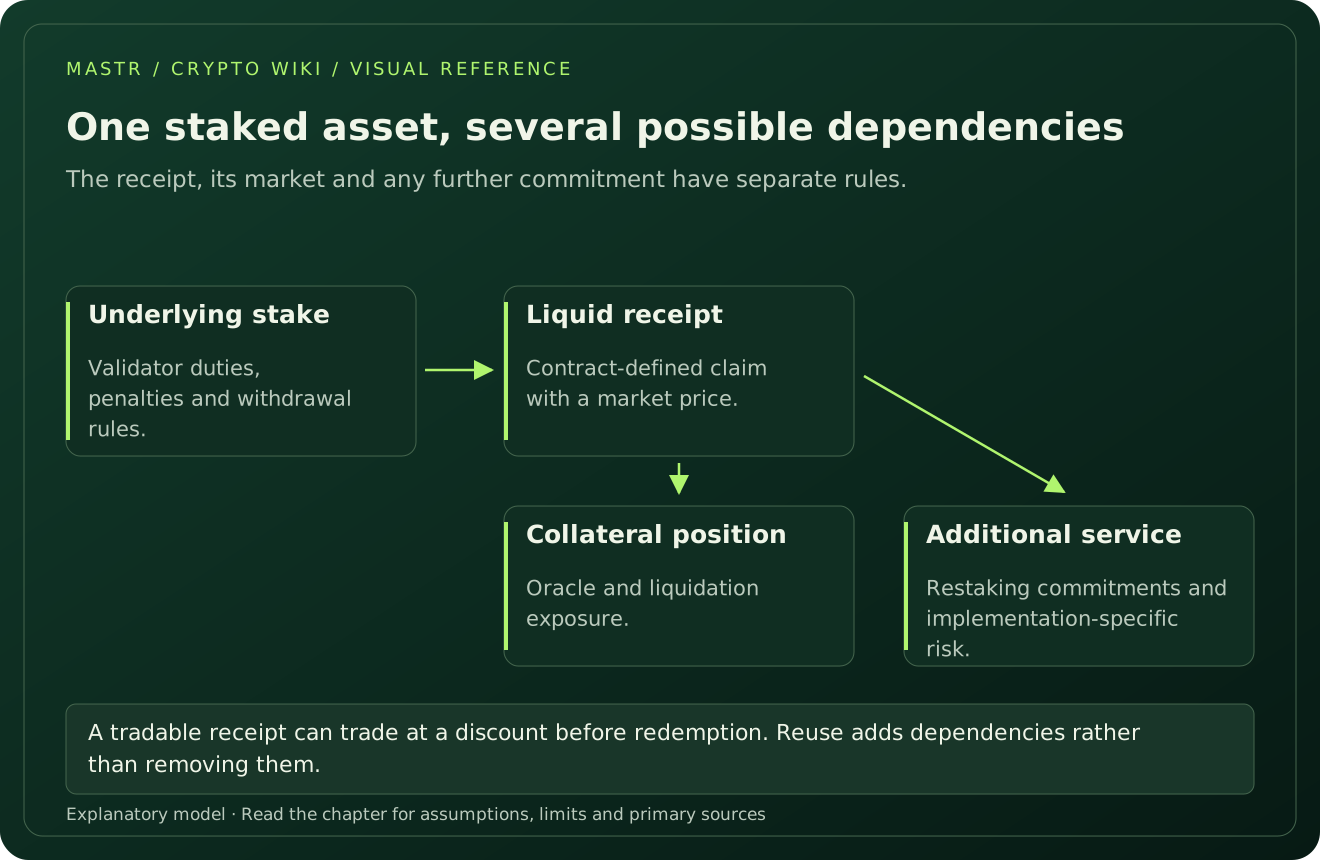
A liquid staking token represents a claim or accounting interest defined by its protocol. It can trade in a market at a price different from the value used in the staking system’s internal accounting. Exit timing, available buyers, perceived risk and withdrawal queues can all affect the market price. A receipt being transferable does not imply that every unit can be redeemed immediately into the underlying asset.
Collateral adds a second threshold
A lending market may accept the receipt as collateral. That introduces oracle and liquidation rules on top of the staking arrangement. The underlying validators can continue operating while the receipt’s market discount causes a leveraged user to be liquidated. Conversely, an apparently stable market price does not eliminate an underlying operator or contract problem. Analyse the layers separately before modelling their interaction.
Restaking extends the commitment
Restaking arrangements can use economic commitments associated with staked assets to support additional services. The specific slashing, delegation, withdrawal and dispute rules depend on the implementation and the service. The broad idea should not be presented as free additional yield. More commitments can create more ways for an operator’s actions or a software failure to affect the position, and dependencies may be correlated rather than independent.
Measure a portfolio’s shared exposures
Several differently named tokens can rely on the same validator operators, oracle, withdrawal infrastructure or collateral asset. Holding all of them does not necessarily diversify those dependencies. Map the route from the receipt through its contracts and operators to the asset a user expects to receive. Then ask which action changes the user’s rights: a governance vote, an upgrade, an operator fault or an exit request.
Erklärendes Beispiel
A hypothetical receipt is internally worth 1 ETH but trades at 0.94 ETH during an exit queue. A leveraged borrower can face liquidation based on the market price even if eventual redemption remains possible. The timing and financing of the position matter as much as the long-run claim.
Fragen zum Mitnehmen
- Trace the receipt to the underlying claim.
- Distinguish market liquidity from redemption.
- List correlated operators and contracts.