Marktstruktur
Leverage and the feedback loop behind liquidation cascades
While it has become quieter around hype chasers and KOLs promoting scams because gamblers are leaving the space in large numbers, it is time to address another major problem.
 MASTR
MASTRZuerst veröffentlicht 2 min · 430 Wörter
Original publication · 15 Dec 2025. Figures, claims and opinions reflect the original publication date.
Die Originalbeiträge sind auf Englisch. Die Navigation ist in sieben Sprachen verfügbar.
Leverage is an additional challenge for crypto price stability.
While it has become quieter around hype chasers and KOLs promoting scams because gamblers are leaving the space in large numbers, it is time to address another major problem.
One that is, again, largely self inflicted.
Once again, the core driver is greed and casino thinking.
Leverage has become one of the most dangerous forces in the crypto market.
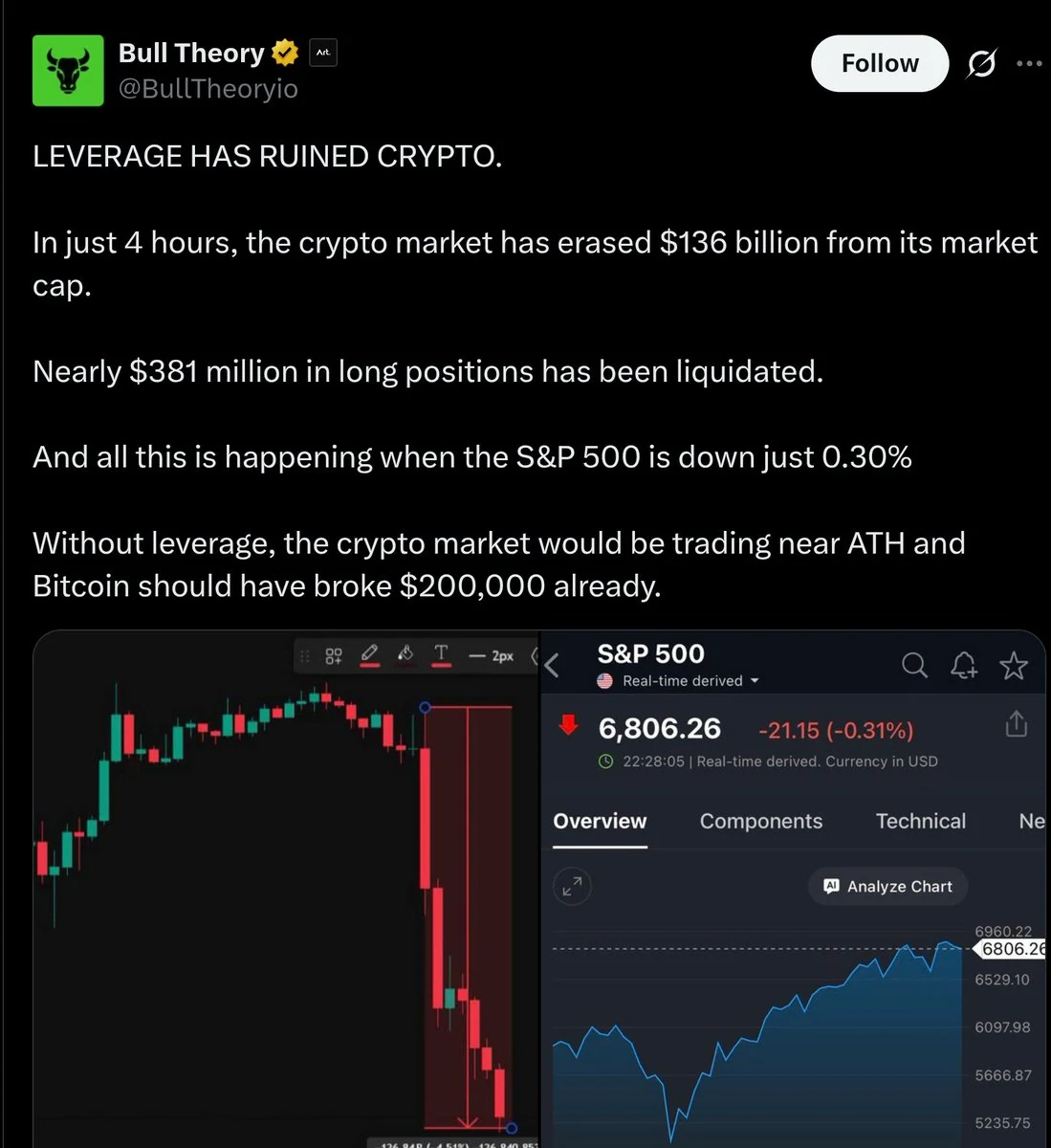
2025 shows, it is probably more destructive than we think. Millions, billions are liquidated, again and again, more frequently and with increasing intensity.
Leverage turns volatility into a weapon and transforms small price movements into cascading liquidations.
When prices drop, leveraged positions are liquidated automatically. This forced selling pushes prices even lower, triggering further liquidations. A self reinforcing feedback loop emerges.
In highly leveraged markets, price discovery no longer reflects real supply and demand. It reflects liquidation mechanics. A move of just 5 percent can wipe out billions in open interest. Retail traders are hit first, but the damage spreads across the entire market.
What makes this even more destructive is that the capital does not flow back into spot markets. Losses from liquidated positions become gains for counterparties, exchanges, market makers, and arbitrage traders.
These gains are usually held in stablecoins, withdrawn, or kept risk neutral. They are not recycled into L1 spot buying.
As prices fall, L1 assets decline together. They are highly correlated, widely used as collateral, and structurally exposed.
Falling prices trigger collateral liquidations, validator reward selling, treasury sell pressure, and risk reduction by funds and algorithms. At the same time, spot demand dries up as buyers wait for lower prices.
The money does not disappear. It concentrates in stablecoins, exchange balances, and low risk positions. Prices fall because selling is forced while buying is optional.
Exchanges benefit from this system. High leverage increases trading volume, fees, and liquidation events. Risk is socialized, profits are privatized.
Traders believe they are in control, but the rules are asymmetrical. Funding rates, liquidation engines, and order book dominance favor the platform.
Leverage also changes behavior. Instead of investing, users gamble. Short time horizons replace conviction. Fear and greed intensify. Education loses against dopamine. The market becomes fragile and unstable.
Every leverage driven wipeout delays trust, scares newcomers away, and hands narrative control to critics.
Leverage is an additional challenge for crypto price stability.
It's part of the game, or no crying in the casino...
But it is important for everyone to understand that this massive use of leverage is a huge factor that influences prices far more than most people realize.