Politik und Interessenkonflikte
WLFI and Justin Sun: token controls and disputed rights
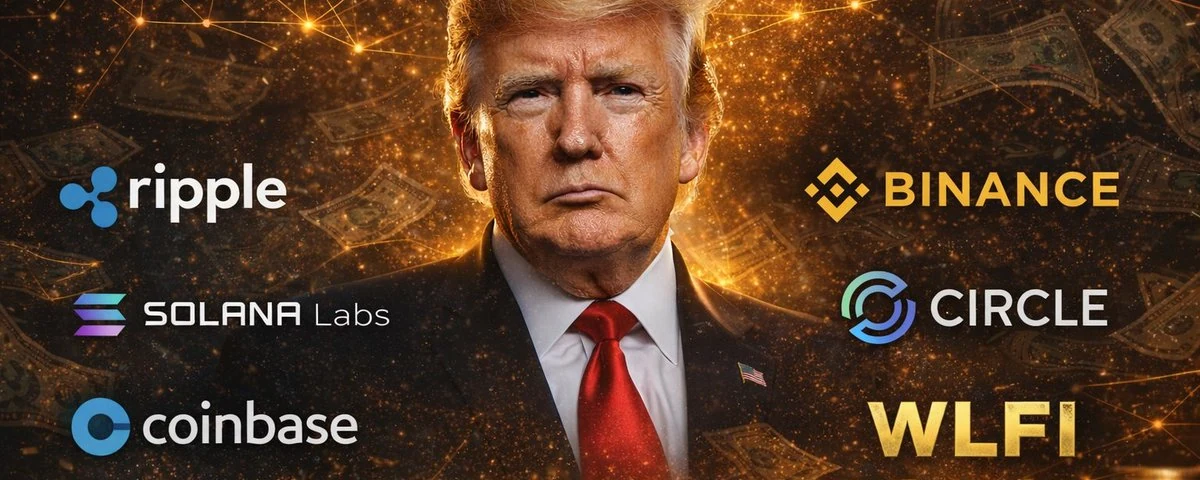
The story around $WLFI and Justin Sun, and this is only 1 of many examples, shows us several things with brutal clarity.
 MASTR
MASTRZuerst veröffentlicht 7 min · 1,333 Wörter
Original publication · 13 Apr 2026. Figures, claims and opinions reflect the original publication date.
Die Originalbeiträge sind auf Englisch. Die Navigation ist in sieben Sprachen verfügbar.
The story around $WLFI and Justin Sun, and this is only 1 of many examples, shows us several things with brutal clarity.
This is not another loud on chain “investigation” built around a screenshot, a wallet address, and a war cry.
It is an analysis at the level that matters most: the layer of the user and the deployer, the layer where incentives are set, trust is manipulated, and extraction is packaged as opportunity.
Crypto is still in its infancy, but not in the romantic way people like to imagine.
Not as a brave young technology finding its way toward freedom. It is infantile in a far uglier sense.
Too much of this space is shaped by people with the emotional maturity of children, the ethics of opportunists, and the volume of propagandists.
And very often they are the loudest people in the room. They have the biggest budgets, the largest audiences, the most shameless branding, and the strongest ability to pull users into ecosystems that are dangerous, unserious, or plainly predatory.
In practical terms, that means the average participant in this market is dangerously exposed.
Not because users are always stupid, but because the environment is deliberately designed to overpower caution with access, speed, status, and manufactured legitimacy.
It also shows that many of the biggest players in this space are not here to decentralize anything in the moral sense people once attached to crypto.
They are here to capture rails, secure preferential treatment, arbitrage weak oversight, and convert public attention into private leverage. T
he slogans still sound revolutionary. The behaviour does not. The behaviour is old power in a new costume.
It is the same hunger for gatekeeping, the same addiction to asymmetry, the same talent for privatizing upside while socializing downside. What gets marketed as liberation often looks, on closer inspection, like elite recycling through new infrastructure.
A lot of people talk about adoption as if adoption were automatically bullish, automatically validating, automatically good.
But what does adoption actually mean if the people arriving first and strongest are exactly the kind of operators who already spent years extracting from broken systems elsewhere?
What kind of victory is it if the unregulated parts of crypto become a fresh playground for the same instincts that corrupted large parts of traditional finance? I think the answer is obvious.
That is not adoption in any noble sense. That is migration of extraction. That is legacy greed discovering faster rails, looser rules, and a population still naive enough to mistake visibility for credibility.
Do not forget that adoption almost always bends toward the side with more power.
Who is naive enough to think users can somehow be kept away from corrupt fiat billionaires entering crypto while everyone keeps celebrating “adoption” as if it were neutral?
That was never realistic. Power attracts users, capital attracts attention, and influence shapes flows. The stronger side sets the direction.
And maybe most importantly, it shows that crypto’s biggest weakness was never only bad code or weak security.
It was always human corruption at scale. Tokens can be audited. Smart contracts can be reviewed. Wallets can be tracked.
But none of that solves the oldest problem in markets: people are still highly vulnerable to influence, especially when that influence is backed by reach, money, reputation, and coordinated hype.
Greed? Yes. Dumb? Yes.
The easiest exploit in crypto was never purely technical. It was social. It was psychological. It was always the ability of powerful figures to persuade masses of users to buy into projects that were dangerous, empty, conflicted, or outright scam adjacent.
That remains the most effective attack vector in the system.
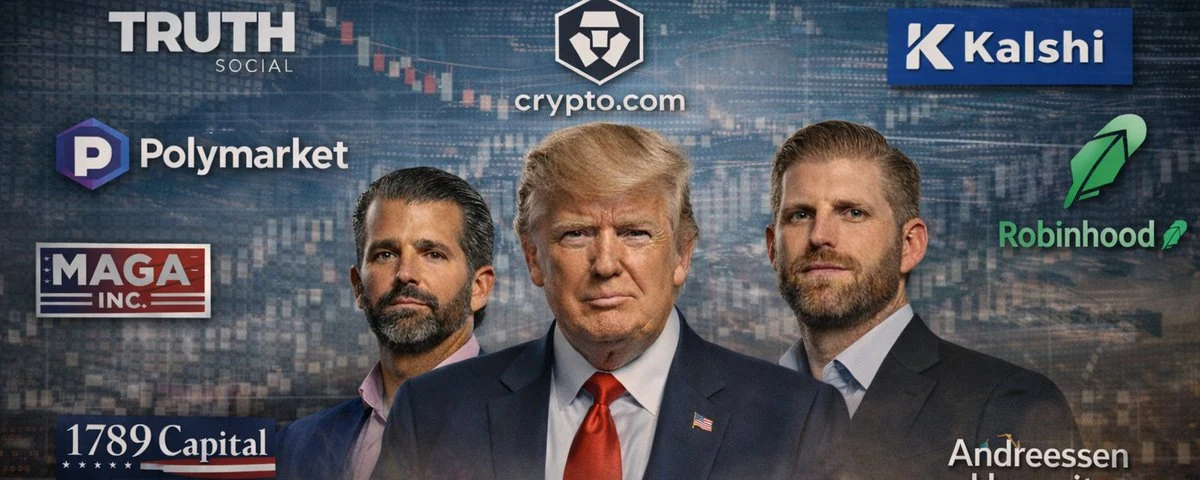
The fact that a compromised, corrupt, bad actor like Trump and his blatantly opportunistic sons can launch a crypto venture and still trigger bullish excitement should tell people almost everything they need to know.
It says the market does not reward integrity consistently. It rewards access, spectacle, tribalism, and the promise that proximity to power might translate into profit.
And with Trump and large parts of the crypto industry around him, it was obvious from the beginning that the core logic was not cypherpunk principle, not decentralization, not user sovereignty, not any of the ideals people still love to quote when they want to sound profound. It was calculation. Cold, strategic, self interested, self-enrichement calculation.
And remember, these are the same people who launched $MELANIA and $TRUMP, and many were still bullish on WLFI anyway.
The outcome was predictable.
The result of his first term was already known as well, and most people still voted for him anyway.
That is why this matters far beyond 1 project or 1 person.
These cases reveal the real condition of the industry.
They show an industry mature enough to understand exactly what it is doing, yet cynical enough in many corners to keep doing it because the incentives still reward extraction over integrity, access over ethics, and manipulation over merit.
Anyone still treating this as a harmless side show is either not paying attention or does not want to.
What is unfolding is a stress test of whether crypto becomes a genuine parallel system with standards, memory, and accountability, or whether it remains what it has largely been so far: a marketplace where insiders dress up capture as innovation, sell corruption as adoption, and expect the public to fund the performance.
So far, it has been almost entirely the latter.


Many people still miss the central point.
These scams, manipulations, and extraction schemes do not happen in a vacuum. They happen because they find an audience.
They find buyers, defenders, repeaters, and useful idiots. They find people who want to believe, people who are blinded by upside, and people who confuse aggressive marketing with legitimacy.
That is why in many cases you do not even need sophisticated on chain analysis to understand that something is wrong.
Of course, deep blockchain research has its place. But often the first and most obvious warning signs are social, not technical.
You can learn a great deal simply by observing how unnaturally hard something is being pushed, how relentlessly it is repeated, how quickly dissent is attacked, and which names suddenly appear to manufacture trust around it.
That alone already tells you a lot.
In crypto, excessive promotion is often not proof of strength. It is proof that distribution is being engineered. It is proof that attention is being weaponized.
And in many cases, the louder the campaign, the weaker the substance behind it.
Greed and ignorance are not marginal problems in this space. They are permanent forces inside it.
People want fast wealth, easy certainty, and simple heroes. That is exactly what makes them vulnerable.
This is also why so much of the damage in crypto does not come from highly technical exploits.
People love to focus on hacks because hacks sound complex, dramatic, and external.
They make the industry look like a victim of rare technical failure. But a huge part of the real damage comes from human intent.
From people planning deception. From people coordinating narratives. From insiders exploiting trust.
From promoters knowingly pushing garbage. From communities defending obvious nonsense because they are financially trapped in it. From audiences rewarding the very behaviour that later destroys them.
That is the hard truth.
The biggest attack surface in crypto was never just the code. It was always human behaviour. Human greed. Human vanity. Human cowardice. Human willingness to suspend disbelief as long as the number goes up.
Many people will still reflexively oppose regulation, and sometimes they have valid reasons.
Regulation can be abused, captured, and misused. That is true. But it is also true that regulation is often one of the few mechanisms that can raise the cost of fraud, reduce open criminality, and create at least some deterrence in an environment that otherwise rewards shamelessness.
Because in the end, most of the worst outcomes are not accidents.
They are wanted. They are supported. They are planned. They are marketed.