
DeFi y gobernanza
Lock-and-mint bridges: the token depends on both sides
A destination-chain asset can represent a claim on funds controlled elsewhere.
Los artículos de investigación y las referencias se publican en inglés. La navegación está disponible en siete idiomas.
The representation
In a lock-and-mint design, an asset is deposited into a source-chain custody mechanism and a corresponding representation is issued on a destination chain. Returning normally requires destroying or surrendering the representation and releasing the original asset through the bridge's rules.
The destination token therefore depends on more than its own transfer contract. It depends on the source custody, message validation, operator or validator permissions, pause functions and the route back to the underlying asset. A familiar ticker cannot identify all of those dependencies.
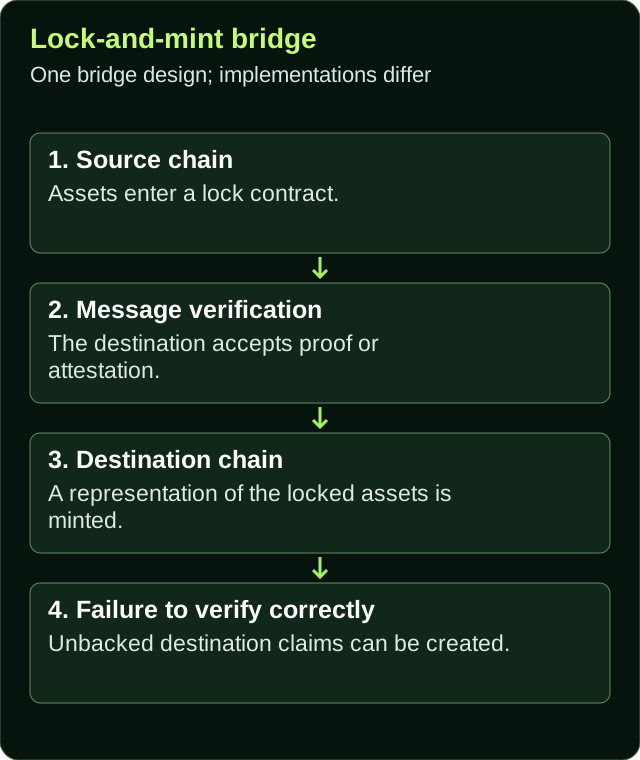
Where a failure becomes an unbacked balance
If a bridge accepts a false deposit message, it may issue a representation without matching collateral. If the locked assets are stolen, correctly issued destination tokens can lose their backing. In either case, the destination blockchain can continue processing valid token transfers while the economic claim is impaired.
Bridge asset identity explains how to identify the specific representation. Ronin provides a historical bridge incident, and data availability addresses a separate dependency that is often incorrectly treated as equivalent to proof of backing.