

Liquidez, precios y reglas de los pools
Concentrated liquidity: ticks, active capital and fee growth
A pool can hold substantial value while only part of its capital supports the current price.
Los artículos y gráficos técnicos están en inglés. La navegación está disponible en 7 idiomas.
Guías de referencia
Liquidity within a chosen interval
Concentrated-liquidity designs let a provider select a price range. The position contributes liquidity while the market price lies inside that range. In Uniswap v3, discrete ticks organise the boundaries and the pool tracks which liquidity becomes active as the price crosses them. A tick is a position in the price grid; it is not a promise that the market will remain there. 1
Out of range changes the position
As price moves through a range, the position’s composition shifts between the assets. Outside the range it can become entirely one side, and it no longer supplies active liquidity for swaps at the current price. This is why total value in the pool is not enough to describe executable depth around the market. The distribution across ranges matters.
Fees need a period and a denominator
Fee growth is accounted for against active liquidity under the pool’s rules. A headline fee rate or historical annualised return cannot establish what a newly opened position will earn. Range width, time in range, trading volume, competition from other positions and rebalancing costs affect the outcome. Fees also have to be evaluated alongside changes in the underlying asset mix. 2
Read a liquidity chart with care
Check the price axis, denomination, tick spacing and whether the chart shows active liquidity or deposited value. A narrow wall can disappear when price moves beyond its range or providers withdraw. When comparing pools, use an executable quote for the intended size in addition to the distribution chart. This connects the visual model to a transaction that could actually be attempted.
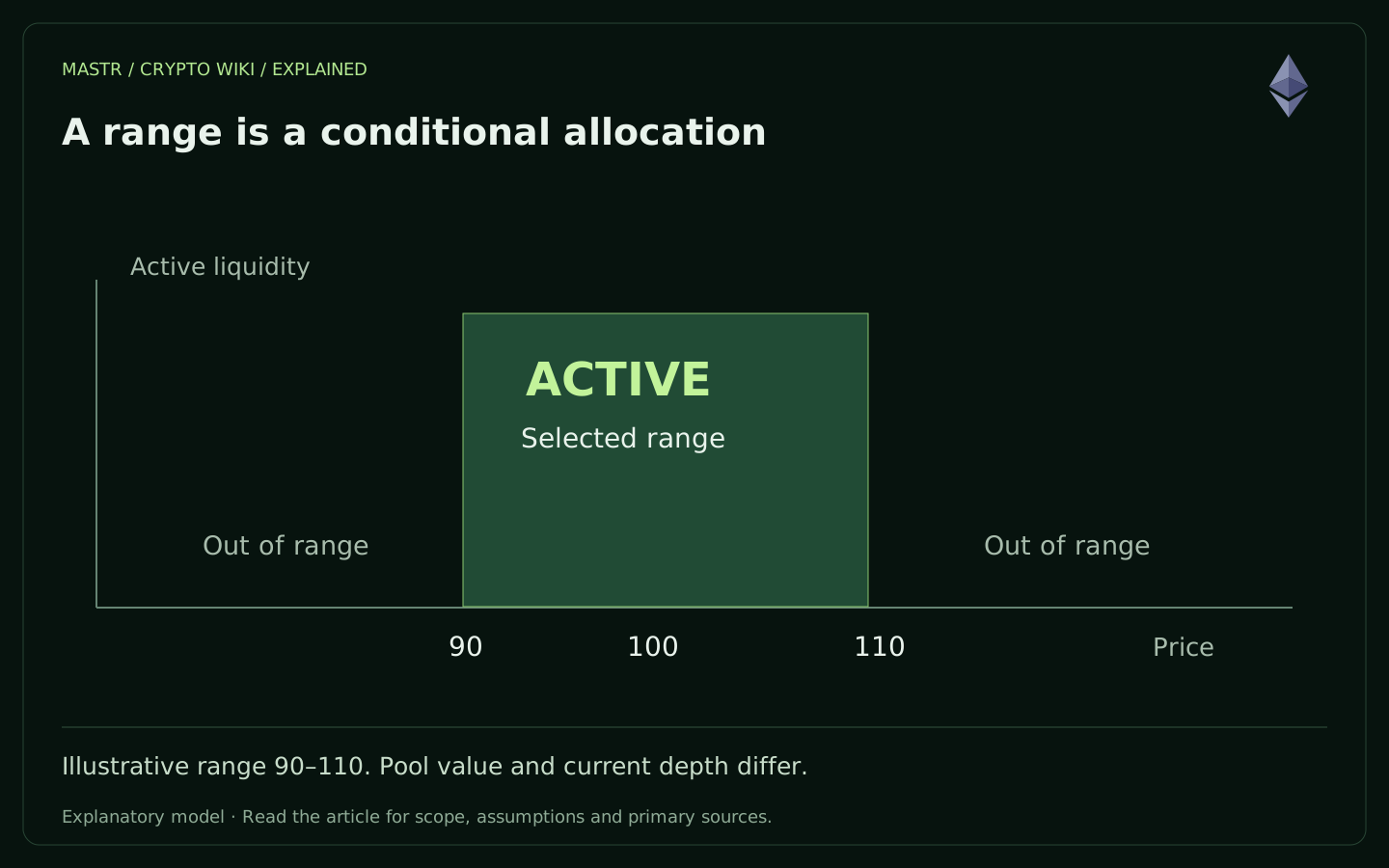
Ejemplo concreto
A position spans prices from 90 to 110 in a chosen quote asset. At price 100 it is active. If the market moves beyond 110, that position does not keep providing the same two-sided depth around 120. This example describes range behaviour and makes no return projection.