

Cuentas inteligentes y gobernanza
EIP-6963: choosing between browser wallets without trusting the icon
Provider discovery solves a coordination problem; names and icons remain self-reported.
Los artículos y gráficos técnicos están en inglés. La navegación está disponible en 7 idiomas.
Guías de referencia
Why one injected provider was awkward
Several wallet extensions historically competed to expose a provider through window.ethereum. Loading order could determine which one a site saw, producing confusing connections for users with multiple wallets installed. EIP-6963 defines event-based discovery so a page can learn about several injected providers and let the user choose. It preserves the underlying provider interface rather than inventing a new chain protocol. 1
An announcement is not an identity certificate
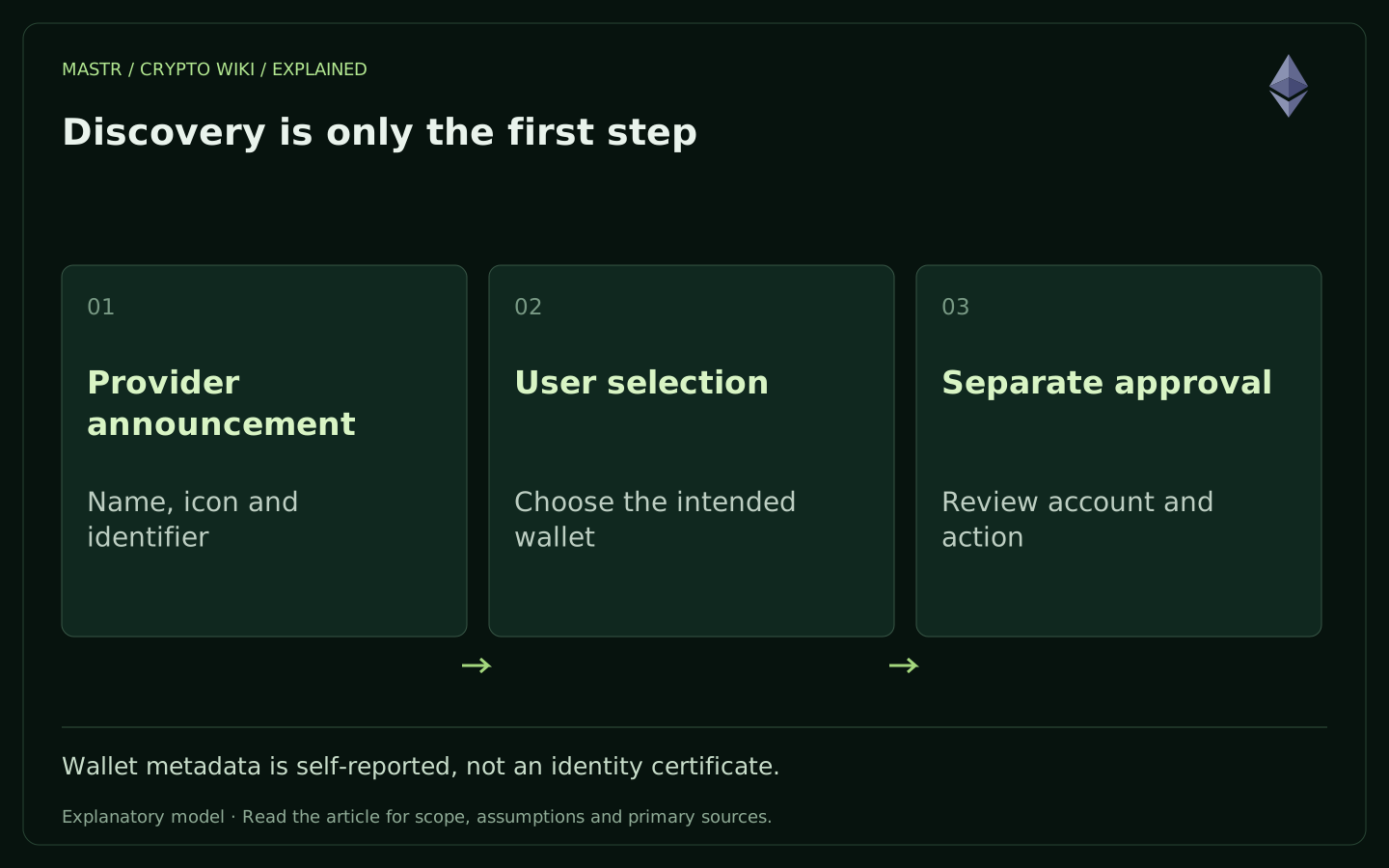
Providers announce information including a name, icon, session identifier and reverse-domain-style identifier. These fields are useful for presenting options, but they are self-attested. The standard explicitly warns that provider metadata can imitate another wallet. A familiar logo inside a connection chooser is not independent proof that the expected extension produced it.
Discovery is not permission
Finding a provider should not be confused with receiving account access, signing a message or authorising a transfer. Those are later interactions with their own consent and security requirements. A well-designed chooser preserves the user’s selected wallet and makes a changed account or chain visible. It should not silently substitute the last provider to announce itself. 2
What to examine when something feels wrong
Check the installed extension through the browser’s own extension management, the selected account and the destination website. A changed icon or duplicate name deserves investigation, but does not by itself prove theft. For developers, render provider imagery as images rather than active markup and treat metadata as untrusted input. For users, the meaningful review happens again in the wallet’s own signing interface.
Ejemplo concreto
Two wallet extensions are installed. A site displays both providers and you select one. That solves selection. It does not mean a later request from the site is safe; the chosen wallet still needs to show what account, chain and action you are authorising.