Política y conflictos de interés
Prediction markets and political conflicts of interest
The original article on prediction-market businesses, political appointments, donations and family connections.
 MASTR
MASTRPrimera publicación 6 min · 1,269 palabras
Original publication · 10 Apr 2026. Figures, claims and opinions reflect the original publication date.
Las publicaciones originales están en inglés. La navegación está disponible en siete idiomas.
Originally published as “Trump, prediction markets, and the architecture of insider corruption.”
What is unfolding around prediction markets is a revealing example of how political power, family influence, donor money, and private business interests can converge into one system.
At the formal level, the issue concerns jurisdiction.
Several states sought to restrain platforms such as Kalshi, Polymarket, Crypto com, and Robinhood on the grounds that they were facilitating forms of unlicensed gambling.
The federal regulator responded not by keeping distance from the dispute, but by going to court against the states.
That move alone is remarkable. More important, however, is the structure of interests behind it.
The companies benefiting from federal protection are not politically neutral firms standing at arm’s length from the administration.
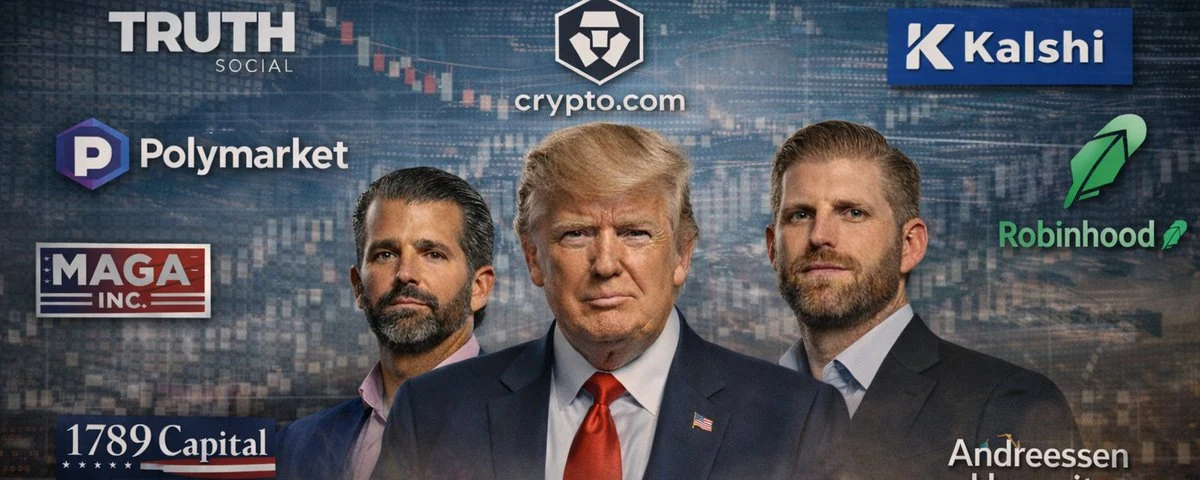
They are connected, in different ways, to Trump, his family, his media company, his donors, and his political network. Once those links are placed side by side, the picture becomes much harder to dismiss as coincidence.
The first problem is the nature of the market itself.
Prediction markets are often presented as sophisticated financial instruments, but much of the activity described here has little to do with hedging real economic risk.
These platforms have hosted bets on sports, elections, celebrity events, weather outcomes, and geopolitical developments.
That matters because the more such markets move away from genuine commercial hedging and toward pure event speculation, the more acute the questions become about gambling, manipulation, privileged information, and regulatory arbitrage.
Reporting described more than $170 million wagered on a potential ceasefire involving Iran. At the same time, specific accounts made highly profitable bets on both a U.S. attack on Iran and a subsequent ceasefire scenario, with profits exceeding $600,000 in one sequence alone.
Even where no criminal finding has been made, markets of this kind are structurally vulnerable to information asymmetry. When political or military events become tradable instruments, the line between speculation and insider advantage becomes dangerously thin.
Against that backdrop, the conduct of the federal government takes on a different meaning. A regulator is not merely defending a theory of market classification. It is intervening in favor of firms that sit inside a dense web of Trump aligned commercial and political interests.

Crypto com is the clearest example.
Trump Media & Technology Group, the parent company of Truth Social and a firm in which Trump remains the dominant shareholder, entered into a significant business partnership with Crypto com.
That relationship was not marginal. It involved plans to reward user engagement with Cronos tokens, the formation of a new entity meant to hold billions in CRO, and the announcement of a future prediction market venture under the Truth brand. In other words, a company receiving favorable federal positioning is directly intertwined with Trump’s own media and token strategy.
At the same time, Crypto com’s parent company donated $5 million to MAGA Inc., the main super PAC supporting Trump. The broader figure reported since 2025 is at least $35 million. Soon after, federal support for the company became more visible, while an SEC investigation begun under the prior administration was dropped without enforcement action. Standing alone, any one of these facts might be defensible. Taken together, they create the appearance of a classic exchange structure: political support, business access, regulatory relief.

The same pattern extends to Trump’s family. Donald Trump Jr. joined Kalshi as a strategic adviser. He also became deeply involved with Polymarket through 1789 Capital, the venture firm where he is a partner. That firm reportedly invested double digit millions into Polymarket, and Trump Jr. then joined its advisory board while publicly advocating broader U.S. access to the platform. This is no longer a case of relatives offering casual commentary on an industry trend.
It is direct financial and institutional entanglement in the same sector now receiving aggressive federal protection.
Robinhood occupies a similar position in this network. The company was selected as brokerage and initial trustee for Trump’s proposed investment accounts for children, while also donating $2 million to Trump’s inaugural fund. Again, the significance lies not in a single payment or a single partnership, but in cumulative overlap. Firms operating in a contested regulatory space are simultaneously donors, service providers, business partners, or politically connected actors within the Trump orbit.
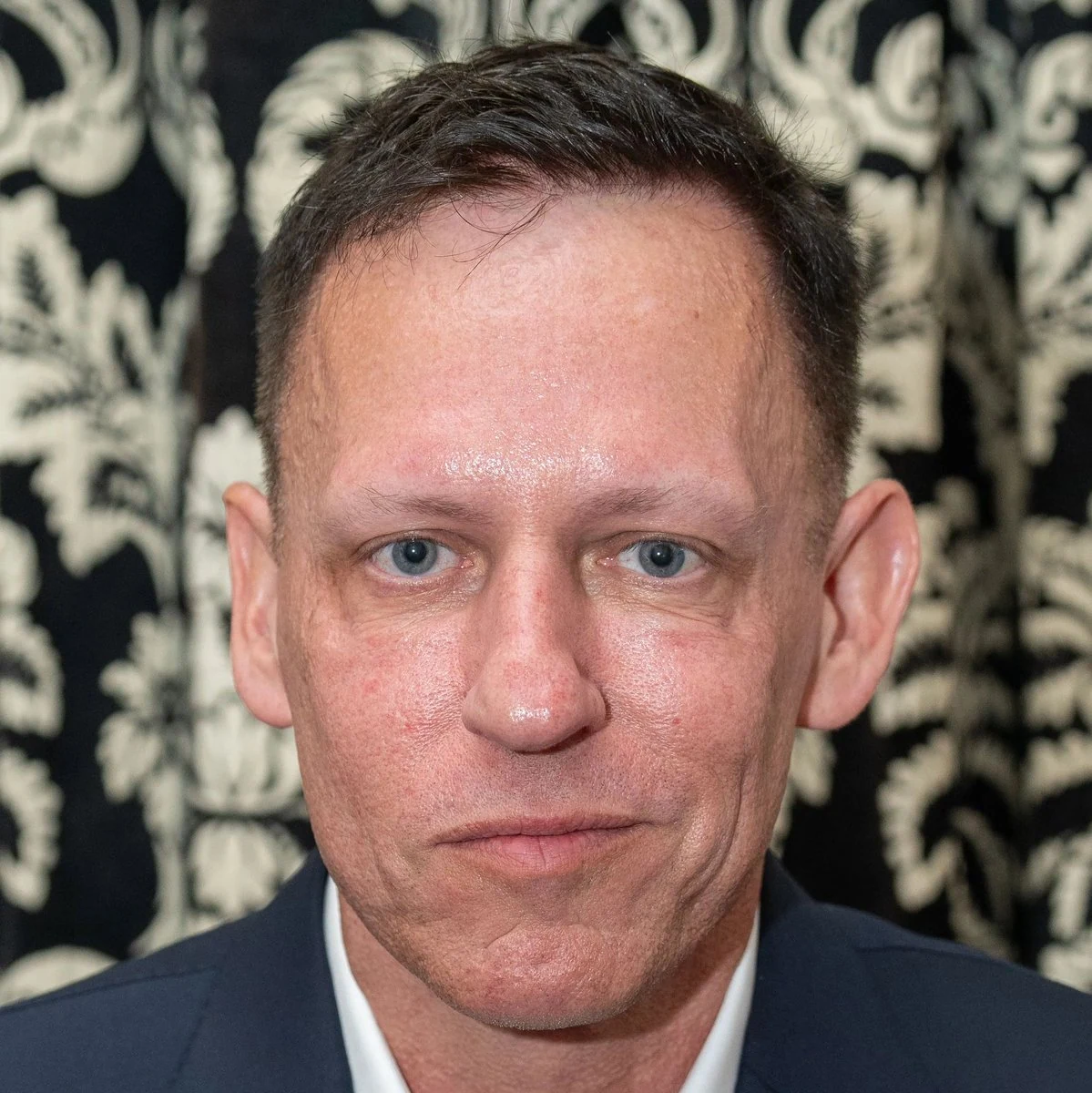
The venture capital layer reinforces the same conclusion. Peter Thiel reportedly helped raise funds for Polymarket. Paradigm and Andreessen Horowitz participated in funding rounds for Kalshi. Paradigm donated $1 million to Trump’s inaugural fund. Marc Andreessen and Ben Horowitz donated millions to a pro Trump super PAC, and Andreessen was later appointed to a presidential science and technology advisory body. These are not isolated investors scattered randomly across the market. They are part of an elite network in which campaign finance, commercial speculation, access, and policy influence increasingly intersect.
This is the point at which the story ceases to be about innovation versus regulation. It becomes a question of state integrity.
A federal regulator is using public authority in a way that benefits companies tied to the president’s family, political donors, commercial partners, and advisory circle. The same ecosystem includes platforms where event based trading can reward those with privileged information. The same ecosystem receives donations from firms later aided by federal intervention. The same ecosystem includes investigations that disappear, appointments that follow, and partnerships that deepen.
This is what advanced corruption looks like in a modern American form. It is not a crude envelope of cash. It is a networked arrangement in which law, politics, family power, business strategy, and capital markets begin to move in the same direction.
Legally, defenders will always retreat to the same argument: no single fact proves a prosecutable quid pro quo.
But that is a narrow and inadequate standard for democratic analysis. The more serious question is whether public institutions are being bent toward the private benefit of the ruling circle and its aligned financiers. On the facts presented here, the answer appears increasingly difficult to avoid.
Trump’s fingerprints are everywhere in this structure:
- They appear in the media company tied to the crypto firm.
- They appear in the token strategy.
- They appear in the future prediction market venture.
- They appear in the donations.
- They appear in the dropped investigation.
- They appear in the advisory roles of his son.
- They appear in the venture capital links.
- They appear in the companies selected for Trump branded financial products.
And now, they appear in an extraordinary use of federal regulatory power against the states.
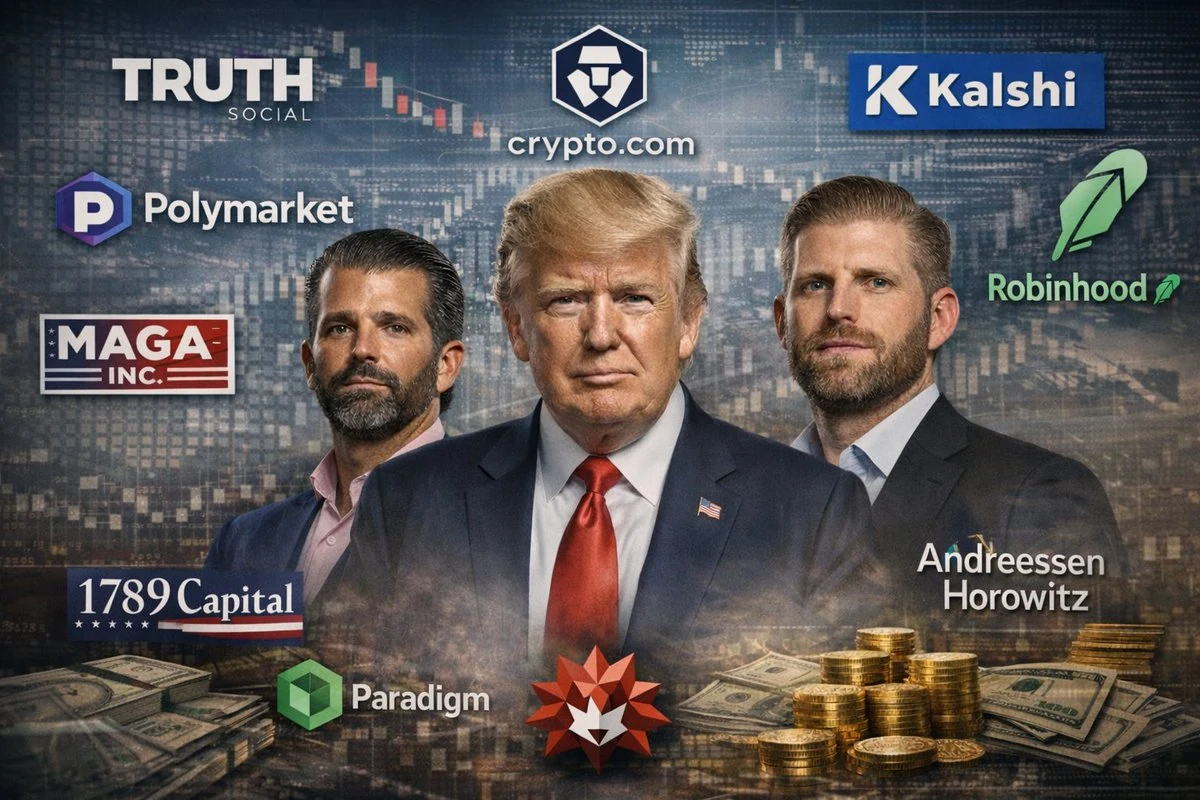
Seen in full, this is not ordinary politics. It is not ordinary lobbying. It is not ordinary deregulation
It is the conversion of public power into a protective canopy for a private network centered on Trump, his family, his donors, and his business partners.
That is the real scandal. Not only who profits, but how completely the boundary between government and self dealing is being erased.
Thank you for your direct or indirect support of Web3 journalism:
https://linktr.ee/askmastr.xyz
These are some links for anyone who wants to DYOR on the prediction markets, Trump ties, donations, appointments, and the regulatory moves around them. The list covers the core reporting and primary announcements behind the claims
- Popular Information
- https://popular.info/p/trumps-cftc-goes-to-war-with-states
- Axios on Trump Jr. / 1789 Capital / Polymarket
- https://www.axios.com/2025/08/26/trump-jr-vc-fund-polymarket
- ConDesk on Trump Jr. joining Polymarket after 1789 Capital investment
- https://www.coindesk.com/markets/2025/08/26/donald-trump-jr-invests-in-usd1b-prediction-market-polymarket-through-vc-firm-1789-capital
- Crypto.com announcement on Trump Media partnership
- https://crypto.com/en/company-news/trump-media-cryptocom-announce-strategic-partnership
- Crypto.com / Truth Social prediction markets announcement
- https://crypto.com/en/company-news/truth-social-to-become-worlds-first-social-media-platform-offering-prediction-markets-via-exclusive-partnership-with-cryptocom
- Reuters on Trump Media entering prediction markets with Crypto.com
- https://www.reuters.com/business/media-telecom/trump-media-enter-prediction-markets-business-2025-10-28/
- Robinhood announcement on Trump Accounts
- https://robinhood.com/us/en/newsroom/robinhood-tapped-as-brokerage-for-trump-accounts-together-with-bny/
- Reuters on BNY and Robinhood roles in Trump Accounts
- https://www.reuters.com/world/treasury-designates-bny-as-financial-agent-for-trump-accounts-2026-04-06/
- Bloomberg on Robinhood / BNY / Trump Accounts
- https://www.bloomberg.com/news/articles/2026-04-06/robinhood-bny-mellon-tapped-to-run-trump-accounts-for-children
- White House on Andreessen appointment to PCAST
- https://www.whitehouse.gov/releases/2026/03/president-trump-announces-appointments-to-presidents-council-of-advisors-on-science-and-technology/
- WHRO on the administration suing states over prediction markets
- https://www.whro.org/2026-04-02/trump-administration-sues-three-states-over-attempts-to-regulate-prediction-markets
Fuentes y publicaciones originales
Pruebas originales (12)
- linktr.ee/askmastr.xyz
- popular.info/p/trumps-cftc-goes-to-war-with-states
- www.axios.com/2025/08/26/trump-jr-vc-fund-polymarket
- www.coindesk.com/markets/2025/08/26/donald-trump-jr-invests-in-usd1b-prediction-market-polymarket-through-vc-firm-1789-capital
- crypto.com/en/company-news/trump-media-cryptocom-announce-strategic-partnership
- crypto.com/en/company-news/truth-social-to-become-worlds-first-social-media-platform-offering-prediction-markets-via-exclusive-partnership-with-cryptocom
- www.reuters.com/business/media-telecom/trump-media-enter-prediction-markets-business-2025-10-28/
- robinhood.com/us/en/newsroom/robinhood-tapped-as-brokerage-for-trump-accounts-together-with-bny/
- www.reuters.com/world/treasury-designates-bny-as-financial-agent-for-trump-accounts-2026-04-06/
- www.bloomberg.com/news/articles/2026-04-06/robinhood-bny-mellon-tapped-to-run-trump-accounts-for-children
- www.whitehouse.gov/releases/2026/03/president-trump-announces-appointments-to-presidents-council-of-advisors-on-science-and-technology/
- www.whro.org/2026-04-02/trump-administration-sues-three-states-over-attempts-to-regulate-prediction-markets