

MASTR · CRYPTO & WEB3
The scaling debate: block space, verification and the right to exit
SegWit and payment channels show why scaling is a choice about resources and trust, not just a larger transactions-per-second number.
Os capítulos e gráficos técnicos estão em inglês. A navegação está disponível em sete idiomas.
Who bears the cost when a network increases its capacity?
A scarce shared resource
Every transaction consumes network resources: bytes to relay and store, signatures to verify and state to track. Increasing capacity can reduce congestion under some conditions, but it also changes requirements for participants who verify the system. A debate about block limits is therefore also a debate about who can afford to check the rules independently. A throughput number without hardware, bandwidth, transaction type and measurement conditions hides that trade-off.
What SegWit changed
BIP141 separates witness data from the traditional transaction structure and introduces block-weight accounting. It also addresses forms of transaction malleability relevant to protocols that refer to transactions before confirmation. SegWit activated in 2017. The change should not be described simply as making signatures disappear: validation still checks them. The accounting treatment and transaction identifiers change, while the security purpose of the signature remains.
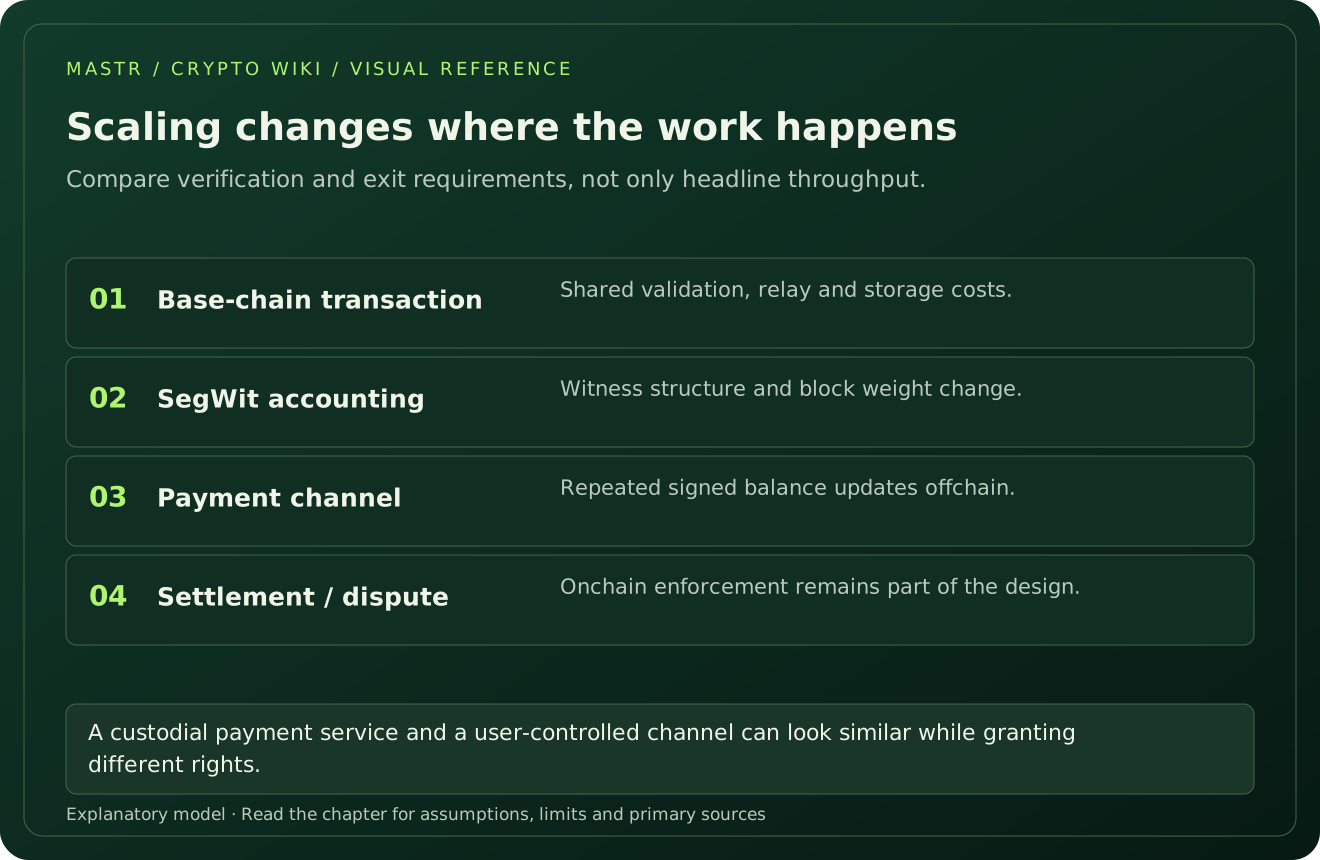
Payment channels move repeated updates offchain
A Lightning channel lets participants update a balance relationship using signed commitments rather than placing every small payment on the base chain. Opening and closing still interact with Bitcoin. Routing through several channels adds questions about available capacity, fees and successful forwarding. Money is not teleported into an unlimited offchain space; liquidity is committed to channels and its direction matters. A channel’s total capacity does not mean all of it is available for a payment in either direction.
Governance is broader than signalling
Miners, developers, businesses and users have different forms of influence. Publishing code proposes rules; installing and using it is another action. A miner’s signal is not identical to every user accepting a change. Splits can leave different communities validating different rules. Calling every disagreement a technical bug misses the social coordination that determines which system a service supports and which asset a user believes they hold.
Evaluate the exit path
For an offchain payment system, the important questions include who can publish a settlement transaction, what must be watched, what timelocks apply and how disputes are resolved. A custodial Lightning service and a user-controlled channel can present similar payment interfaces while offering different rights. The word Lightning alone does not answer who controls the funds. The same reasoning later reappears in the evaluation of rollups and bridges.
Exemplo explicado
A channel containing 100 units might allocate 95 to Alice and 5 to Bob. Bob cannot send 50 units through that channel in the Alice direction simply because its total capacity is 100. Directional liquidity is a constraint separate from the speed of signing an update.
Perguntas a reter
- State the resource assumptions behind throughput.
- Identify who controls the channel keys.
- Check directional capacity and the settlement path.