

MASTR · CRYPTO & WEB3
A decentralised chain can still have a fragile front door
Domains, browsers, hosting, RPC providers and indexers sit between a user and the chain. Their failures are not all consensus failures.
Os capítulos e gráficos técnicos estão em inglês. A navegação está disponível em sete idiomas.
Which layer can stop the user from reading, signing or submitting?
The ordinary access path has many operators
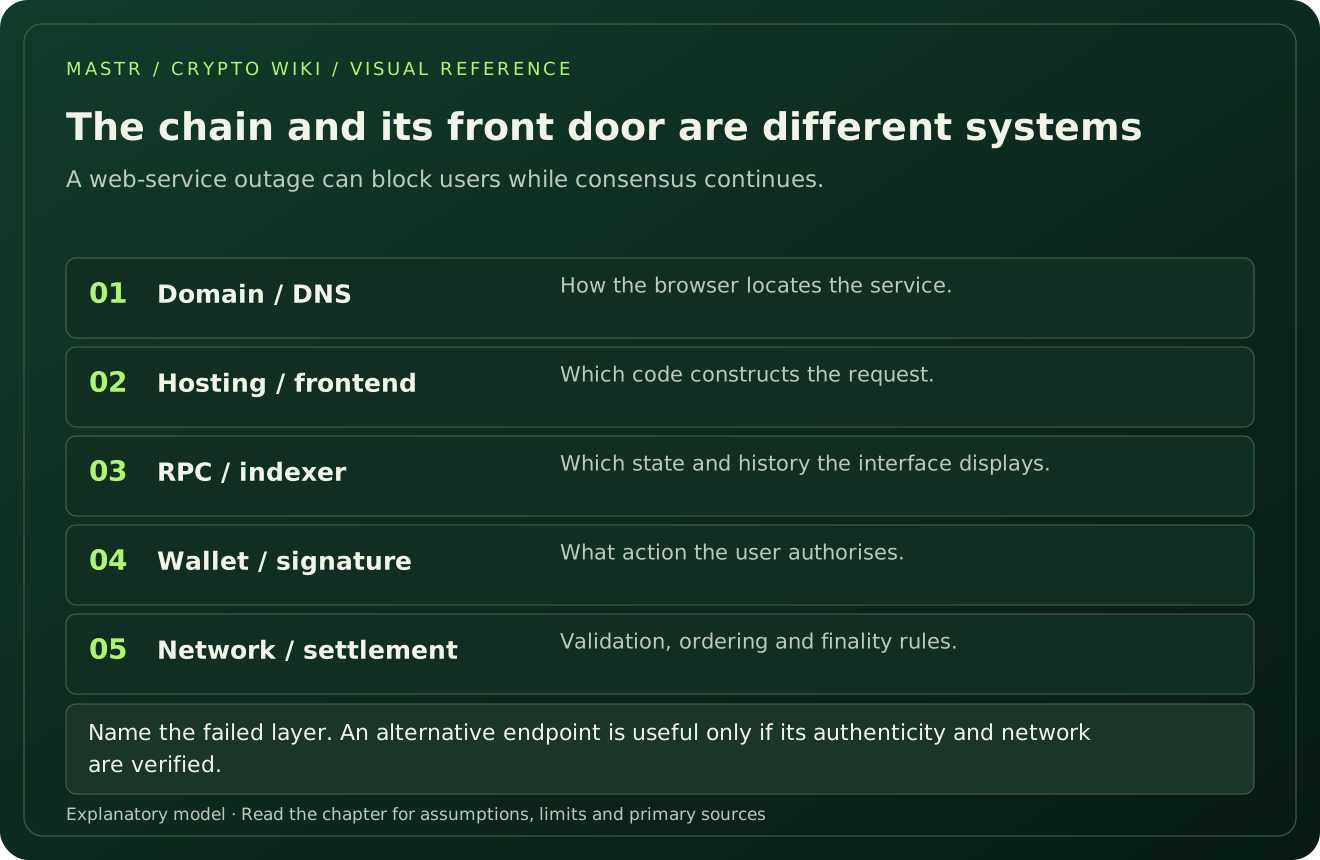
A user enters a domain, resolves it through DNS, downloads a frontend and contacts services that provide chain data or submit transactions. The application may also depend on an indexer, authentication provider or content-delivery network. These services can make a decentralised protocol usable, but their operational dependencies deserve a separate map. The chain’s validator count does not describe the whole user journey.
RPC is an information and submission boundary
An RPC provider returns a view of state and accepts supported requests. Its answers can be delayed, incomplete or unavailable, and a client may be configured for the wrong network. Where practical, comparing independent sources can reveal discrepancies, but two endpoints using the same backend are not independent verification. Some questions require a validating node or preserved block-specific evidence rather than another dashboard.
A compromised frontend can ask for a valid harmful action
The browser page may display one intention while constructing another request. A hardware wallet can protect a key from extraction yet still sign an action the user misinterprets. Transport encryption authenticates a connection under certificate rules; it does not establish that the website’s business is honest or its code uncompromised. The signing boundary remains important even when the padlock is present.
Availability and censorship have several forms
A frontend outage can prevent convenient access while contracts continue operating. A provider may refuse a request, an indexer may omit a record, or a sequencer may delay inclusion. These are different mechanisms. Describe which party can block which action and whether an alternative route exists under the protocol’s rules. Avoid claiming that a working chain means every user can always access every application.
Design and research for a recoverable path
Document essential contract addresses, the expected network and authoritative sources. For an investigation, save enough information to identify the relevant transaction even if one explorer disappears. For an application, an alternative endpoint or interface can improve resilience only if it preserves the necessary security checks. Changing to a random mirror during an outage can replace an availability problem with an authenticity problem.
Exemplo explicado
A dashboard cannot load because its content-delivery provider is unavailable. The network continues finalising blocks. Reporting a blockchain halt would describe the wrong layer; reporting that every user remained unaffected would also be wrong.
Perguntas a reter
- Name the access layer that failed.
- Distinguish provider responses from independent validation.
- Verify alternative routes before using them.