Estrutura de mercado
Rising prices, FOMO and retail losses
A long-form examination of FOMO, influencer narratives, speculative booms and the outcomes faced by retail traders.
 MASTR
MASTRPrimeira publicação 27 min · 5,771 palavras
Original publication · 5 Jan 2026. Figures, claims and opinions reflect the original publication date.
As publicações originais estão em inglês. A navegação está disponível em sete idiomas.

Originally published as “Rising crypto prices are when retail loses the most money. Deep dive backed by data market research!”
Why You Should Be Especially Careful When Crypto Prices Are Rising, And What That Means for You
Introduction: Crypto markets have a habit of seducing investors with dizzying gains during bull runs. When prices surge across Bitcoin, Ethereum, meme coins and beyond, excitement and greed often drown out caution. Newcomers flood in hoping to get rich quick, while social media feeds fill with success stories and bold predictions. Yet history – and hard data – show that the very moments of peak euphoria are when investors should be most on guard. In this article, we delve into why rising crypto prices can be dangerously deceptive, examining the psychology of FOMO (Fear of Missing Out), the role of influencers and hype, the spike in scams, and lessons from past boom-and-bust cycles. More importantly, we discuss what practical steps you can take to protect yourself when the crypto market is red-hot.

Crypto bull runs spark surging optimism – which can quickly reverse into turmoil. Even as Bitcoin and other coins climb, experienced analysts urge restraint and vigilance.
When crypto prices climb rapidly, a sense of mania can take hold. Retail traders on forums cheer on new all-time highs; greed overtakes fear; and in the rush to not miss out, many forget that what goes up can come crashing down. Analysts often point out a worrying pattern: intense optimism among everyday investors tends to coincide with market tops, followed by painful corrections. For example, during Bitcoin’s 2017 rally and again at its late-2021 peak, surging social media curiosity and upbeat sentiment were soon met with sharp price reversals. In the 2018 crash that ended the last major boom, cryptocurrencies collectively plunged about 80% from their January peak by September, a downturn even more severe than the dot-com bubble’s collapse. In short, the same excitement that drives prices up can herald an unstable bubble, and prudent investors should keep their emotions in check even as their portfolios swell on paper.
The Psychology of FOMO: Hype, Herding and Overconfidence
One of the biggest reasons caution is needed in a rising market is investor psychology. When people see green numbers day after day, it triggers a powerful emotional response known as FOMO – Fear of Missing Out. This anxiety of being left behind can short-circuit our rational thinking. Investors start chasing coins they barely understand simply because everyone else seems to be getting rich. Social media amplifies this effect: on platforms like Twitter, Reddit or TikTok, we mostly hear about huge wins and moon-shot predictions, rarely the losses, creating a distorted reality where it feels like everyone is making a fortune except you. Psychologically, humans are wired to follow the crowd and to be overconfident after a few successes. In a bull run, following the herd feels safe – if prices keep rising, how bad could joining in be? – and a couple of lucky trades can trick us into thinking we’re geniuses, leading us to take bigger and bigger risks.
From a behavioral finance perspective, FOMO and herd behavior are a recipe for bubbles. Academic analyses confirm that as prices rise, the fear of missing out entices ever more people to pile in, which inflates the market and creates speculative bubbles. Investors tend to imitate others’ actions in these moments. Instead of doing due diligence, many simply buy because their peers are buying – a classic herd mentality that pushes valuations beyond any fundamental value. Crucially, this feedback loop can make the eventual crash more devastating: the same herd that rushed in can rush for the exits together, turning a dip into a freefall. As researchers note, *“FOMO can result in an increase in the number of investors who enter the market as prices rise, thereby generating speculative bubbles”*. Conversely, when sentiment flips, panic selling becomes contagious, exacerbating the downturn.
Who are the people most vulnerable to FOMO? Often, it’s new or inexperienced traders who get swept up in a bull market. The allure of rapid profits attracts many individuals who lack the knowledge or experience to navigate crypto’s complexities. They see others making money and don’t want to be left out. As one academic study put it, many newcomers rely on “trends and the actions of others rather than conducting extensive research,” which exacerbates speculative activity. This influx of naive money can actually propel prices even higher in the short term – until the bubble pops. And when it pops, those latecomers often suffer the most, having bought near the top without a plan. Analysts warn that FOMO-driven buyers tend to purchase at peak prices and then panic-sell in downturns, locking in heavy losses. In fact, a recent study found that herding behavior and loss-aversion bias significantly influence cryptocurrency investors’ decisions, often undermining sound strategy. In simpler terms, the fear of missing out can trick you into being the last person holding an overhyped asset, only to watch it plunge in value.
Retail Euphoria vs. Reality: Signs of a Market Top
Bull runs are often fueled by retail investors – everyday people plowing their savings into the market. Their optimism can be infectious, but it’s also a contrarian indicator if it becomes overzealous. Market data frequently shows that when retail sentiment becomes extremely positive, a pullback isn’t far behind. As one on-chain analyst observed, crypto markets tend to weaken shortly after retail enthusiasm hits extreme levels – when “everyone and their barber” is talking about crypto gains, the rally may be living on borrowed time. The reason is that once the last marginal buyer (often an average person prompted by news of quick riches) has bought in, there’s no one left to keep pushing the price up. At that point, even a bit of bad news or big players taking profits can trigger a reversal.
We saw this dynamic at play in late 2021. Bitcoin reached $69,000 in November 2021 amid a frenzy of positive sentiment, memes, and celebrities endorsing crypto. The Crypto Fear & Greed Index, a popular composite sentiment gauge, was showing extreme greed. Social media was ablaze with people boasting about their gains or speculating that Bitcoin would soon hit $100k. But beneath the euphoria, savvy observers were cautious. Just as in 2017’s climax, surging public enthusiasm preceded a dramatic correction: by 2022, Bitcoin had slid almost 80% from its peak, dragging most altcoins down with it. As one report noted, social sentiment was notably elevated in the months before major crashes like May 2021 and November 2022, even as objective on-chain data was flashing warnings. In other words, the crowd’s excitement blinded them to the dangers.
It’s important to recognize some warning signs of this retail euphoria. For instance, skyrocketing online chatter is one clue. If your feeds and group chats suddenly fill with crypto talk from people who never cared before, caution is warranted. Another sign is when search trends and new account sign-ups on exchanges spike – heavy retail participation often coincides with the late stages of a rally. We also see smaller coins or “micro-cap” tokens staging mini bull runs of their own. In early 2026, for example, a sudden rally in obscure meme coins had seasoned traders nervous that the broader market was overheating. Veteran investors sometimes joke that when strangers start giving you crypto tips, it’s time to start selling. There’s truth in that humor: extreme optimism can signal that most buyers are already “all-in,” leaving the market vulnerable.
One telling quote comes from Brian Quinlivan, an analyst at Santiment, who said the health of a rally depends on retail traders remaining a bit cautious, pessimistic, or impatient – if they become uniformly euphoric, it’s a red flag. His concern was that if Bitcoin blasted through a psychological level (say, jumping rapidly toward $90k+), it could trigger a wave of retail FOMO buying – “Are they pouring in money just because Bitcoin goes up? That would be bad,” he warned. Emotional, reactionary buying often marks an unstable, short-lived peak. History bears this out: time and again, when greed overtakes fundamentals, the bubble is near bursting.
Influencers, Shills and the Social Media Hype Machine
In today’s crypto market, information (and misinformation) spreads at light speed, and much of it comes from social media. This has given rise to a new breed of crypto promoters and “Key Opinion Leaders” (KOLs) – from Twitter gurus to YouTube personalities – who can sway the masses. In a bull run, these influencers often turn up the promotional hype to 11. They might tout certain altcoins or new projects as the next big thing, sometimes with ulterior motives. Retail investors, especially newcomers, are highly susceptible to these pitches, as they often trust charismatic online figures more than dry financial reports. A Reuters investigation in 2021 found that many young investors were basing their crypto buys on tips from Reddit, Twitter and TikTok rather than any fundamental analysis. When half a dozen altcoin traders in their 20s were interviewed, they admitted their decisions came largely from social media trends – a testament to how influential these channels are in shaping market behavior.
The involvement of celebrities and big-name billionaires further turbocharges the hype machine. Perhaps the most famous example is Elon Musk, whose offhand tweets about cryptocurrencies have ignited massive rallies and crashes. During the 2021 bull run, Musk’s tweets about Dogecoin (a meme coin originally created as a joke) sent its price flying. Dogecoin ran up over 10,000% in 2021, reaching a market capitalization of about $60 billion – briefly becoming one of the five largest cryptocurrencies. This astonishing rise had nothing to do with Dogecoin’s technical merits (it has no supply cap and very limited use-case); rather, it was “momentum from the tweets of a prominent backer” – i.e. Musk – that drove the surge. But hype is a double-edged sword. When Musk jokingly called Dogecoin “a hustle” during an SNL skit in May 2021, the coin’s price plummeted by over 30% in a single day. Many late buyers who got in near the top were left holding heavy losses. As one finance professor cautioned at the time, *“Anyone who wants to play the Elon Musk game should be prepared to lose all their money.”* It was a stark reminder that chasing a coin just because a celebrity hyped it is extremely risky.
It’s not just Elon Musk. Throughout crypto booms, influencers of all kinds come out of the woodwork. Some are well-meaning enthusiasts, but others are outright shills – promoting coins in exchange for payments or personal profit. Often, these promotions are not transparent. A high-profile case involved reality TV star Kim Kardashian, who in 2021 posted an Instagram promo for a token called EthereumMax. The project had thin fundamentals, but her endorsement drew in a lot of unwary buyers. The result? “Anyone who bought the token after Kardashian promoted it would have lost 95% of their money,” according to later investigations. Regulators took notice: the U.S. SEC fined Kardashian $1.26 million for failing to disclose she was paid to advertise that crypto. The message is clear – celebrity hype can be disastrously misleading. What looks like genuine enthusiasm might just be a paid ad, and by the time you buy in, the promoters may already be cashing out.
Crypto “gurus” on YouTube and Twitter can be even more insidious. Unlike a celebrity one-off, these individuals build trust over time with their audience, then plug obscure coins (often ones they got in early or received for free). In the last bull market, a number of influential YouTubers were accused of doing pump-and-dump schemes on their followers. One exposé by crypto sleuth ZachXBT uncovered how a YouTuber named Lark Davis would shill new tokens to his hundreds of thousands of subscribers, without disclosing he received large allocations of those tokens at low prices. As soon as the token launched and the price jumped – thanks in part to the buzz he created – he dumped his holdings for big profits, while late-arriving fans saw the token price collapse. This happened not just once, but with eight different cryptocurrencies, netting the influencer an estimated $1.2 million. “These scam-tubers target noobs who are very high on the hopium and hoping to make a quick buck,” said one victim who lost a fortune following such advice. “I lost a lot of money thinking they were legit and looking out for the smaller fish.”
The truth is, the crypto space can be very cutthroat. As one crypto critic, Molly White, noted, popular influencers often get free tokens or cash to promote projects. They have every incentive to paint a rosy picture and urge followers to “jump in now.” Meanwhile, they can sell into that artificially created demand. “If the person has sufficient reach, that can really pump the price of the token,” White explained – but *“the only way people actually make money off a pump-and-dump scheme is by getting enough suckers to buy into it.”* In other words, if you’re the one buying because of the hype, there’s a good chance you are the sucker being left holding the bag. This isn’t to say all crypto influencers are bad actors, but you should approach any hot tip or bold prediction with deep skepticism during bull runs. Always ask: What might this person gain if I buy what they’re recommending? And remember that real investment insight is rarely found in a 15-second viral video or a promotional tweet.
Scams and Excesses: Bull Markets Are Breeding Grounds for Fraud
Not only do rising prices attract naive investors, they also attract scammers and opportunists looking to capitalize on the euphoria. When the market is hot, a sort of “gold rush” mentality sets in – and con artists know it’s the perfect time to strike. New crypto projects spring up literally by the hour, many with no intention of delivering a product. Some are outright scams designed to steal funds, while others are flimsy ventures that collapse as soon as the hype fades. In the exuberance of a bull market, unfortunately, many people let their guard down. They’re so eager not to miss the next Bitcoin or the next 100x gem that they’ll throw money at almost anything – an opening that scammers exploit with gusto.
One common type of fraud is the classic pump-and-dump scheme, which has found fertile ground in crypto. The basic idea is as old as markets: promote an asset heavily to inflate its price, then sell out at the top, leaving late investors with the losses. Crypto makes this easier than ever, because anyone can create a new token with a few clicks and hype it on social media – often without revealing their real identity. According to blockchain analytics firm Chainalysis, the scale of this problem is staggering. In 2022 alone, roughly 1.1 million new tokens were created. Most had no traction, but Chainalysis identified about 40,500 tokens that garnered enough trading activity to analyze – and of those, roughly 1 in 4 showed on-chain patterns indicative of pump-and-dump schemes. In other words, around 9,900 tokens launched in 2022 (almost 25%) crashed by at least 90% within a week of launching, a hallmark of fraudulent hype cycles. Investors who bought into those suspicious tokens spent a total of $4.6 billion worth of crypto on them, only to see their value evaporate. Meanwhile, the creators of these tokens walked away with an estimated $30 million in profits from selling their holdings into the frenzy. Each individual scam might have only netted the fraudsters a few thousand dollars or more, but added together they represent a massive transfer of wealth from **“FOMO buyers” to shady developers.
Why are these schemes so prevalent? Chainalysis points out that crypto pump-and-dumps are “uniquely destructive” due to the ease of launching new tokens and the social media–driven nature of crypto investing news. In a bull run, a slick website, a hyped tweet from a pseudo-anonymous promoter, and perhaps a catchy meme is all it takes to send speculators flocking to a new coin. By the time people realize a token had no substance – or that the developers built malicious code preventing users from selling (yes, that happens too) – the insiders have often cashed out and vanished. This is why you must be extremely cautious about new coins popping up during hype cycles. The odds of any random new token being a scam or worthless are non-trivial, as the data shows. As the saying goes, “If it sounds too good to be true, it probably is.” A project promising guaranteed high returns or a “revolutionary” technology, yet materializing out of nowhere during a frenzy, should set off alarm bells.
Beyond pump-and-dump tokens, bull markets also see a rise in investment schemes and Ponzi-style scams. You might recall the 2017 ICO boom, where countless startups raised money through “Initial Coin Offerings” – many turned out to be scams or failures, costing investors billions. Each cycle has its signature scams. In the 2020–2021 run, “rug pulls” became a notorious problem, especially in the DeFi (decentralized finance) arena. A rug pull is when developers launch a project (like a DeFi protocol or NFT collection), lure in investors, then suddenly withdraw all liquidity or funds and disappear, effectively stealing the money. According to reports, rug pulls were rampant; one study noted that in early 2025, the number of rug pull incidents actually declined compared to a year prior, but the scale of theft skyrocketed – only 7 major rug pulls were recorded in the first part of 2025 (down from 21 a year earlier), yet they caused nearly **$6 billion in losses, up from about $90 million in early 2024. Fewer scams, in other words, but much bigger ones targeting the avalanche of new money.
The memecoin craze exemplifies this. Memecoins (like Dogecoin, Shiba Inu, and countless imitators) often surge purely on hype, making them perfect vehicles for bad actors. In 2025, many rug pulls shifted focus to memecoins – riding the viral popularity of a joke cryptocurrency, then pulling the plug. One high-profile case was the Meteora token scam, a so-called meme coin on Solana. Insiders allegedly used over 150 controlled wallets to buy up 95% of the token supply within minutes of its launch, artificially driving up the price through coordinated trading. This created the illusion of massive demand, drawing in public investors who saw the price spiking. Once the price hit a peak, the insiders dumped their tokens on the market, causing a violent crash – over $69 million of investor funds evaporated in that collapse. Meteora’s case was extreme, but it highlights how sophisticated these schemes have become (even venture capital names were entangled in that one). The bottom line: bull markets can be a scammer’s paradise, because greed can make even smart people ignore red flags. It’s crucial not to assume that every project booming in a bull run is legitimate – many are not.
Boom and Bust: Learning from Crypto’s Past Cycles
Crypto is infamous for its extreme boom-and-bust cycles. Prices can rise exponentially, but they can also fall just as dramatically. Anyone diving into crypto during a bull run must remember that volatility is the norm, not the exception. The market has repeatedly seen gains of 5x, 10x, even 100x for certain assets – followed by losses just as steep when the cycle turns. By studying past cycles, we can glean why caution is so critical when prices are soaring.
Consider the 2017 boom and the subsequent 2018 crash. In 2017, Bitcoin went from under $1,000 to nearly $20,000 in one year, and the total crypto market cap ballooned as hundreds of new tokens launched via ICOs. The media was touting crypto as a revolution, and retail investors worldwide scrambled to get in on the action. But by early 2018, the bubble burst. As mentioned, by September 2018 the crypto market had wiped out 80% of its value from the peak. Many of those shiny new ICO tokens went to zero or close to it – in fact, a study by Ernst & Young found that by 2019, over 80% of ICO projects from 2017 had failed or delivered no product, and scams were rampant (the notorious BitConnect scheme, for example, cost investors around $2.5 billion before it was shut down). The lesson from 2017–2018 was stark: the faster the rise, the harder the fall, and much of what retail FOMO’d into during the peak proved worthless in hindsight.
Fast forward to the 2020–2021 bull run. This time, not only Bitcoin and Ethereum skyrocketed (BTC hit $69k, ETH around $4.8k), but we saw new trends like NFTs and DeFi capturing imagination – and dollars. By late 2021, people were paying millions for digital collectibles, and tokens tied to DeFi protocols were surging. Again, retail enthusiasm hit a fever pitch: crypto ads ran during the Super Bowl, celebrities issued their own NFTs, and the mantra “WAGMI” (“We’re All Gonna Make It”) echoed in online communities. But by 2022, reality struck. A series of events – over-leverage, project failures, macroeconomic tightening – triggered another meltdown. Bitcoin plunged from 69k to nearly $15k at the trough (a ~78% drawdown), and the implosion of major entities like the Terra-Luna stablecoin system in May 2022 and FTX exchange in November 2022 sent shockwaves. Once again, latecomers who bought during the height of optimism saw investments shrivel. As The Washington Post wrote in December 2022, “the crypto bubble has definitively popped, taking with it billions of dollars of investments made by regular people”. Many retail investors who chased the hype in 2021 were left holding assets down 70-90%. It was history repeating.
What these episodes teach us is that extra vigilance is required during the good times. When prices are rising and sentiment is rosy, it’s easy to believe “this time is different” – that maybe crypto has entered a new paradigm of permanent gains. But time and again, such notions have been proven wrong. Does this mean crypto is “bad” or doomed to fail? Not necessarily – many long-term believers simply hodl (hold) through the turbulence, and some projects do survive and thrive across cycles. However, it means that if you’re swept up in a bull market, you need to be aware that a bear market will likely follow. Trees don’t grow to the sky, and no market goes up in a straight line forever. By expecting the downswing, you can make more rational choices during the upswing – like taking some profits, avoiding over-leveraging, and not throwing money at dubious opportunities.
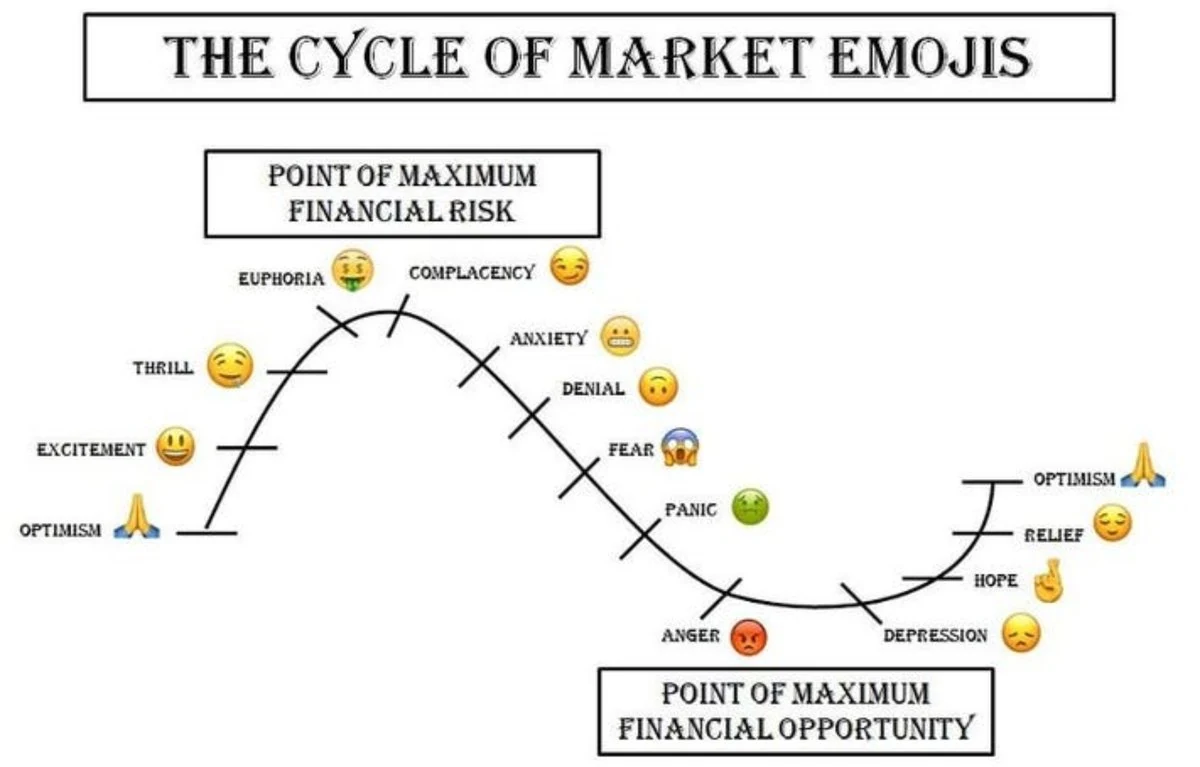
As an individual, the key takeaway is: Don’t let short-term excitement cloud your long-term judgment. The best time to prepare for a crash is while everything is still going up. That’s when you have the chance to lock in gains and reinforce good habits, before the storm hits. It’s also when you must remind yourself that risk is highest when euphoria is highest. Economist Hyman Minsky famously observed that stability breeds complacency and risk-taking, which eventually breeds instability – a pattern highly relevant to crypto. In practical terms, when your portfolio has doubled and everyone around you is giddy about easy money, that’s when you should carefully reassess your risk exposure.
What It Means for You: Staying Safe During Crypto Hype Cycles
Seeing crypto prices skyrocket can be thrilling – your investments might be growing, and opportunities seem endless. But as we’ve detailed, those are precisely the moments to exercise caution and prudence. So, what should you do when faced with a surging market and widespread hype? Here are some key strategies and principles to remember:
- Keep Emotions in Check: Self-awareness is your first line of defense. A bull run will test your discipline; you’ll feel the pull of greed and FOMO. Remind yourself that panic-buying high and panic-selling low is a losing game. If you notice you’re making decisions out of excitement or fear (e.g. rushing to buy because a coin’s price is spiking today), pause and take a breath. Seasoned traders often say that your own psychology is the biggest risk – “The investor’s biggest problem… is likely to be himself,” as Benjamin Graham put it. Consider setting rules for yourself (like a 24-hour rule: wait a day before acting on any hot tip or impulse trade). By creating a buffer between emotion and action, you can avoid costly mistakes.
- Do Your Homework (DYOR – Do Your Own Research): In a bull market, countless new coins and projects will vie for your attention, each claiming to be the next big thing. Don’t take any claim at face value. Dig into the fundamentals: What does the project do? Who is behind it (and are they reputable)? Is there a real user base or revenue, or is it all promises? Read whitepapers, check community discussions, and verify if independent analysts have reviewed it. Be especially wary of projects that are heavy on hype but light on substance. For instance, if a token’s main selling point is celebrity endorsements or meme appeal, and you can’t determine its actual utility, think twice. As one guide put it, *“investors should concentrate on carrying out in-depth research – analyzing market data, understanding project fundamentals – rather than making rash decisions based on market trends”*. Grounding your investments in facts rather than feelings will serve you well when the frenzy dies down.
- Skepticism Towards Influencers and Tips: By all means, consume information from various sources – Twitter threads, YouTube analyses, Discord chats – but maintain a skeptical filter. Ask yourself: Why should I trust this source? During bull runs, even well-known figures can lead followers astray (sometimes unintentionally, other times deliberately). Never assume an influencer or friend’s advice is foolproof. If a famous person or crypto “guru” is pushing a coin, recall that **we’ve seen high-profile promotions end disastrously (e.g., buyers of that celebrity-endorsed token losing 95%)**. And consider: if it’s such a great opportunity, why are they sharing it with the world for free? Often, the answer is that they benefit when you buy – maybe they bought earlier and need new buyers to drive the price up so they can exit. So, treat tips as ideas to investigate, not as givens. And never trust anyone who guarantees profits or insists an investment “can’t fail” – that’s a huge red flag. Legitimate investors acknowledge uncertainty; scammers hype certainty.
- Stick to a Strategy and Risk Management: Before things get wild, it’s wise to have a plan. Decide how much money you’re willing to invest (and potentially lose) in crypto before the bull market excitement tempts you to overextend. Never invest more than you can afford to lose, no matter how sure a bet seems. It’s also smart to set profit-taking and stop-loss levels for yourself. For example, you might plan to take some money off the table if your investment doubles (to at least secure your initial capital), or set a rule that you’ll cut losses if an asset falls 20% from its peak. During a bull run, people often ignore risk management because everything looks like a winner – that’s dangerous. If you’re up significantly on a coin, consider taking some profits; you don’t have to sell everything, but realizing gains while they’re there is never a bad thing. Markets can turn quickly, and paper profits can vanish. By having predetermined rules (and perhaps using tools like limit orders or stop orders), you reduce the chance that emotion will paralyze you when action is needed. As one experienced trader advises: *“Don’t risk everything; stick to your plan and don’t buy just because prices are rising”*. A disciplined approach beats a FOMO-fueled, seat-of-the-pants approach every time.
- Diversify and Don’t Chase Every Hype: In a bull run, new trends pop up (DeFi one month, NFTs the next, then metaverse coins, and so on). It’s easy to feel you must jump into each hot sector or you’ll miss out. But chasing every new shiny object is a fast way to burn through your capital. You don’t need to invest in everything to succeed. It can be better to hold a diversified but sensible portfolio – for instance, some allocation to established coins (Bitcoin, Ethereum, etc.), and a measured exposure to higher-risk altcoins that you’ve researched and believe in. This way, you benefit from the overall market’s rise without betting the farm on a single dubious token. And if you do dabble in speculative altcoins or meme coins, keep those positions small relative to your total funds. Many folks during the Dogecoin/SHIB craze in 2021 regretted putting, say, 50% of their money into one meme coin which then crashed. Treat highly speculative bets as just that – speculation, not long-term investments. And don’t let greed drive you into concentrating your whole portfolio in the flavor-of-the-month coin that promises a 1000% return. Sure, someone will hit the lottery; but many others will lose.
- Watch for Red Flags and Know When to Exit: Pay attention to signals that the party might be ending. We discussed some earlier: extreme public euphoria (e.g., when your non-investor friends are all talking about crypto), unprecedented price surges without new fundamentals, or valuation metrics going off the charts. Also watch out for technical signs – if a coin’s price action becomes erratic or blow-off parabolic, or if market leaders like Bitcoin start losing momentum while tiny coins are spiking (often a sign of speculative froth). Historically, when media hype is at its peak and people say “this time is different,” it’s time to be cautious. Likewise, if regulators start voicing alarm or governments hint at crackdowns, those can prick the enthusiasm bubble quickly. It takes courage to sell or take profits while things are still rising (you won’t time the exact top, and that’s okay). But remember: nobody regrets taking a profit; many regret not doing so and watching gains evaporate. Have the humility to admit that you won’t get out at the perfect moment, but you’d rather be a bit early than too late.
- Protect Yourself from Scams: Finally, on a very practical note, sharpen your fraud radar. Scammers thrive on bull market FOMO, so be extra vigilant. Double-check URLs and identities (phishing attacks and fake profiles run rampant – e.g., if someone DMs you an “investment opportunity,” it’s almost surely a scam). Never give out your private keys or seed phrases – no legitimate investment requires those. Be skeptical of any scheme that requires you to send crypto upfront for a promised larger payout (common in giveaway scams – nobody legit will ever ask you to do this). If you’re exploring DeFi protocols or new tokens, maybe allocate only a small test amount first and see if you can withdraw funds; scammers often make it easy to deposit money but impossible to get it back. Use resources like Token Sniffer or community forums to see if a new token has known red flags (for instance, many new tokens were flagged in 2022 as having code that prevented selling – a huge red flag). And keep your software (wallets, devices) secure to avoid hacks. In short, keep your skepticism dial at maximum when everything seems golden, because that’s when many lower their guard.
My Conclusion
A roaring crypto bull market can feel like a tidal wave lifting all boats – an exciting, intoxicating time where fortunes are made. But as we’ve explored, it’s also when the seeds of the next crash are sown. Understanding this paradox is vital: the periods of rising prices demand more caution, not less. For individual investors, this means tempering your excitement with diligence and risk awareness. It means remembering that markets are cyclical and that greed and fear can distort your judgment if you’re not careful. By recognizing the psychological traps (like FOMO and herd mentality), spotting the warning signs of excess, and following sound risk management, you can enjoy the upside of crypto innovation without being blindsided by its notorious downsides.
In practical terms: stay curious but skeptical, ambitious but grounded. Educate yourself continuously – the crypto landscape evolves fast, and yesterday’s hot trend can be today’s cautionary tale. Build a network or follow credible analysts who focus on data over hype. And perhaps most importantly, keep a long-term perspective. Crypto will likely have many cycles in the future; you don’t have to catch every wave to do well. Sometimes sitting out the frenzy – or taking profits and waiting for sanity to return – is the smartest move. As one saying goes, “The trick is not to be the first one in or the last one out.” If you can navigate bull markets with your eyes open and your brain engaged (not turned off by hype), you’ll be far better positioned to reap the rewards of the crypto revolution and protect yourself from its pitfalls. In the end, the goal is not just to make money, but to keep it – and that requires being especially careful when crypto prices are soaring. Happy investing, and stay safe out there!
Used Sources:
- Quinlivan, B. (2026). Retail sentiment and caution in crypto markets. Santiment analysis – via Spectrum Search.
- Fortune (Nov 2022). How a crypto influencer’s followers got left holding the bag. Example of undisclosed promotions and pump-and-dump schemes.
- Reuters (May 2021). Dogecoin tumbles after Elon Musk’s SNL appearance. Demonstrates volatility from hype and the Musk effect.
- Reuters (May 2021). Buyers beware as "altcoin" frenzy bruises bitcoin. Reports on retail-driven altcoin mania, social media influence, and meme coin surges and crashes.
- Chainalysis via Money.com (Feb 2023). Crypto pump-and-dump schemes netted $30M. Study finding ~9,902 tokens (2022) likely pump-dumps, $4.6B spent by victims.
- Sumsub (2025). Crypto scams to beware (2025–26). Notes explosion in rug-pull losses (~$6B in early 2025) and memecoin scam tactics.
- Yellow.com (2025). FOMO explained – Survival guide. Insights on psychological effects of FOMO and impact on investment decisions.
- Herding Behavior in Crypto Markets (2024 study). Academic perspective on how FOMO and herd behavior inflate bubbles and heighten volatility.
- Wikipedia. Cryptocurrency bubble. Historical record of 2017 boom and 2018 crash (80% market collapse), illustrating boom-bust extremes.
This article was produced by the $MASTR research team and translated into English with AI assistance.
If you want to become a better trader, you need knowledge and security.
The more informed you are, the fewer mistakes you make.
This is not financial advice.
It is part of our effort to educate those who want to learn and to help people avoid falling into traps set by large players and scammers.
If you made it this far, thank you for reading.
Take a look at what we are building and support the work if you choose to.

Fontes e publicações originais
- Original no X
- X article · Rising crypto prices are when retail loses the most money. Deep dive backed by data market research!