
Recherchemethoden
Reserve assets and liabilities: the missing half of a solvency claim
Showing controlled assets cannot establish which customers and creditors have competing claims on them.
Rechercheartikel und Referenzeinträge erscheinen auf Englisch. Die Navigation ist in sieben Sprachen verfügbar.
Personen & Projekte
Start with both sides
A provider can demonstrate control of an address at a stated time. That is useful evidence about an asset. It does not, by itself, disclose customer balances, borrowed money, pledged collateral, related-party obligations or other claims against that asset.
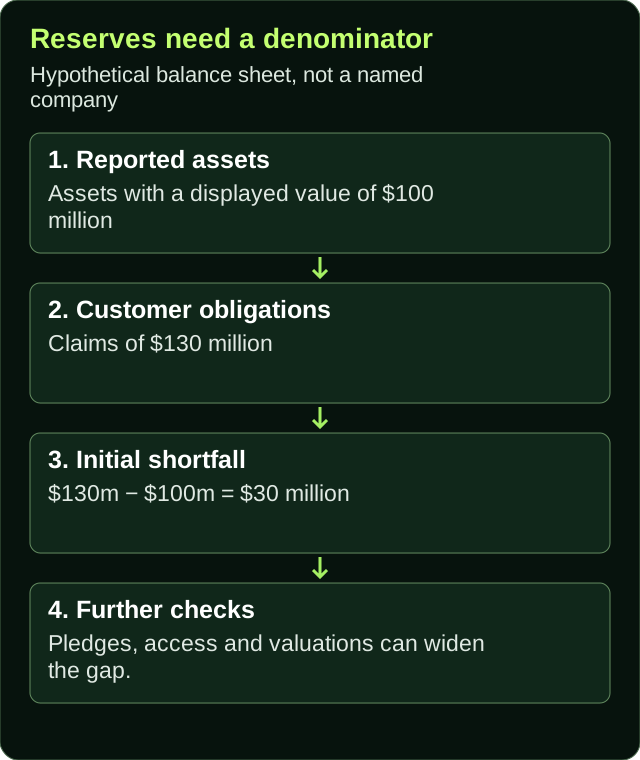
Suppose a platform shows $100 million in tokens but owes $130 million to customers and lenders. The asset demonstration can be correct while the platform remains underfunded. If some of the tokens are borrowed for the snapshot or pledged elsewhere, even the apparent availability needs further explanation. This is an illustrative balance sheet, not an allegation about a named provider.
Completeness is the hard question
A customer may be able to verify inclusion of their balance in a published commitment. That does not prove that every other obligation was included or that negative and related-party accounts were handled appropriately. The scope and methodology of an assurance report matter.
FTX's record demonstrates why related-party exceptions are material. Historical reserve representations demonstrate why the date and precise wording of a backing claim matter. A useful assessment reconciles assets, liabilities, ownership restrictions and valuation instead of replacing a balance sheet with a screenshot of wallets.