

MASTR · CRYPTO & WEB3
The credit layer: why visible reserves are not a complete balance sheet
Exchange collapses and lending failures are easier to understand when assets, liabilities, control and withdrawal rights are kept separate.
Kapiteltexte und technische Grafiken sind auf Englisch. Die Navigation ist in sieben Sprachen verfügbar.
What does a reserve snapshot leave out?
A balance on an exchange is a relationship
A custodial service can show a user a balance while controlling the underlying keys. The user’s practical ability to withdraw depends on the service’s assets, liabilities, operations and applicable arrangements. A trading interface can make that relationship feel like a wallet, but a number in an internal database is not itself an unspent output or an independently controlled token account.
Credit changes the asset’s role
When a custodian lends, pledges or transfers assets, the same asset can become part of several contractual relationships. The user sees a deposit; the lender sees a receivable; another party may hold collateral. Rehypothecation and related-party lending can make the system difficult to understand from public wallet balances alone. The core question is who can demand which asset, when, and with what priority.
FTX made the distinction concrete
The US Justice Department’s March 2024 sentencing announcement describes Bankman-Fried’s misuse of FTX customer funds and other fraudulent schemes. That historical finding should be distinguished from every later question about bankruptcy distributions or asset prices. Recoveries depend on claims and estate processes; a later increase in asset values does not rewrite the original use of customer money. The source date and the nature of the finding belong beside the claim.
A proof can answer only its defined question
A signed message can demonstrate control of a key at a point in time. A Merkle-based inclusion check can help a customer inspect whether a reported liability set includes their balance. Neither observation alone shows that the list contains every creditor, that reserves are unencumbered, or that liabilities have been measured correctly. Even a useful attestation needs scope, date, procedures and exceptions. “Proof of reserves” is a label covering different kinds of evidence.
Build a map rather than a confidence score
List customer claims, borrowing, collateral pledges, related parties and assets available for withdrawal. Mark what is independently observed and what is a management assertion. Then consider a withdrawal surge: which assets can be delivered immediately, which need a sale and which may be legally or operationally unavailable? This turns an abstract trust debate into a set of checkable questions without pretending that public data can always answer all of them.
Erklärendes Beispiel
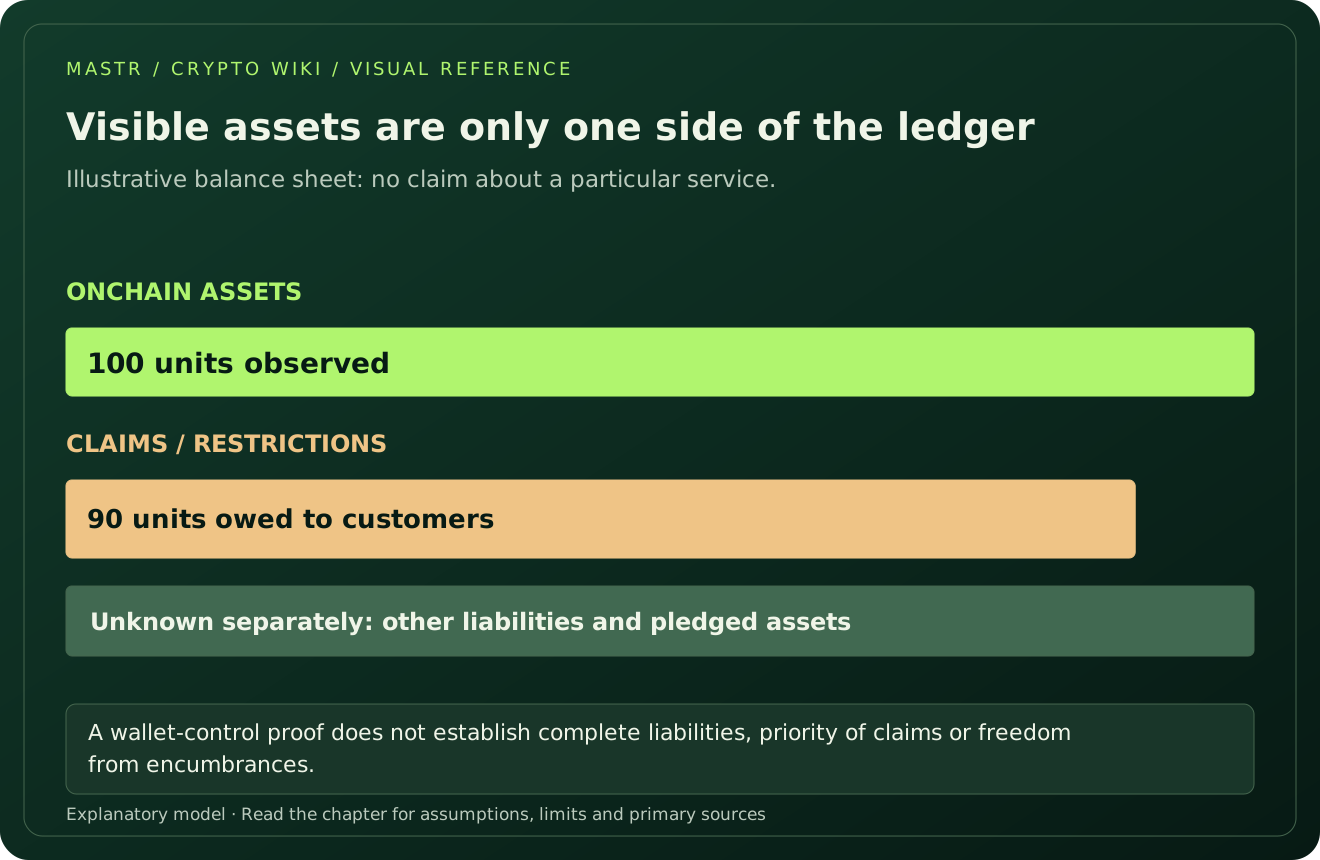
A service controls 100 units onchain and owes customers 90. That appears comfortable until another lender has a secured claim over 40 of the same units. Visible assets of 100 do not mean 100 are freely available to the customers.
Fragen zum Mitnehmen
- Ask what the evidence actually proves.
- Include liabilities and encumbrances.
- Keep recovery outcomes separate from the original conduct.