Influencers y promoción
Recognising manipulation and manufactured trust
A detailed guide to manipulation, social pressure and the use of trust in personal and online encounters.
 MASTR
MASTRPrimera publicación 44 min · 9,669 palabras
Original publication · 18 Jan 2026. Figures, claims and opinions reflect the original publication date.
Las publicaciones originales están en inglés. La navegación está disponible en siete idiomas.

Originally published as “How to Know You’re Being Manipulated: The Science Behind Influence and Control”
Recognizing Manipulation: From Personal Encounters to Online Deception.
Introduction:
Manipulation comes in many guises, from a controlling partner twisting your reality to a viral fake news story nudging your opinion. At its core, manipulation is the use of deceptive or underhanded tactics to influence someone’s beliefs or behavior for the manipulator’s benefit. We encounter it in real life – through gaslighting spouses, guilt-tripping family members, high-pressure salespeople, and in the online world via curated social media feeds, targeted ads, “dark pattern” interfaces, bots, and misinformation campaigns. In our hyper-connected society, knowing how to recognize when you’re being manipulated is more important than ever. This article draws on psychology, neuroscience, behavioral science, and cybersecurity insights to help you spot the signs of manipulation and defend yourself against it.
Modern neuroscience shows that our brains are wired to be influenced in certain ways, we are social creatures who crave belonging and dopamine-fueled rewards, and these can make us vulnerable to manipulation. Psychologists have documented emotional manipulation tactics like gaslighting, love bombing, and fear appeals used by abusers and propagandists alike. Online, tech and cybersecurity experts warn of algorithmic influence (like filter bubbles), malicious UX design (dark patterns), and armies of bots amplifying propaganda. Below, we’ll delve into how manipulation works on our brains, the common tactics manipulators employ, how to spot the red flags (from that nagging gut feeling to full-blown cognitive dissonance), and practical strategies – both mental and digital – to stay in control of your own reality. By understanding the science and strategies of influence, you can build immunity to being controlled by others.
The Neuroscience of Influence and Susceptibility
Why are we susceptible to manipulation in the first place? Part of the answer lies in how our brains are wired. Humans evolved as social animals – acceptance by the group was key to survival – so our brains developed mechanisms to reduce conflict and conform to others. For example, when you sense that your opinion or behavior clashes with your social group’s, it triggers a neural “error signal” and feelings of discomfort. Brain imaging studies show that the dorsal anterior cingulate cortex (dACC), a region involved in conflict monitoring, and the anterior insula, which registers aversive emotions, activate when we feel “out of sync” with our group. This distress at being an outsider motivates us to realign with the group’s stance, often subconsciously. In fact, in one experiment, temporarily disrupting the dACC using magnetic brain stimulation actually reduced people’s tendency to conform to group opinion. In short, our brains are tuned to avoid social rejection – a vulnerability a manipulator can exploit by making us feel isolated or “wrong” unless we agree with them.
Our brain’s reward circuitry also plays a role. Social validation – getting a nod of approval, a “like” online, or affection from someone – triggers the release of dopamine, the neurotransmitter of pleasure and learning. Dopamine reinforces behaviors; it’s the same chemical that makes gambling or sugary foods so habit-forming. Social media platforms and online content are notorious for exploiting this: each notification or favorable comment can give a quick dopamine hit, encouraging us to seek more. Over time, we can become addicted to these rewards and the platforms that deliver them, making us less critical of the content we consume. As Stanford psychiatrist Anna Lembke observes, “these apps can cause the release of large amounts of dopamine into our brains’ reward pathway all at once, just like heroin or meth,” hooking users into compulsive engagement. A person hooked in this dopamine loop is more susceptible to the messages and suggestions coming through that channel – fertile ground for advertisers, propagandists, or scammers.
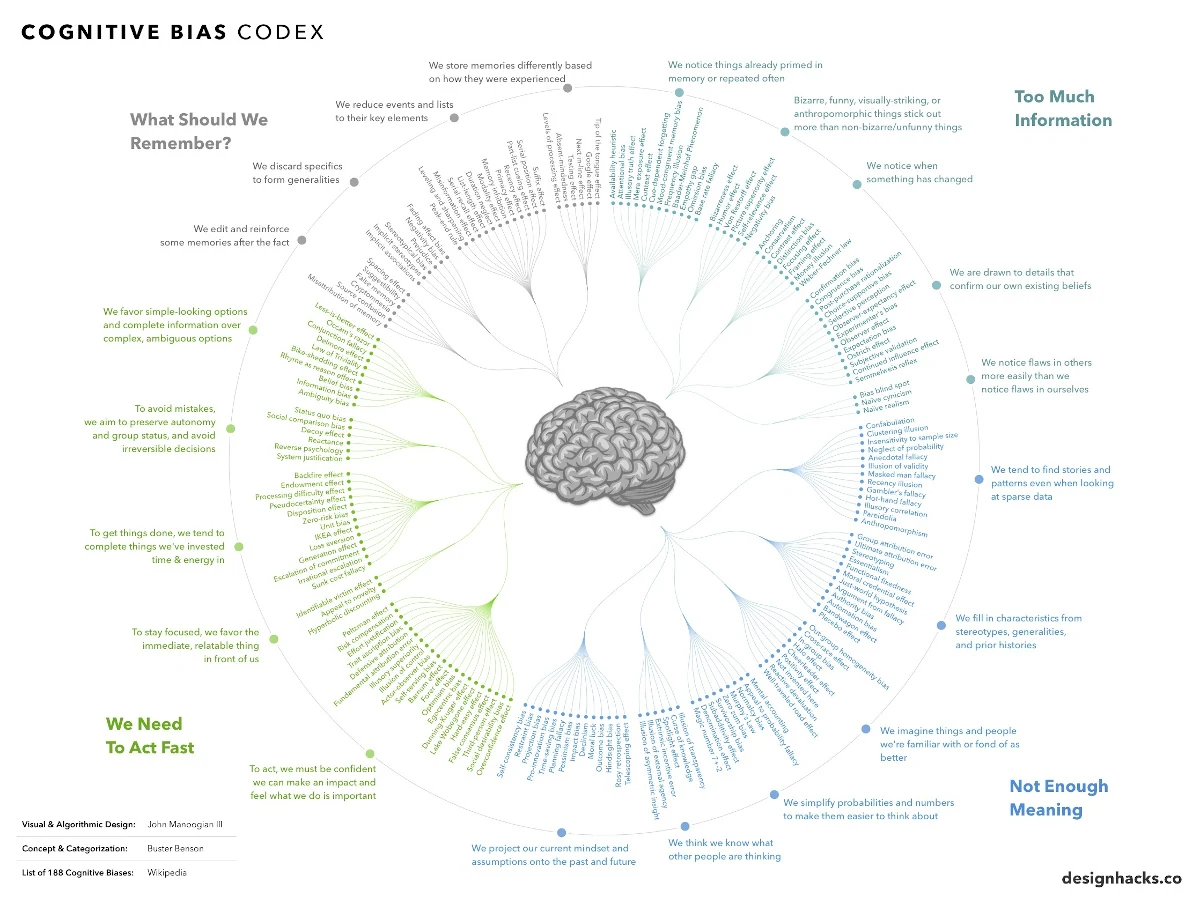
Another factor is our built-in cognitive biases and shortcuts. The human brain, amazing as it is, uses heuristics – mental shortcuts – to make decisions efficiently. While useful, these shortcuts can be blind spots that manipulators target. For instance, confirmation bias makes us favor information that aligns with our existing beliefs and dismiss contradictory evidence. This bias has roots in our neurochemistry: research has found that individual susceptibility to confirmation bias correlates with certain dopamine-related genes. In other words, some people’s brains are genetically predisposed to reinforce their prior beliefs (via dopamine-mediated learning) even in the face of counter-evidence. A manipulator (or a tailored algorithm) who tells you exactly what you want to hear is leveraging this bias. Other biases include authority bias (we tend to trust authority figures or experts), scarcity bias (we value things more when they seem scarce or urgent), and liking bias (we agree with people we like). These biases can be weaponized in scenarios from sales pitches (“Only 2 left in stock – act now!”) to political misinformation (“Many doctors say this miracle cure works!”).
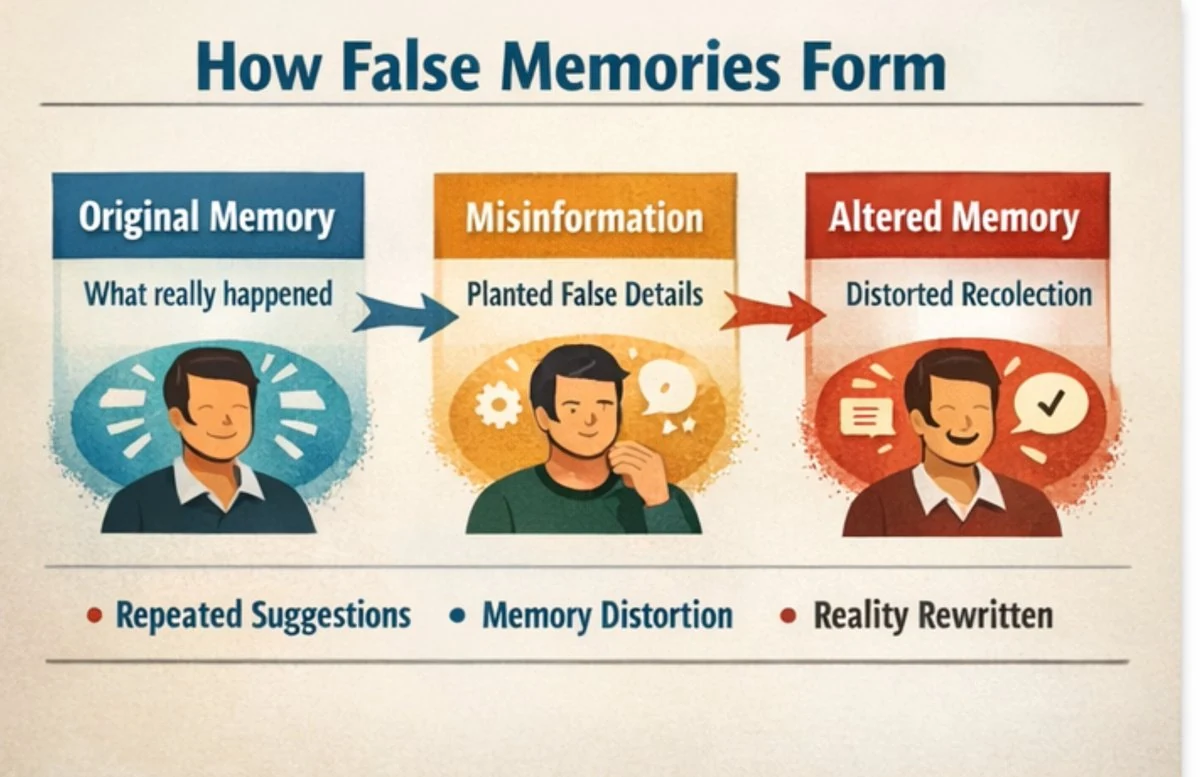
Memory is yet another weak point. We often think of memory as a recording device, but in truth it’s highly reconstructive and malleable. Each time we recall a memory, our brains reassemble the details, and in that process the memory can subtly change. Psychologists like Elizabeth Loftus have famously demonstrated how misinformation can alter people’s memories of events. In fact, misleading information can even overwrite the original memory of an event in some cases. For example, if someone insistently tells you that a past incident happened differently than you remember, you might eventually doubt yourself and adopt their version. Gaslighters exploit this by repeatedly denying or altering past happenings (“That never occurred; you’re imagining it”) until the victim’s memory adapts to the false narrative. Our susceptibility to false memories is heightened by stress and repetition of the misleading details. Neuroscience confirms that the same brain regions that encode real memories can be activated when we visualize or imagine suggested false events, making the false memory feel just as vivid. Thus, a savvy manipulator can quite literally “rewrite” someone’s remembered reality over time.
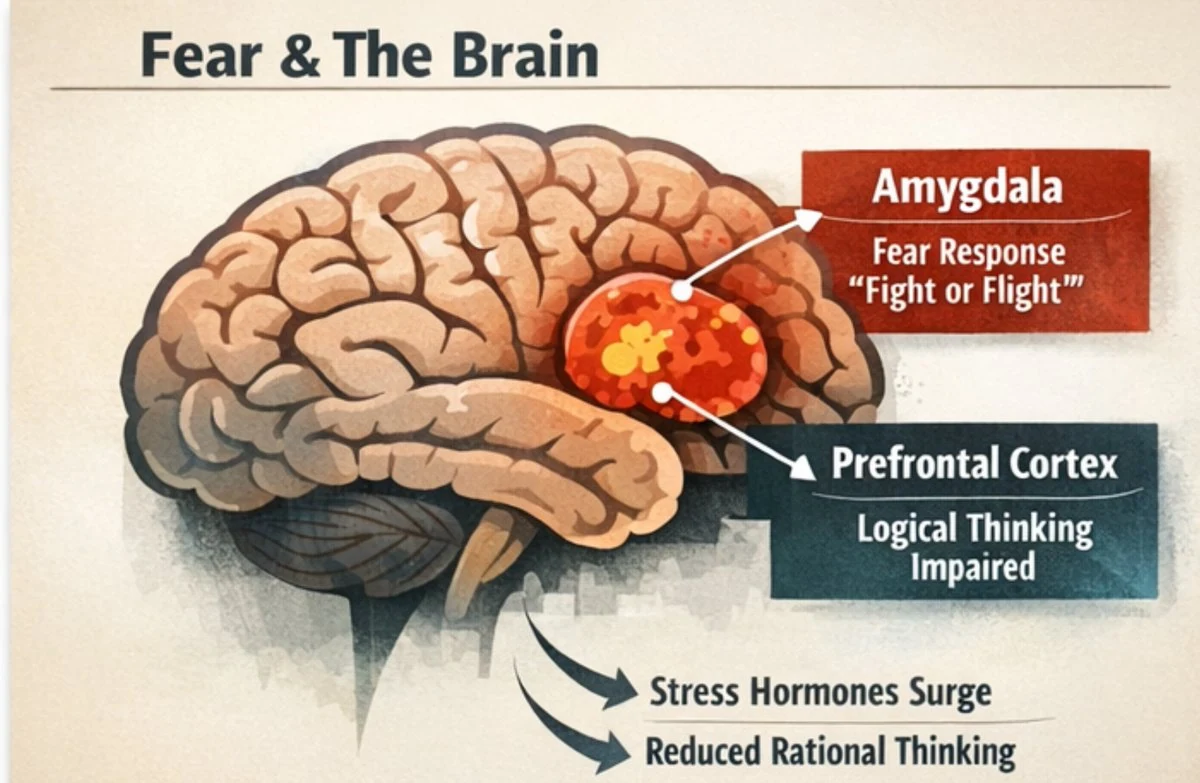
Finally, consider the role of fear and emotional arousal in hijacking our thinking. Strong emotions, especially fear, engage the amygdala – the brain’s threat detector – which initiates a fight-or-flight response. When the amygdala is in charge, our prefrontal cortex (the rational, analytic part of the brain) is partly sidelined in what psychologists call an “amygdala hijack.” In an amygdala hijack, the flood of stress hormones like adrenaline and cortisol prepares you to react (run, fight, etc.) but impairs your ability to think logically and calmly. Manipulators who use fear-based persuasion understand this well. Politicians or media figures pushing fear (“Crime is coming for you,” “They will take away your livelihood,” etc.) aim to short-circuit your critical thinking and provoke an emotional, compliant reaction. Fear appeals can be effective at swaying attitudes and behaviors – studies find that strong fear messages, especially when coupled with a clear solution (“Do X to avoid this danger”), tend to be more persuasive than mild messages. The amygdala-driven state makes us grab onto whatever promise of safety or certainty is offered, rather than scrutinizing it rationally. In extreme cases, high fear or stress over time can condition someone into a state of learned helplessness or trauma-bonding with an abuser, where they become so emotionally exhausted that they stop questioning and simply acquiesce.
In summary, our neurobiology gives manipulators a toolkit: our social conformity instinct, our dopamine-fueled cravings, cognitive biases, memory weaknesses, and emotional overrides. But knowledge is power – by understanding these mechanisms, we can become more mindful of when they’re being used against us.
Psychological Tactics of Manipulators (Gaslighting, Love Bombing, Guilt, Fear)
Emotional manipulators, whether an abusive partner, a cult leader, or a con artist, often rely on similar playbooks of psychological tactics. Here we break down some of the most common manipulation strategies used in personal interactions, and how they distort your perception:
- Gaslighting (Reality Distortion) – “That never happened – you must be crazy.” Gaslighting is a systematic technique of making you doubt your own reality, memory, or sanity. The term comes from the classic 1944 film Gaslight where a husband secretly dims the gas lamps and denies it, driving his wife to think she’s imagining things. Gaslighters will deny events that you clearly remember, invent alternate versions of incidents, or insist “you’re overreacting” to invalidate your feelings. They might hide your belongings then accuse you of losing them, or pretend to forget promises they made. Over time, this constant contradiction erodes your confidence in your own mind. Gaslighters also often isolate the victim (“Nobody else would put up with you; I’m the only one who cares about you”) and may enlist others to question your credibility. The goal is total dominance: if you accept the gaslighter’s version of reality, you become dependent on them for “truth.” Psychological research shows gaslighting can be devastating – victims experience extreme self-doubt, anxiety, depression, and even cognitive issues from the constant mental conflict. It creates cognitive dissonance, where your own honest perception clashes with what the manipulator insists is true. That dissonance is painful, and many victims resolve it by ultimately adopting the abuser’s narrative as reality. (Red flag: If you often think “Maybe I am too sensitive/forgetful/etc.” around a certain person, or you find yourself compulsively recording events/keeping emails as “proof” because you fear you’ll be told your memory is wrong, you may be getting gaslit.)
- Love Bombing (Idealization Stage) – Not all manipulation starts negative; some begins with overwhelming positive attention. Love bombing is a tactic where an individual showers you with excessive affection, flattery, gifts, and praise early on, to create a sense of instant intimacy and loyalty. It’s commonly used by narcissists, toxic partners, and cult recruiters. Early warning signs include: over-the-top compliments and “soulmate” proclamations within days or weeks, constant texting or calling, rapid pushes for commitment (“I’ve never felt this way, let’s move in together!”), and attempts to isolate you from others under the guise of special devotion. For example, a new partner might insist on spending all your time together and frame your friends or family as not understanding how special your bond is (subtly sowing distrust of anyone but them). This idealization phase feels thrilling – your brain gets flooded with dopamine and oxytocin from all the affection, which creates an addictive high. Manipulators use that high to gain leverage: once you’re hooked on their approval, they can later withdraw it to control you. Psychologically, love bombing works by exploiting your vulnerabilities: e.g. if you crave validation, they’ll praise you nonstop; if you’re lonely, they’ll be your 24/7 companion. It also relies on the principle of intermittent reinforcement – an inconsistency that keeps you coming back (much like a gambler at a slot machine hopes the next pull will bring the reward). After a love-bombing phase, manipulators often shift into devaluation – suddenly becoming cold, critical, or distant – which leaves you desperately trying to “get back” the loving person you thought they were. (Red flag: If someone you’ve just met or a new group you join seems “too good to be true” – overzealous flattery, rushing intimacy, trying to isolate you – be cautious. Healthy relationships grow gradually, not in an instant supernova.)
- Guilt-Tripping and Emotional Blackmail – “After all I’ve done for you, you’re really going to do this to me?” Guilt-tripping involves manipulating someone by inducing guilt and shame so that they yield to your demands. The guilt-tripper leverages your conscientiousness and empathy as a weapon. Common forms include reminding you of favors (“I sacrificed so much for you”), playing victim (“I guess I’ll just suffer alone if you won’t help me”), or comparing your actions to an ideal “good” person’s actions (“A good daughter would do this for her mother”). By making you feel like a bad person for saying “no” or asserting yourself, the manipulator presses your guilt button until you give in. Importantly, guilt-tripping is intentional emotional manipulation to change your behavior – it’s not just someone expressing hurt. Another variant is emotional blackmail, where the manipulator uses your emotional attachments against you, often with implicit or explicit threats: “If you leave me, I don’t know what I’ll do (maybe I’ll hurt myself)” or “If you don’t comply, I’ll make you regret it.” This creates fear, obligation, and guilt – psychotherapist Susan Forward famously called it the “FOG” of emotional blackmail. Signs you’re being guilt-tripped include feeling like you can never do enough, feeling responsible for the other person’s unhappiness, or being called selfish whenever you prioritize your own needs. Over time, you might comply with unreasonable requests just to avoid the guilt or the silent treatment that follows. (Red flag: You notice a pattern where you constantly feel in debt to someone, or you alter your plans out of fear that saying no or setting a boundary will make you “bad” or cause a blow-up. In healthy relationships, people can handle hearing “no” and don’t make your worth conditional on always pleasing them.)
- Fear-Based Persuasion and Intimidation – “If you don’t do X, terrible Y will happen.” Fear is one of the most powerful motivators – manipulators ranging from playground bullies to authoritarian regimes know this. By instilling fear, panic, or a sense of threat, they aim to disable your reasoning and push you into compliance or belief (recall the earlier discussion of the amygdala hijack). Fear-based persuasion can be direct, like threats and intimidation: “If you tell anyone, you’ll regret it” or “Agree with me or you’ll be sorry.” This creates a state of anxiety where the safest path seems to be doing what the manipulator wants. It can also be more subtle: politicians, advertisers, or media figures use fear appeals by painting a scary scenario (“Your health is at risk”, “Criminals are everywhere”) and then offering their product, policy, or guidance as the protective solution. Research shows fear appeals can be highly effective at changing attitudes or behavior – one meta-analysis found that strong fear messages, especially when paired with ways to mitigate the threat, significantly increased persuasion outcomes. However, fear tactics often have ethical costs and can backfire if people feel overly threatened or see it as manipulation. In interpersonal manipulation, another form of fear control is gaslighting with intimidation: an abuser might angrily insist that any challenge to their narrative will cause chaos, making the victim afraid to question them. Bullying and threats to abandon (“I’ll leave you if you don’t obey”) also fall here. (Red flag: You find yourself making choices because you’re afraid of what someone will do if you don’t – even if they haven’t overtly threatened you, maybe their past blow-ups or implied consequences loom in your mind. Consistent fear or anxiety in a relationship or information source is a sign of unhealthy influence.)
- Blame-Shifting and Diversion – Manipulators are adept at flipping the script. When confronted or questioned, they will shift blame onto you or external factors. For example, if you point out something they did wrong, they might retaliate with “I wouldn’t have done that if you hadn’t made me so angry” (making you the guilty party) or “Everyone was doing it, why single me out?” Blame-shifting goes hand-in-hand with gaslighting and guilt-tripping: it keeps the victim on the defensive. Another diversion tactic is to introduce irrelevant information or confusion when caught. Think of a politician answering a tough question by rambling off-topic, leaving the interviewer (and audience) too muddled to press further. In personal arguments, a manipulator might respond to an accusation by bringing up something unrelated you did last month – anything to avoid accountability and put you on the back foot. The effect of these tactics is you often end up apologizing to them when in fact they were at fault, or you simply drop the issue because it’s become too convoluted to untangle. (Red flag: You approach someone to discuss something hurtful they did, but you walk away feeling like you are the one who needs to apologize. Consistently being made the “bad guy” when you try to address their behavior is a sure sign of manipulation.)
Of course, manipulators can use many other techniques (e.g. silent treatment, triangulation with a third party, overloading with information, flattery followed by criticism). But the tactics above are some of the major recurring themes in emotional abuse and coercive persuasion. They frequently appear in cycles – for instance, the classic narcissistic abuse cycle: idealize (love bomb) → devalue (criticize, gaslight) → discard → then sometimes hoover (suck the victim back in with apologies or more love bombing), and round it goes. Recognizing these patterns in real time can help you step out of the cycle before it spins again.
Online Manipulation: Social Media, Misinformation, and Dark Patterns
Link: Dark Patterns in Interface Design (HCI research)
In the digital realm, manipulation has scaled up to an unprecedented degree. Our attention and behavior are influenced not just by individual bad actors, but by algorithms and coordinated campaigns that operate on a massive scale. Here are some of the key strategies of online manipulation and how they affect unwary users:
- Echo Chambers and Filter Bubbles: One way the internet manipulates is by surrounding us with voices that echo our own, reinforcing our beliefs and shutting out dissenting views. Social media algorithms (like those on Facebook, YouTube, TikTok) are designed to maximize engagement, which often means showing you more of what you already like or agree with. Over time, this creates a filter bubble – a personalized information sphere where you largely see content aligning with your opinions or preferences. The danger is an echo chamber effect, where a group of like-minded people keep amplifying the same ideas with no reality-check from outside. Studies confirm that spending time in partisan echo chambers does increase polarization: in one experiment, people who discussed politics only with same-party peers became significantly more extreme in their positions and more hostile toward the other side, compared to those in mixed groups. Echo chambers make it easy to conform (everyone you see agrees) and hard to even conceive of alternate perspectives. This can be exploited by manipulators who inject false or extreme content into those homogeneous communities, knowing it will likely go unchallenged and spread rapidly. For example, fringe conspiracy theories can gain huge traction in closed online groups where members reinforce one another’s suspicions. The result is a skewed sense of reality: if you only ever hear one narrative, it starts to feel like the truth. (What to watch for: If an online space or feed is giving you an all one-sided view – whether it’s all hyper-partisan news, or all content validating a certain lifestyle or ideology – consider actively seeking out other sources. Even though we enjoy agreement, it’s mentally healthy to hear the other side or fact-check sensational claims. Be wary of any community that demands isolation from outside info or aggressively attacks dissenting voices; it’s a classic sign of an echo chamber.)
- Microtargeting and Personalized Propaganda: Remember how we discussed confirmation bias and hearing what we want to hear? Modern advertisers and political campaigns take full advantage through microtargeting – delivering highly tailored messages to small segments of the population based on detailed personal data. The infamous example is Cambridge Analytica, the firm that harvested Facebook data on millions of users and boasted it could sway voter behavior by targeting people’s psychological vulnerabilities with precision-crafted ads. They would infer traits like neuroticism or extroversion from someone’s online activity, then send them ads most likely to influence them (for instance, a highly neurotic person might see a fear-inducing political ad to trigger anxiety). A UK parliamentary committee investigating these tactics concluded that such “relentless targeting that plays to the fears and prejudices of people” poses a serious threat to democracy. While Cambridge Analytica’s more extravagant claims were likely exaggerated, recent peer-reviewed studies have validated that personality-tailored ads can significantly boost persuasive effect over generic messages. In other words, personalization works – whether it’s a political ad, a product recommendation, or propaganda, you’re more likely to be influenced if the message “speaks to you” (your values, fears, desires). Today, with AI and big data, this can be done at enormous scale. Marketers can predict intimate things – even your mood at a given moment – and deliver content optimized to catch you at a weak point. For example, one report revealed Facebook had the ability to identify teens feeling “insecure” or “worthless” in real time and could (in theory) serve ads exploiting that moment. Political microtargeting in election campaigns means two neighbors might each get completely different messages tailored to their psyche – making it hard to even debate what’s true, since each person is fed a customized narrative. (What to watch for: Be aware of ads or “suggested posts” that feel uncannily spot-on to your emotions or interests – it’s no coincidence, it’s data-driven. Use privacy settings, tracker blockers, or even consider periodic social media “detox” breaks to limit how much data you’re giving away. And approach political ads with extra skepticism: ask, why am I seeing this message? Is it playing on a specific fear or desire of mine? Recognize the emotional button being pushed before you react.)
- Misinformation and Fake News Amplification: The internet has enabled misinformation to spread like wildfire, often with the help of automated bot accounts and organized trolls. A striking statistic from an analysis of Twitter during the 2016 U.S. election found that just 6% of accounts (likely bots) were responsible for 31% of the “low-credibility” (fake news) information being spread. These bots amplify false or misleading stories by sharing them widely and rapidly, creating an illusion of popularity or consensus. If you log on and see a story retweeted thousands of times, you’re more inclined to believe it or at least check it out – manipulators know this, so they program bots to generate that initial buzz. Bots also deploy tactics like auto-replying en masse to tweets (swaying the narrative in the comments), repeating lies until they seem familiar, and astroturfing (making a fringe idea appear like a grassroots movement). Beyond bots, there are troll farms and state-sponsored disinformation campaigns (e.g. Russia’s Internet Research Agency) where real humans coordinate fake personas to infiltrate groups and push propaganda. Their goals might be to polarize societies, smear a target, or simply erode trust in all information. The social media algorithms inadvertently aid this by boosting content that gets high engagement – which misinformation often does, because outrageous or emotionally-charged falsehoods tend to get more clicks than mundane truths. The result is a chaotic info-environment where it’s easy to get manipulated by whichever narrative shouts the loudest or has the most shares. (What to watch for: Develop a reflex of fact-checking shocking or sensational claims before believing or forwarding them. Look at the source – is it a known news outlet, a random blog, a meme? If something evokes a strong emotional reaction (anger, fear, vindication), that’s a sign to slow down and verify; manipulators want you to react impulsively. Also, diversify where you get news – don’t rely solely on social media feeds. Consider following independent fact-checkers or using fact-check sites when you see a doubtful story.)
- Dark Patterns in Technology: Not all online manipulation is in the content we consume; sometimes it’s baked into the very design of websites and apps. Dark patterns are tricks in user interface design that intentionally mislead or coerce users into actions they might not otherwise take. For example, have you ever tried to unsubscribe from a service and found the “Cancel” button hidden in fine print, while the “Keep Subscription” button is bright and huge? That’s a dark pattern. Other examples: sneaky pre-checked boxes that sign you up for newsletters or extras, countdown timers that pressure you with fake urgency, wording that confuses (“Opt-out of not receiving emails” – wait, what?), or guilt-laden prompts like “No, I hate saving money” on a decline button. These interface designs exploit our cognitive biases and momentary lapses in attention. Their goal is to steer your choices – often to spend more money, share more data, or stay on a platform longer than you intended. A classic dark pattern is the “roach motel,” where signing up for a service is super easy (one click) but cancelling is very difficult (multiple steps, maybe even needing to call customer service). Another is “confirmshaming,” where a dialog box frames the opt-out in a shaming way (e.g. a popup that says: “Do you want to get 50% off? – Yes please! / No, I prefer to pay full price”). Studies have shown that these deceptive designs do increase user compliance – one experiment found users were 2–4 times more likely to sign up for unwanted services under the influence of mild versus aggressive dark patterns, compared to a clear interface. In essence, dark patterns manipulate by confusing you or taking advantage of quick, unthinking clicks. (What to watch for: Slow down and read carefully any dialog boxes or forms – especially the fine print. Be skeptical of urgency pop-ups (“Act in 10 seconds!”) – real deals don’t usually disappear in seconds. Use tools: some browser plugins or privacy organizations maintain lists of known dark pattern techniques so you can recognize them. Most importantly, remember you have a choice – if you feel an interface is pushing you, you can always back out and take a moment to decide intentionally rather than being tricked into a knee-jerk click.)
- Social Engineering and Phishing: From a cybersecurity angle, one of the greatest risks is human hacking – tricking people into giving up information or access. Phishing emails and scam messages are everyday examples: you receive a message that appears legitimate (from your bank, a colleague, a government agency) urging you to click a link or provide details urgently. These often use fear or authority to cloud your judgment (“Your account will be closed immediately unless you verify now!” or “This is the IRS, you owe money – pay or face arrest”). The link then takes you to a fake site to capture your password, or downloads malware. Despite how common this tactic is, it remains alarmingly effective – Verizon’s analysis of data breaches found that the human element (often social engineering) was a factor in about 60% of successful breaches, and some reports claim over 90% of cyber-attacks start with social engineering. Attackers manipulate our trust (by spoofing familiar identities), our fear (of consequences, like losing access), or curiosity (a juicy “Check out these attached photos!” bait). Another social engineering angle is phone scams, like someone calling pretending to be tech support and convincing you to reveal a password or install something. We also see social media engineering: quizzes or viral challenges that actually harvest personal info, or impersonation where a scammer pretends to be your friend in distress (“Hey, I’m traveling and lost my wallet, can you wire me $500?”). (What to watch for: Treat unsolicited requests for sensitive info with extreme caution – legitimate institutions rarely ask you to verify passwords or financial info over email/link. Double-check sender addresses (phishing emails often use addresses that look right at first glance but have subtle typos). If in doubt, contact the company or person through a known legitimate channel rather than the one provided in the message. Enable two-factor authentication on important accounts, so even if you slip up and divulge a password, the thief can’t get in. In general, cultivate a healthy paranoia online: it’s not about being scared, but being mindful that not everything is as it seems and taking that extra beat to verify claims.)
In summary, the online world is rife with manipulation machinery – some driven by profit, some by politics, some by outright crime. Unlike face-to-face manipulators, digital ones can be faceless or automated, which can lull us into dropping our guard (you don’t “see” the manipulator, just a screen). But behind the screen there may be a very deliberate influence campaign or a behavioral science-savvy design. Staying safe online means treating our attention and trust as precious resources – because lots of entities are trying to exploit them. In the next sections, we’ll focus on how to recognize when you’re caught in a manipulation web (online or off) and methods to cut those strings.
Warning Signs: How to Tell If You’re Being Manipulated
One of the biggest challenges in manipulation is that it often happens gradually or subtly. However, there are red flags and gut feelings that can tip you off. If you learn to recognize these warning signs in yourself and others, you can catch manipulation before it goes too far. Here are some common signals:
- Persistent Self-Doubt and Confusion: Do you frequently second-guess yourself in a particular relationship or context? Manipulators often engineer confusion. For example, after conversations with them, you might feel like you don’t trust your own memory or judgment. If someone’s narrative of events consistently contradicts yours and leaves you unsure, that’s a sign. Gaslighting in particular will make you feel like you’re “going crazy” or constantly confused about what’s real. You may start keeping records of conversations or replaying incidents in your mind because the person has convinced you your memory can’t be trusted. Feeling mentally foggy or full of self-doubt around someone is a major red flag – our relationships should not routinely undermine our reality testing.
- Walking on Eggshells (Anxiety and Fear of Reprisal): A manipulated person often lives with a background hum of anxiety. You might fear upsetting or disappointing the other person, even over small things, because of how they react. If you catch yourself constantly monitoring your words and actions to avoid a negative response (anger, silent treatment, guilt trip), take note. Healthy relationships allow open communication and the freedom to make mistakes without dire fallout. In contrast, if you’re afraid to set boundaries or say “no”, that indicates the other person has successfully made you fear consequences. Intimidation and emotional volatility from the manipulator cause this “eggshell” feeling – you never know what will set them off, only that somehow it will be your fault when they explode. Similarly online: if a community or influencer makes you scared to disagree (because dissenters get dogpiled or shamed), you are in a manipulative environment.
- Feeling Guilty, Ashamed, or “Always Wrong”: Guilt and shame are favorite tools of manipulators. Reflect on interactions: do you frequently feel like you’re not good enough, or that you’re selfish/too sensitive/a bad friend etc., especially when you try to assert yourself? A sign of manipulation is when normal actions on your part result in disproportionate guilt. For example, you take one evening for yourself and your partner makes you feel like you’ve abandoned them and are an awful person. Or you bring up something that bothered you and end up apologizing for even mentioning it. When someone twists issues such that you are always to blame and they are the aggrieved party, they’re managing your emotions for their gain. In an online sense, some cult-like or extremist groups use shame for control: if you question the group, you’re told you’re stupid or traitorous. If someone routinely makes you feel ashamed for having independent needs, opinions, or boundaries, that’s manipulation.
- Isolation and Dependence: Take stock of your social connections. Have you become more isolated since connecting with this person or group? Manipulators often try to cut off your support network (sometimes subtly: “Those friends of yours don’t really care about you like I do”). If you find you’re spending almost all your time with the person or their group and rarely talking to others without their oversight, be careful. This isolation is deliberate – without outside perspectives, you’re easier to control. You might also notice you’ve become emotionally dependent on the manipulator for validation. For instance, if they are pleased with you, you’re on top of the world; if they’re displeased, you feel despair. Your self-esteem may have become pegged to their approval. Feeling like “I need them, I can’t do anything right without them” is a warning sign – a healthy relationship supports your independence rather than eroding it.
- Cognitive Dissonance and Inner Conflict: Pay attention to that inner voice that says “this isn’t right”. You might experience what psychologists call cognitive dissonance – a mental stress from holding contradictory beliefs or from new information clashing with your worldview. In manipulation, this often manifests as a deep-down sense that something is off, even if you can’t articulate it. For example, you might know you’re a competent person, yet you notice you feel incompetent and confused whenever interacting with Bob (a possible gaslighter at work). Or your cherished values (kindness, honesty) are being compromised because someone convinced you to do things that don’t sit right with your conscience. That tension – between your authentic self and the version molded by the manipulator – produces anxiety, depression, or a sense of “losing yourself.” If you reflect and realize you’ve changed in ways you’re not comfortable with (e.g. becoming more closed-minded or anxious or constantly apologetic), ask why. It could be the influence of manipulation steering you away from your true identity. Listen if your mind or body is signaling distress – chronic stomach knots around a person, frequent tears or anger that seem uncharacteristic, these are symptoms of internal conflict that shouldn’t be ignored.
- Thrall of Emotion (Excessive Highs and Lows): Manipulative relationships often resemble a roller coaster. You might experience extreme emotional highs and lows, which can be a sign you’re being psychologically jerked around. For instance, the love-bombing phase feels ecstatic – you’re flooded with positive emotion – but then you crash into despair when the affection is withdrawn. This volatility is a tactic: it keeps you off-balance and craving the next high (intermittent reinforcement at work). If your involvement with a person or online cause is consuming your emotional landscape, where every day is either amazing or terrible with little calm in between, consider that unnatural pattern. Healthy interactions are more stable and predictable; extreme emotional dependency is often a red flag for manipulation (or at least an unhealthy dynamic).
- Lack of Consent or Respected Boundaries: Lastly, a straightforward sign – your “No” is not accepted. If you have expressed a boundary or refusal and it’s repeatedly ignored or steamrolled, you’re dealing with a manipulator who is testing how far they can push you. In a normal scenario, if you say “I’m not comfortable with this” the other party will at least discuss or respect it. Manipulators instead cajole, badger, or simply do the thing anyway. Similarly, if you notice you’re being pushed into rapid decisions (“decide now or it’s off the table!”) or you’re not given time to think, someone is trying to limit your ability to rationally consent. High-pressure sales tactics are a good example: the salesman manipulates you into signing by saying the deal is one-day-only. Online, think of dark patterns that assume consent unless you fight through a labyrinth to opt out. Respect for your right to make an informed, pressure-free choice is a clear line – when that’s missing, manipulation is afoot.
These signs often come together. For example, say you’re in a manipulative friendship: you feel guilty whenever you’re not available for them (guilt-tripping), you’re afraid they’ll get angry if you hang out with others (isolation and fear), you find yourself confused because they deny things you remember (gaslighting), and you’re emotionally exhausted by the up-and-down drama. Any one of these alone might be explainable, but together they paint a picture of unhealthy control.
It’s important to note: anyone can be susceptible to manipulation, and realizing you’re being manipulated is not a sign of weakness or foolishness. It actually shows strength that you can spot it. Manipulators often target intelligent, empathetic people – because they can appeal to your intellect with rationalizations or to your empathy with sob stories. So don’t fall into self-blame; instead, take action once you notice the red flags.
Defending Yourself: Tools for Resistance and Recovery
Recognizing manipulation is the crucial first step, but how do you break free or protect yourself going forward? Fortunately, psychologists, neuroscientists, and cybersecurity experts have studied ways to inoculate people against manipulation and bolster critical thinking. Here are some practical strategies and tools to defend yourself, both offline and online:
1. Strengthen Critical Thinking and Media Literacy – Train your mind to analyze before accepting. A consistent finding in research is that people who engage in more analytic, reflective thinking are less likely to fall for misinformation or false claims. This doesn’t mean you have to be a skeptic of everything, but try to adopt a habit of healthy skepticism: ask questions, seek evidence, and consider alternative viewpoints. When confronted with a persuasive claim (whether from a person or a piece of content), pause and think: “What is the evidence for this? Who is the source, and might they have an agenda? Does this claim align with multiple credible sources or is it one isolated story?” Especially check your own biases – are you believing something just because it confirms what you want to believe? Techniques like the SIFT method (Stop, Investigate the source, Find better coverage, Trace claims to the original context) can help in evaluating news and online content. Fact-checking is easier than ever: do a quick search to see if a claim has been debunked by reputable fact-checkers. Cultivate a diverse media diet – expose yourself to different viewpoints and reliable news outlets across the spectrum, so you’re less likely to be blindsided by groupthink. On social media, following accounts that specialize in myth-busting or media literacy can continually remind you to think twice. Remember, as the saying goes, “extraordinary claims require extraordinary evidence.” Critical thinking is like a mental immune system – the more you use it, the better you get at catching the “viruses” of lies and manipulation before they infect you.
2. Practice the “Pause” and Emotional Regulation – Manipulators often succeed by rushing you or triggering knee-jerk emotions. One powerful defense is to slow down your response. If you read something online that makes your blood boil and you feel the urge to share it immediately – pause. Take a few deep breaths, maybe step away for 5 minutes. Giving yourself even a short time-out engages your frontal lobes (logical brain) to regain control from the amygdala (emotional brain). The same applies in person: if someone is pressuring you for a decision (“Answer me right now!”) or you notice you’re feeling intense anger or guilt in a discussion, it’s okay to say “I need a moment to think” or “Let’s table this and come back later.” By pausing, you prevent the manipulator from capitalizing on your hot state. Emotional awareness is key – learn to identify when you’re in HALT (Hungry, Angry, Lonely, Tired) or otherwise emotionally charged. Those states make you more pliable. Thus, don’t make big decisions or serious concessions when you’re in a highly emotional state. If you must respond, try techniques like grounding exercises (e.g. breathing, focusing on physical surroundings) to cool down first. Essentially, buy yourself time and calm – many manipulative ploys fall apart under a bit of scrutiny that only a calm mind can give.
3. Set Firm Boundaries (and Stick to Them) – In interpersonal scenarios, assertive boundaries are your armor. Identify what your non-negotiables are (your values, your needs, your limits) and communicate them clearly. For example, “I am not comfortable with you reading my private messages,” or “I cannot lend you money again,” or “I need space to spend time with other friends.” A healthy person will respect such boundaries; a manipulator will push back or try to make you feel guilty for setting them. Expect that pushback, and be prepared to stand firm. It can help to use “I” statements (“I feel disrespected when...”) and broken-record technique (calmly repeating your boundary if they try to divert the conversation). Do not get drawn into lengthy justifications – you have the right to say no without a 10-minute defense. If the person reacts with anger or ridicule, hold the line and observe that reaction; it tells you a lot about their intentions. In extreme cases, you might have to enforce boundaries by reducing contact or cutting off the relationship if the manipulation is severe and persistent. Online, boundary-setting translates to things like curating your feeds (unfollow or mute sources that consistently manipulate or distress you), setting time limits on apps so you’re not endlessly consumed, and not engaging with trolls or abusive comments (you can block or report rather than be drawn into a futile fight).
4. Maintain a Support System and Reality Check with Others – Don’t isolate yourself – that’s what manipulators want. Instead, reach out to trusted friends, family, or mentors and share what you’re experiencing. A second perspective can be invaluable: often others can see manipulation more clearly from the outside. For instance, you might say “She says I’m always at fault for our problems,” and a friend can counter, “That’s not true, I’ve seen how she instigates things.” Emotional support from people who care about you also counteracts the gaslighter’s message that you’re alone or unlovable. If you’re dealing with an online information environment, similarly, step outside the bubble: discuss what you’re reading with real-life friends or in forums that encourage critical debate. You might discover that “everyone knows X” in your Facebook feed, but actually your friends have data that say otherwise. Community and dialogue are antidotes to the siloing effect of manipulation. In addition, consider seeking professional help like a therapist if you’ve been in a long-term manipulative situation – therapists are trained to recognize abuse dynamics and can help you rebuild your confidence, establish boundaries, and process what happened. There is no shame in getting help; manipulation can deeply affect mental health, and support can expedite recovery.
5. Use Digital Hygiene and Security Tools – In the online domain, a bit of digital savvy goes a long way. First, take control of your privacy: tighten your social media privacy settings to limit what data can be mined about you. Be cautious with online quizzes or apps that ask for access to your profiles – they might be data-siphoning tools. Consider using ad blockers or tracker blockers in your browser; these can reduce microtargeted ads by cutting off some of the data tracking that follows you around the web. If you frequently encounter misinformation, follow pages or use plugins that flag known fake news sites. There are browser extensions that can warn you “This website is known for low credibility” – they’re not perfect but can help. For spotting bots on platforms like Twitter, tools such as Botometer (from Indiana University’s OSoMe) can analyze an account’s behavior and give a probability that it’s a bot. For phishing, educate yourself on common signs (poor spelling, odd email domains, generic greetings, urgent demands). Keeping your devices and antivirus software up to date also helps, so if you accidentally click a malicious link, you have some defense. Digital hygiene also means practicing good skeptics’ habits online: if a headline is outrageous, search if reputable outlets have also reported it. Reverse image search pictures that seem fishy (to see if that “shocking photo” is actually from years ago in another context). Enable two-factor authentication on accounts to reduce damage if credentials are phished. Essentially, treat the internet with the same situational awareness you’d use walking through a crowded marketplace – be friendly but a tad guarded, and secure your valuables (in this case, your data and trust).
6. Prebunking and Inoculation – A fascinating frontier in defending against manipulation is the concept of psychological inoculation. Just as a vaccine exposes you to a harmless fragment of a virus so your immune system learns to fight the real thing, prebunking exposes you to weakened forms of misinformation or manipulation tactics so you build mental resistance. Researchers have created games like “Bad News” where you play the role of a fake news creator – by learning how one spreads propaganda, you become more skeptical of it in real life. Studies across thousands of participants and multiple countries found that a short session of such a game significantly improved people’s ability to spot and resist misinformation techniques afterwards. The “mental antibodies” concept is promising: for example, being aware of what a conspiracy theory argument looks like (“they will use a fake expert, cherry-pick anomalies, claim secret knowledge”) can inoculate you so that when you later see a real conspiracy claim, you recognize the formula and are less swayed. To apply this yourself, you can educate yourself about common manipulation tactics (articles like this one are a start!). By knowing the playbook, you essentially vaccinate your mind. Some actionable ways: read fact-checker blogs that debunk hoaxes – they often explain how the hoax was crafted. Learn basic statistics and logical fallacies, so you can spot when someone’s using a flawed argument or misusing data to manipulate. Even role-playing scenarios (mentally or with friends) – “How would I respond if someone tried to guilt-trip me into X?” – can prepare you to resist in the moment. The more you’ve thought about and seen an influence tactic, the less power it holds because it’s no longer sneaky – you can call it out: “Ah, this is a scare tactic,” or “This website is using a dark pattern to trap me.” A well-prepared mind is a resilient mind.
7. Trust Yourself and Rebuild Confidence – Finally, remember that manipulators aim to break your self-trust. Regaining and trusting your own perceptions and feelings is a vital defense. Remind yourself regularly: “I have the right to my own feelings. I have the right to say no. I’m allowed to make mistakes. I know myself better than anyone else does.” Positive self-talk isn’t fluff; it’s reinforcing your autonomy. If you have left a manipulative situation, take time to heal and reconnect with things that affirm your identity – hobbies, supportive friends, personal goals. As you rebuild confidence, you become much harder to manipulate because you’re not looking to others to define your reality or worth. Embrace a bit of skepticism, but don’t slide into cynicism – the goal is a balanced outlook where you neither blindly trust everyone nor assume everyone is out to trick you. Your intuition, combined with knowledge, is a powerful guide. For example, if something inside you says “this person’s behavior is not okay,” trust that and investigate it rather than immediately dismissing your gut feeling (so often, victims later say “I knew something was off, but I ignored my gut.” Don’t ignore it!).
In summary, defending against manipulation is about empowerment through knowledge, support, and assertiveness. You might think of it as building your personal firewall: critically evaluate input (information or emotional input from others), control access (boundaries and privacy), and keep updating your “software” (stay informed about new manipulation tactics and self-reflect on your vulnerabilities). No one is a perfect firewall – manipulation can be very subtle – but every bit of resistance you build means you stay more in charge of your own mind and decisions.
Case Studies: Real-World Manipulation in Action
To ground all this information, let’s look at a couple of brief case studies – one from the interpersonal realm and one from the online/information realm – to see how manipulation plays out and is recognized in practice.
Case 1: Gaslighting in an Abusive Relationship – Aria’s Story. Aria had been in a relationship with Mark for two years. In the beginning, Mark was charming and attentive (a touch of love bombing, in hindsight). But as they moved in together, Mark’s behavior shifted. He would frequently state conversations or events had not happened the way Aria remembered. For instance, Aria recalled Mark angrily breaking a plate during an argument; later Mark insisted she had dropped it and that “her memory was off.” Small household things started disappearing – Aria’s keys, an important letter – and Mark would shrug and say she was getting forgetful. Whenever Aria expressed hurt or tried to discuss an issue, Mark would tell her, *“You’re too sensitive, you always imagine slights”*. Over time, Aria became plagued with self-doubt. She started journaling incidents to have a record, because Mark’s denials made her wonder if she truly was misremembering. Her self-esteem plummeted as Mark also isolated her – he discouraged her from seeing friends (“They don’t really care about you like I do”) and would embarrass her in front of family by joking about her “ditziness.” Aria began experiencing anxiety and would cry without understanding why. She felt like a shell of the confident person she used to be. The turning point came when a friend sent Aria an article on gaslighting. The checklist of tactics – denial of reality, invalidating feelings, blaming the victim’s “imaginations” – matched Mark’s behavior exactly. For the first time in months, Aria realized she wasn’t “crazy” after all – she was being gaslit. She secretly reached out to a counselor, who validated her experiences and helped her plan safe ways to reassert her reality (like having a friend present during one discussion as a witness). Eventually, Aria documented enough and built enough support that she left the relationship. In therapy afterwards, she worked through the cognitive dissonance Mark had instilled in her (he had made her question even simple facts). She rebuilt her confidence by trusting her own memory again and surrounding herself with people who affirmed her. This case illustrates how an intimate partner can wield gaslighting to control someone, but also how recognizing the pattern (through education and an outside perspective) allowed Aria to break free. It underscores that victims often doubt themselves profoundly – so the act of naming the manipulation (“This is gaslighting”) is incredibly powerful in starting to undo it.
Case 2: The 2016 Misinformation Machine – Social Media Manipulation in an Election. The 2016 U.S. presidential election is now infamous for the onslaught of online manipulation that occurred. Two facets stand out: microtargeted political ads and bot-amplified fake news. On the microtargeting side, Cambridge Analytica (mentioned earlier) obtained data on tens of millions of Facebook users without consent and created psychographic profiles. For example, if a user was identified as neurotic and conscientious, they might see an ad that played up fears about security with a message tailored to their personality. One real Facebook ad (revealed later) showed a ominous image of gun crosshairs and a riot, targeted to people identified as anxious about crime, telling them one candidate would bring chaos, while the other would ensure law and order. These ads were not shown to everyone – only the slice of users whose psychological profile indicated they’d be swayed by that particular fear message. Meanwhile, on Twitter and Facebook, an army of bots and troll accounts (some linked to Russian influence operations) were busy spreading disinformation: fake stories like “Pope Endorses Trump” went viral. The Indiana University study we cited found that a small fraction of accounts (a mix of automated bots and coordinated humans) were responsible for a hugely disproportionate share of false news spread. They would strategically push links at times when they could trigger trending algorithms, and use techniques like tagging influential users to get more exposure. The result was that average users logging on would see these false stories trending or being widely shared, giving them an air of legitimacy. Many voters were likely influenced – some perhaps stayed home or changed preferences based on false narratives (though quantifying the exact effect is difficult). This case study is a cautionary tale of how personal data plus manipulation tactics equals a potent force. It led to greater public awareness: after 2016, terms like “fake news,” “bots,” and “echo chamber” became mainstream. Social media companies belatedly put in some measures (like flagging disputed news and purging some bot networks). But the cat was out of the bag: we all saw how easily our information ecosystem can be distorted. The election case makes clear that defending against online manipulation isn’t just an individual task but a societal one – requiring platform accountability, better media literacy education, and perhaps regulation on data and political advertising. It’s an ongoing battle.
These case studies, one personal and one societal, highlight both the micro and macro scales of manipulation. In Aria’s story, a single relationship had profound psychological impacts, and recognizing manipulation was the key to her liberation. In the election scenario, millions were targeted and the consequences affected a whole country’s trajectory. Yet, the common thread is that awareness and critical scrutiny were crucial – whether it was Aria realizing “this is abuse” or journalists and researchers exposing the mechanics of election interference. Each example reinforces the earlier lessons: trust that nagging doubt when things don’t add up, seek validation from reliable others, and shine light on deceptive tactics to break their power.
Conclusion
Manipulation, in its many forms, preys on our humanity – our social nature, our emotions, our cognitive shortcuts. But as we’ve explored, understanding the why and how of manipulation arms us to counter it. Knowledge truly is power in this domain. By learning about the neuroscience of influence, we become more mindful of when our brain’s reward, conformity, or fear circuits are being deliberately provoked. By studying psychological tactics, we can name them (“Ah, this is gaslighting” or “This is a dark pattern tricking me to click”) and thereby neutralize much of their effect. By improving our digital literacy and thinking habits, we make it harder for propagandists and scammers to find a foothold.
Importantly, recognizing manipulation is not about becoming cynical or closed-off. It’s about being an empowered observer of interactions and information – someone who can engage with the world thoughtfully without being easily puppeteered. We can still trust and love others, and we can still consume news and social media, but we do so with our eyes open and our agency intact.
If you suspect you’re being manipulated – whether by a person close to you or by the media you consume – remember that you are not alone and not helpless. There are resources and people ready to help: counselors, support groups, fact-checkers, and simply friends with an outside perspective. Reclaiming your reality when it’s been distorted can be challenging, but it’s deeply liberating. It starts with that first spark of realization and curiosity – “Something isn’t right here” – followed by courage to seek the truth.
In a world where both interpersonal abuse and sophisticated digital misinformation are real threats, developing a keen sense of awareness and critical thinking is like having a mental immune system. You can’t avoid all manipulative encounters, but you can prevent many from infecting you, and recover faster when they do. By applying the insights from psychology, neuroscience, and cybersecurity outlined here, you’ll be better equipped to spot the puppet strings – and cut them for good.
In the end, protecting yourself from manipulation doesn’t mean shutting the world out; it means engaging with it on your own terms, armed with skepticism, knowledge, and self-respect. Stay curious, stay informed, and trust in your ability to discern – because recognizing manipulation is the first step to truly freeing your mind.
References: The information in this article is supported by research and expert insights from multiple fields. Key sources include studies on the neural basis of social influence, psychological research on narcissistic abuse tactics, findings on dopamine’s role in confirmation bias, memory malleability experiments, and meta-analyses of fear appeal effectiveness. Real-world examples such as the role of bots in spreading misinformation and the Cambridge Analytica microtargeting techniques illustrate the concepts in practice. Strategies for defense are informed by evidence on inoculation theory in combating fake news and studies correlating analytic thinking with resistance to false information, among other sources. By integrating these interdisciplinary findings, the goal is to provide a well-rounded, factual basis for understanding and resisting manipulation in all facets of life.
Thank you for reading.
If this article helped you understand manipulation and how to protect yourself, please like, share, and follow.
Your support helps this work reach more people.
If you want to see how our project fights deception and protects users in the real world, follow what we are building.
https://linktr.ee/askmastr.xyz

Sources:
Core Neuroscience & Psychology
Stanford Medicine – Dopamine, addiction, social media reward loops
https://med.stanford.edu/news/all-news/2021/11/brain-dopamine-addiction.html
Stanford Medicine – Anna Lembke on dopamine and behavioral addiction
https://med.stanford.edu/news/all-news/2022/01/dopamine-addiction.html
National Library of Medicine (PMC) – Dopamine, learning, and cognitive bias
https://www.ncbi.nlm.nih.gov/pmc/articles/PMC4732689/
National Library of Medicine (PMC) – Genetic basis of confirmation bias
https://www.ncbi.nlm.nih.gov/pmc/articles/PMC6025062/
National Library of Medicine (PMC) – False memories and memory distortion
https://www.ncbi.nlm.nih.gov/pmc/articles/PMC5902425/
National Library of Medicine (PMC) – Memory reconsolidation and misinformation
https://www.ncbi.nlm.nih.gov/pmc/articles/PMC4183265/
National Library of Medicine (PMC) – Stress, memory, and cognitive distortion
https://www.ncbi.nlm.nih.gov/pmc/articles/PMC3181836/
Healthline – Amygdala hijack and emotional brain responses
https://www.healthline.com/health/stress/amygdala-hijack
---
Social Influence & Conformity Neuroscience
University of Pennsylvania Annenberg School – Neural basis of conformity
https://www.asc.upenn.edu/news-events/news/brain-science-conformity
University of Pennsylvania Annenberg School – Social rejection and brain activity
https://www.asc.upenn.edu/news-events/news/social-rejection-brain
University of Pennsylvania Annenberg School – Brain stimulation and reduced conformity
https://www.asc.upenn.edu/news-events/news/brain-stimulation-social-influence
---
Political Manipulation & Digital Influence
Political Science Now – Psychological manipulation in political communication
https://politicalsciencenow.com/psychology-political-manipulation/
Indiana University Observatory on Social Media (OSoMe) – Bot amplification of fake news
https://osome.iu.edu/research/fake-news
---
Gaslighting & Psychological Abuse
Quick and Dirty Tips – What is gaslighting
https://www.quickanddirtytips.com/health-fitness/mental-health/what-is-gaslighting
Balanced Mind of New York – Gaslighting explained
https://balancedmindofny.com/psychological-gaslighting/
Cedarway Therapy – Effects of gaslighting on mental health
https://cedarwaytherapy.com/gaslighting-effects/
Cedarway Therapy – Cognitive dissonance in abusive relationships
https://cedarwaytherapy.com/cognitive-dissonance-abuse/
---
Love Bombing & Trauma Bonding
Balanced Mind of New York – Love bombing explained
https://balancedmindofny.com/love-bombing/
Balanced Mind of New York – Narcissistic abuse cycle
https://balancedmindofny.com/narcissistic-abuse-cycle/
Balanced Mind of New York – Trauma bonding psychology
https://balancedmindofny.com/trauma-bonding/
---
Guilt Tripping & Emotional Blackmail
PsychCentral – Guilt tripping in relationships
https://psychcentral.com/relationships/guilt-tripping
PsychCentral – Emotional blackmail explained
https://psychcentral.com/lib/emotional-blackmail
PsychCentral – Signs of emotional manipulation
https://psychcentral.com/health/emotional-manipulation
PsychCentral – Setting boundaries with manipulators
https://psychcentral.com/relationships/setting-boundaries
---
Fear Based Persuasion
Social Action Lab – Fear appeals and persuasion science
https://www.socialactionlab.org/fear-appeals
---
Echo Chambers & Polarization
Political Science Now – Echo chambers and polarization
https://politicalsciencenow.com/echo-chambers-polarization/
Fuentes y publicaciones originales
- Original en X
- X article · How to Know You’re Being Manipulated: The Science Behind Influence and Control
Pruebas originales (28)
- arxiv.org/pdf/2405.07378
- linktr.ee/askmastr.xyz
- med.stanford.edu/news/all-news/2021/11/brain-dopamine-addiction.html
- med.stanford.edu/news/all-news/2022/01/dopamine-addiction.html
- www.ncbi.nlm.nih.gov/pmc/articles/PMC4732689/
- www.ncbi.nlm.nih.gov/pmc/articles/PMC6025062/
- www.ncbi.nlm.nih.gov/pmc/articles/PMC5902425/
- www.ncbi.nlm.nih.gov/pmc/articles/PMC4183265/
- www.ncbi.nlm.nih.gov/pmc/articles/PMC3181836/
- www.healthline.com/health/stress/amygdala-hijack
- www.asc.upenn.edu/news-events/news/brain-science-conformity
- www.asc.upenn.edu/news-events/news/social-rejection-brain
- www.asc.upenn.edu/news-events/news/brain-stimulation-social-influence
- politicalsciencenow.com/psychology-political-manipulation/
- osome.iu.edu/research/fake-news
- www.quickanddirtytips.com/health-fitness/mental-health/what-is-gaslighting
- balancedmindofny.com/psychological-gaslighting/
- cedarwaytherapy.com/gaslighting-effects/
- cedarwaytherapy.com/cognitive-dissonance-abuse/
- balancedmindofny.com/love-bombing/
- balancedmindofny.com/narcissistic-abuse-cycle/
- balancedmindofny.com/trauma-bonding/
- psychcentral.com/relationships/guilt-tripping
- psychcentral.com/lib/emotional-blackmail
- psychcentral.com/health/emotional-manipulation
- psychcentral.com/relationships/setting-boundaries
- www.socialactionlab.org/fear-appeals
- politicalsciencenow.com/echo-chambers-polarization/