Influencers y promoción
Elon Musk: a review of promises and delivery dates
A dated review of public predictions and delivery timelines, with the original examples and source context.
 MASTR
MASTRPrimera publicación 14 min · 3,028 palabras
Original publication · 28 Jul 2026. Figures, claims and opinions reflect the original publication date.
Las publicaciones originales están en inglés. La navegación está disponible en siete idiomas.
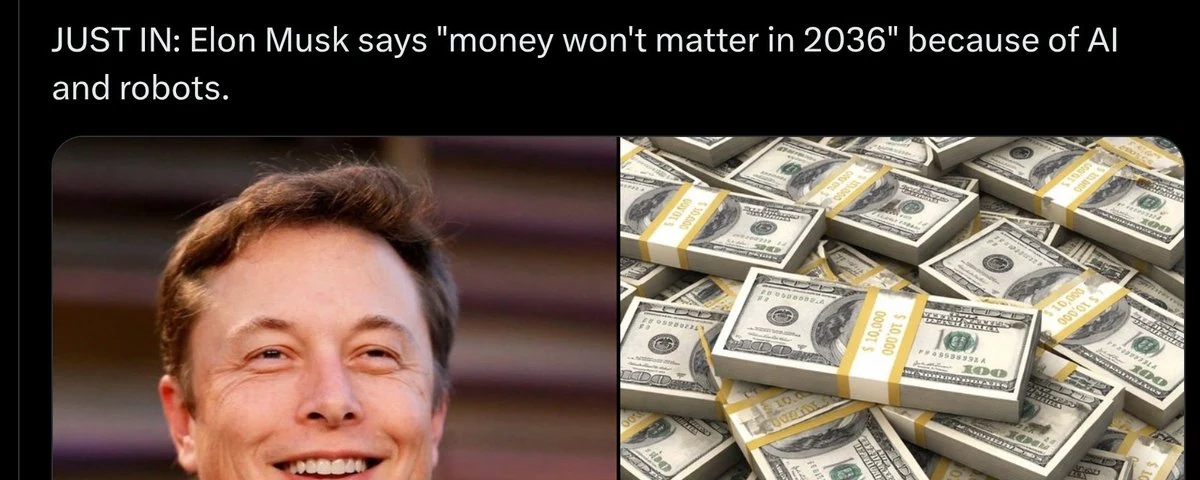
Originally published as “Elon Musk on-time prediction success rate is reportedly in the single digits.”
This is a non-exhaustive list of things Elon Musk predicted, got wrong, or that simply never happened. His on-time prediction success rate is reportedly in the single digits.
Status: 26 July 2026
A 2026 New York Times analysis reportedly identified 602 Musk goals over 15 years. Only 19% were delivered on time, approximately 17% arrived late, roughly 50% never materialised, and the remainder were still pending.
A narrower Tesorb tracker recorded 28 major time-bound predictions as of April 2026: 2 on-time hits, 17 misses, 3 revised deadlines and 6 unresolved, producing a 7% on-time rate.
➡️ Full Self-Driving, autonomy and robotaxis
1. September 2013: 90% of miles driven autonomously within 3 years, by 2016. Missed. Tesla released driver-assistance features, but nothing remotely equivalent to autonomous operation over 90% of journeys.
2. October 2014: Tesla cars would be 90% capable of Autopilot during 2015. Partially delivered and heavily overstated. The original Autopilot could steer and maintain speed under restricted conditions. It was not autonomous driving for 90% of normal journeys.
3. October 2015: Full autonomy in approximately 3 years, by 2018. Missed. Tesla’s current consumer system remained SAE Level 2 and required continuous driver supervision in 2026.
4. December 2015: Complete autonomy in approximately 2 years, by 2017. Missed. No Tesla achieved unsupervised consumer autonomy in 2017.
5. January 2016: Owners would summon their cars across the United States within 2 years. Missed. Tesla’s Summon functions remained limited parking-area assistance rather than autonomous cross-country travel.
6. June 2016: Autonomous driving was “basically solved” and complete autonomy was less than 2 years away. False timeline. Almost 10 years later, Tesla still described FSD as supervised Level 2 assistance.
7. October 2016: A Tesla would drive autonomously from Los Angeles to New York by the end of 2017. Missed. The promised demonstration never happened.
8. October 2016: The Los Angeles to New York trip would require no human touch, including charging. Missed. Neither the autonomous trip nor the automatic charging system entered normal use.
9. April 2017: Tesla remained on track for the coast-to-coast autonomous demonstration during 2017. Missed again. Musk reaffirmed the date months before it expired, then quietly abandoned it.
10. 2017: Tesla occupants would be able to sleep during journeys in roughly 2 years. Missed. Tesla still required attentive drivers in 2019 and continued requiring them in 2026.
11. November 2018: Full Self-Driving would arrive in 2019. Missed. What followed was a succession of supervised beta versions.
12. November 2018: Teslas would technically be able to deliver themselves from factories to customers within about 1 year. Missed. A limited factory-to-customer demonstration occurred only in June 2025, approximately 6 years late.
13. January 2019: FSD would be safe for release by the end of 2019. Missed. Tesla had no unsupervised FSD release at the end of that year.
14. February 2019: FSD would be “feature complete” during 2019. Missed. Musk claimed cars would travel to destinations without intervention. That capability did not arrive.
15. April 2019: Drivers would no longer need to touch the steering wheel around the second quarter of 2020. Missed. Driver supervision remained mandatory.
16. April 2019: More than 1 million Tesla robotaxis would operate during 2020. Completely missed. Tesla had zero operating robotaxis in 2020.
17. April 2019: The first Tesla robotaxis would operate without anyone inside during 2020. Missed. The first limited Austin pilot began in June 2025 and initially used in-vehicle safety monitors.
18. April 2019: Owners could earn approximately $30,000 per year by placing their Teslas in the robotaxi network. Missed. The promised owner-operated network never launched.
19. April 2019: Then-current Teslas possessed all hardware necessary for full autonomy. Not delivered as represented. Those vehicles did not become unsupervised robotaxis, and Tesla subsequently introduced newer computers and hardware generations.
20. October 2019: FSD would become reliable enough that drivers would not need to pay attention by the end of 2020. Missed. Tesla continued warning drivers to supervise it at all times.
21. April 2020: Robotaxi functionality was still expected during 2020. Missed again. No such consumer functionality appeared.
22. July 2020: Level 5 autonomy would be completed before the end of 2020. Missed. Musk said there were no fundamental challenges remaining. The product remained Level 2.
23. December 2020: Tesla would achieve Level 5 autonomy in 2021, with Musk claiming 100% confidence. Missed. No Level 5 Tesla existed in 2021.
24. January 2021: Tesla’s self-driving reliability would exceed human drivers before the end of 2021. Unsubstantiated and missed. Tesla did not release an independently validated unsupervised system exceeding human driving reliability.
25. December 2021: Level 4 FSD was “quite likely” during 2022. Missed. Tesla remained a Level 2 system.
26. May 2023: Full autonomy would happen during 2023. Missed. This was another version of the same annual promise.
27. October 2024: Unsupervised FSD would operate in Texas and California during 2025. Not delivered at the promised scale. Tesla started a restricted Texas service, but California did not receive the broadly available unsupervised service described, and safety monitoring remained part of much of the operation.
28. April 2025: People would fall asleep in their Teslas and wake up at their destinations by the end of 2025. Missed. Sleeping while using retail FSD remained unsafe and prohibited.
29. July 2025: Tesla robotaxis would serve half of the US population by the end of 2025. Massively missed. By July 2026, Tesla was operating only dozens of vehicles across a handful of restricted service areas.
30. September 2025: Tesla robotaxis would no longer require safety monitors by the end of 2025. Missed as a fleet-wide promise. Monitored vehicles remained in use after the deadline.
31. October 2025: Robotaxis would operate in 8 to 10 metropolitan areas by the end of 2025. Missed. Meaningful deployments remained far below that target.
32. October 2025: Approximately 500 robotaxis in Austin and 1,000 in the Bay Area by the end of 2025. Missed. The operational fleet remained in the dozens rather than the promised hundreds or thousands.
33. July 2016: Owners would add their vehicles to a shared Tesla fleet by tapping a button in the app. Never delivered. The promised Tesla Network did not become available to ordinary owners.
34. January 2020: Conventional car-sharing would launch before the autonomous robotaxi network. Missed. Tesla did not launch the promised owner car-sharing system either.
The central fact remains simple: in October 2025, NHTSA still described Tesla FSD as an SAE Level 2 partial-automation system requiring a fully attentive driver at all times. The agency was also investigating reports of red-light violations, wrong-way movements and crashes while FSD was engaged.
➡️ Tesla vehicles, production and pricing
35. August 2006: Tesla’s expensive Roadster would finance a genuinely low-cost family car. Materially unfulfilled. The Model 3 lowered Tesla’s entry price, but the durable low-cost family vehicle described in the original plan remained absent almost 20 years later.
36. 2012 to 2013: Model X customer deliveries were expected during 2014. Late. Initial deliveries began in September 2015 after repeated delays.
37. June 2014: Model X would reach volume production during the second quarter of 2015. Late by roughly 1 year. The production ramp remained constrained well into 2016.
38. September 2015: A Tesla would exceed 1,000 kilometres or 621 miles of range by 2017 “for sure.” Missed. No production Tesla achieved that rated range in 2017.
39. March 2016: The Model 3 would be a broadly available $35,000 car. Heavily delayed and short-lived. The $35,000 version appeared only in 2019, was difficult to order, and was later removed. The early cars were substantially more expensive.
40. 2017: Tesla expected 1,500 Model 3 vehicles during the third quarter. Missed. It produced only 260.
41. 2017: Model 3 production would reach 5,000 vehicles per week by December 2017. Late. Tesla reached the rate around the end of June 2018, aided by a temporary assembly line constructed under a tent.
42. 2017: Model 3 production would reach 10,000 vehicles per week during 2018. Missed. Tesla did not sustain that output during the promised year.
43. May 2016: Tesla would produce 500,000 total vehicles during 2018. Missed. Tesla produced approximately 255,000 vehicles that year. The original claim concerned all Tesla vehicles, not 500,000 Model 3s.
44. September 2020: Tesla would produce a compelling $25,000 fully autonomous vehicle in approximately 3 years, by 2023. Missed. No $25,000 autonomous Tesla appeared.
45. April 2024: New affordable Tesla models would be introduced by early 2025. Missed. The programme was delayed and shifted toward cheaper versions of existing products rather than the promised new mass-market vehicle.
46. November 2017: Tesla Semi production would begin during 2019. Late. Initial customer vehicles appeared only in December 2022, and these were limited rather than true volume production.
47. 2022: Tesla would produce 50,000 Semis during 2024. Missed. Production remained extremely limited and large-scale manufacturing was pushed into later years.
48. November 2017: The new Tesla Roadster would enter production during 2020. Missed. No customer Roadsters had been delivered by July 2026.
49. 2021: Roadster production was moved to 2023. Missed again. Production did not begin in 2023.
50. 2023: Roadster production was moved to 2024. Missed again. No production vehicle arrived in 2024.
51. 2024: Roadster deliveries were moved to 2025. Missed again. The car remained unreleased.
52. 2025: A new Roadster demonstration would occur before the end of 2025. Missed. No promised demonstration took place.
53. 2018 onward: A Roadster with SpaceX cold-gas thrusters might briefly fly or hover. Undelivered. The underlying Roadster missed its original 2020 launch by more than 6 years, and no flying production car has been shown.
54. November 2019: Cybertruck production would begin around late 2021. Late by approximately 2 years. Deliveries started in November 2023.
55. November 2019: The base Cybertruck would cost $39,900. Not delivered as launched. Initial delivered all-wheel-drive versions started around $79,990, approximately double the advertised entry price.
56. November 2019: The top Cybertruck would provide more than 500 miles of range. Missed. Delivered versions were rated much closer to approximately 320 miles without the proposed range extender.
57. 2019: Cybertruck glass was presented as effectively shatter-resistant. Public demonstration failed immediately. A thrown metal ball broke 2 windows during the unveiling.
58. 2023: Cybertruck production would eventually reach approximately 250,000 units per year in 2025. Missed. Output and demand remained far below that level.
59. June 2013: Tesla battery-swap stations would begin rolling out later in 2013. Cancelled. Tesla built one limited pilot location and abandoned the programme.
60. December 2014: Tesla was developing a “solid metal snake” charger that would connect automatically. Cancelled. A prototype appeared, but it never became a production charging system.
61. November 2016: Tesla’s Solar Roof would cost less than a normal roof even before electricity savings. Not generally achieved. Solar Roof remained an expensive niche installation rather than the cheaper default roof implied.
62. March 2019: 2019 would be “the year of the Solar Roof and Powerwall.” Missed. Solar Roof installations remained limited and suffered repeated production and installation delays.
63. Early Supercharger claims: The network would increasingly operate from solar power and remain functional off-grid. Not broadly achieved. Most Superchargers continued relying primarily on ordinary grid connections, with solar and battery storage used only at selected sites.
64. February 2012: Tesla would never need to raise another funding round. False. Tesla subsequently raised billions through equity and debt offerings.
65. October 2016: Tesla’s financial plan did not require another capital raise. Wrong again. Tesla continued raising outside capital as Model 3 production consumed cash.
66. April 2018: Tesla would not need additional capital and would become profitable during the second half of 2018. Partially wrong. Tesla did report quarterly profits, but later returned to capital markets and raised substantial additional funds.
67. 7 August 2018: Tesla could be taken private at $420 per share and “funding secured.” False. No privatisation occurred. The SEC said Musk had not discussed specific deal terms with potential financing partners and that the statements lacked an adequate factual basis.
➡️ SpaceX, Mars, the Moon and Starship
68. 2001 to 2002: Mars Oasis would send a small greenhouse containing plants or organisms to Mars during the mid-2000s. Abandoned. The project never flew and was replaced by the creation of SpaceX.
69. 2002: SpaceX would attempt a Mars mission by the end of that decade, around 2010. Missed. No SpaceX spacecraft reached Mars.
70. April 2011: SpaceX would put its first astronaut into space in approximately 3 years, around 2014. Late by roughly 6 years. Crew Dragon first carried astronauts in May 2020.
71. April 2011: Falcon Heavy would launch during 2013. Late. Its first launch occurred in February 2018.
72. 2011: Humans could reach Mars within 10 years, around 2021. Missed. No crewed Mars mission was attempted.
73. Early Falcon 1 schedule: First launch expected during 2003 or 2004. Late. The first launch attempt occurred in 2006, and Falcon 1 did not reach orbit successfully until 2008.
74. 2014: A Falcon 9 first stage had an 80% to 90% chance of landing and flying again within 1 year. Late. SpaceX landed a booster in December 2015 and first reflown one in March 2017.
75. 2015 to 2016: Crew Dragon would carry NASA astronauts during 2017. Late. The first crewed flight occurred in 2020.
76. 2016: Crew Dragon would use propulsive landings for precise ground touchdowns. Cancelled. SpaceX abandoned that landing architecture and retained parachute ocean landings.
77. 2016: Red Dragon spacecraft would travel to Mars during the 2018 launch window. Cancelled. The mission never launched.
78. September 2016: SpaceX would send its first uncrewed Interplanetary Transport System spacecraft to Mars in 2018. Missed. No SpaceX vehicle reached Mars.
79. September 2016: Human missions would depart for Mars in 2024 and arrive in 2025. Missed. Starship was still performing Earth-based flight tests during that period.
80. September 2017: At least 2 cargo ships would travel to Mars during 2022. Missed. No such missions occurred.
81. September 2017: 4 ships, including 2 crewed ships, would travel to Mars during 2024. Missed. No SpaceX spacecraft had even reached Mars by 2026.
82. December 2020: A human might step onto Mars in 2024. Missed. There was no crewed Mars launch.
83. February 2017: SpaceX would fly private passengers around the Moon during 2018. Missed. That mission was replaced by a different programme that was itself delayed and cancelled.
84. 2018: DearMoon would carry private passengers around the Moon during 2023. Missed and cancelled. The mission was officially cancelled in 2024 after Starship failed to become ready on schedule.
85. September 2019: Starship would reach orbit within approximately 6 months. Late by years. The first integrated Starship test flight occurred in April 2023 and did not complete its planned trajectory.
86. 2017 to 2019: Starship would begin commercial cargo missions around 2021. Missed. Starship remained in experimental flight testing.
87. 2017: Earth-to-Earth Starship travel could begin around 2022, allowing trips between major cities in under 1 hour. Missed. No commercial point-to-point rocket transport service exists.
88. 2018 to 2019: Starship could land humans on the Moon by 2024. Missed. No crewed Starship lunar landing occurred, and NASA’s Artemis schedule moved substantially beyond that date.
89. 2024: SpaceX would catch or recover the Starship upper stage with the launch tower during 2025. Missed. The company did not accomplish an upper-stage tower catch during the stated year.
90. Repeated 2010s claims: Rapid, airline-like rocket reuse would reduce turnaround times to hours or a day. Not achieved at the stated level. Falcon boosters became impressively reusable, but refurbishment and launch operations never became comparable to airline aircraft turnaround.
➡️ Hyperloop and The Boring Company
91. August 2013: Los Angeles to San Francisco in 35 minutes. Never built. No operational Hyperloop connects the cities.
92. August 2013: The Los Angeles to San Francisco Hyperloop would cost approximately $6 billion. Never demonstrated. No system was built at that cost, making the estimate effectively meaningless.
93. August 2013: Passenger tickets could cost approximately $20. Never delivered. There was no service and therefore no $20 journey.
94. 2013 onward: Hyperloop passenger pods would travel at more than 600 mph. Never achieved. Hyperloop One’s passenger demonstration reached approximately 107 mph before the company shut down in 2023.
95. April 2022: A Hyperloop could connect Boston and New York in less than 30 minutes. Not built. No construction programme capable of delivering it followed.
96. July 2017: New York to Washington, DC in 29 minutes. Never built. Musk announced “verbal government approval,” but no complete regulatory approval or operating system materialised.
97. 2017: The Chicago to O’Hare high-speed Loop would open in approximately 18 to 24 months. Cancelled. The project disappeared without construction of the promised connection.
98. April 2017: Cars would travel through urban tunnels on electric skates at approximately 125 mph. Abandoned. The operating Las Vegas system uses ordinary Teslas at road-like speeds.
99. 2017: The tunnel network would use autonomous vehicles travelling as fast as 150 mph. Not achieved. The Las Vegas Convention Center Loop opened with human-driven cars and has experienced congestion at extremely low speeds.
100. 2017: The Boring Company would construct approximately 1 mile of tunnel per week. Missed by an enormous margin. Its real construction rate remained nowhere near that industrial scale.
101. 2018: The Dugout Loop between a Los Angeles Metro station and Dodger Stadium would enter service around the 2020 baseball season. Never built. The project stalled in environmental review and effectively vanished.
102. 2018: Tunnels would solve urban congestion by moving cars away from surface streets. Not demonstrated. The only meaningful passenger system remains a small Las Vegas network that itself can become congested.
➡️ Neuralink
103. August 2017: Neuralink’s first product would reach the market in approximately 4 years, around 2021. Missed. Neuralink had no commercial product on the market in 2021.
104. July 2019: Human clinical trials would begin before the end of 2020. Late by more than 3 years. The first human implant occurred in January 2024.
105. 2020: A human Neuralink implant could happen during 2020. Missed. Regulatory approval for the first human study arrived only in 2023.
106. 2021: Human trials could begin later in 2021. Missed again. No human was implanted that year.