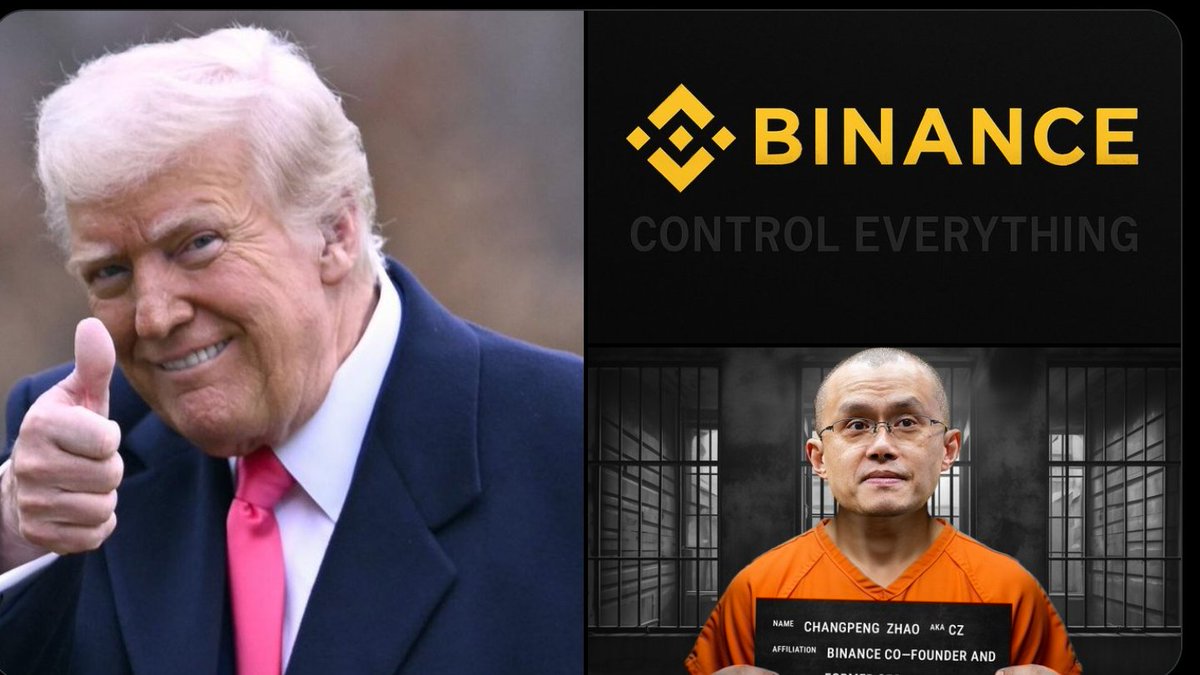
The Crisis of Truth
We are living through a peculiar fracture in modern society. Information has never been more abundant, yet shared reality has never been more fragile.
Truth used to be anchored in institutions. Universities, courts, journalism, scientific bodies, financial oversight. These were imperfect, often biased, sometimes slow, but they provided a common reference point.
Today that reference point is dissolving. In its place we find narratives, tribes, algorithms, and outrage.
Politics and crypto illustrates this vividly.
Movements like MAGA around Donald Trump show how powerful identity can become when it replaces verification.
Loyalty to a story can outweigh loyalty to evidence. For supporters, criticism becomes persecution.
For opponents, supporters become caricatures. Dialogue collapses into performance. Truth becomes secondary to belonging.
The same pattern appears in the digital economy. In crypto markets, exchanges like Binance hold enormous influence over price discovery, liquidity, and market structure.
When anomalies occur, when prices deviate, when systems fail or appear opaque, the reaction is not simply technical analysis. It becomes a battle of narratives.
Some defend the platform instinctively. Others assume manipulation. Transparency is demanded, but rarely delivered in a way that restores trust. The absence of clear, verifiable information creates a vacuum that speculation eagerly fills.
This is the core of the crisis. When institutions, whether political or financial, fail to communicate with radical transparency, people do not become neutral. .
They become suspicious. And suspicion, once widespread, reshapes reality more powerfully than facts.
Social media accelerates this erosion. Algorithms reward emotional intensity, not accuracy. The loudest claim spreads faster than the most careful analysis. A viral post can shape perception before evidence has time to form.
Corrections arrive too late. Outrage is memorable. Nuance is forgettable.
The human mind is not built for this environment. We evolved to trust our tribe, to rely on signals from those around us, to simplify complex realities into stories. In the digital age, this instinct is exploited continuously.
We are pulled into camps where truth is filtered through identity. We stop asking what is correct and start asking who is speaking.
The consequence is profound. Courts struggle with public opinion formed before trials. Markets react to rumors before data. Democracies polarize into incompatible realities. Financial systems face waves of distrust after opaque events. Even science is questioned when conclusions do not fit existing beliefs.
The crisis of truth is therefore not about lies alone. It is about the breakdown of shared verification. It is about the loss of common ground where disagreement can still exist within a shared reality.
Restoring truth does not require perfection. It requires transparency, accountability, and humility from those who hold power.
It requires institutions to show their workings, not only their conclusions. It requires individuals to value evidence over allegiance. It requires slowing down before reacting, and questioning before sharing.
Most importantly, it requires recognizing that truth is not a weapon for one side. It is the foundation that allows any side to exist at all.
Without truth, politics becomes theater. Markets become casinos. Media becomes noise. Society becomes a collection of parallel worlds that can no longer speak to each other.
The crisis of truth is the defining challenge of our time.