1998 / REFERENCE
b-money: shared balances before the blockchain
Wei Dai’s 1998 proposal explored pseudonymous accounts, distributed bookkeeping and contract enforcement before Bitcoin.
Texto de referência em inglês · Navegação em 7 idiomas
Nesta página
A proposal with 2 designs
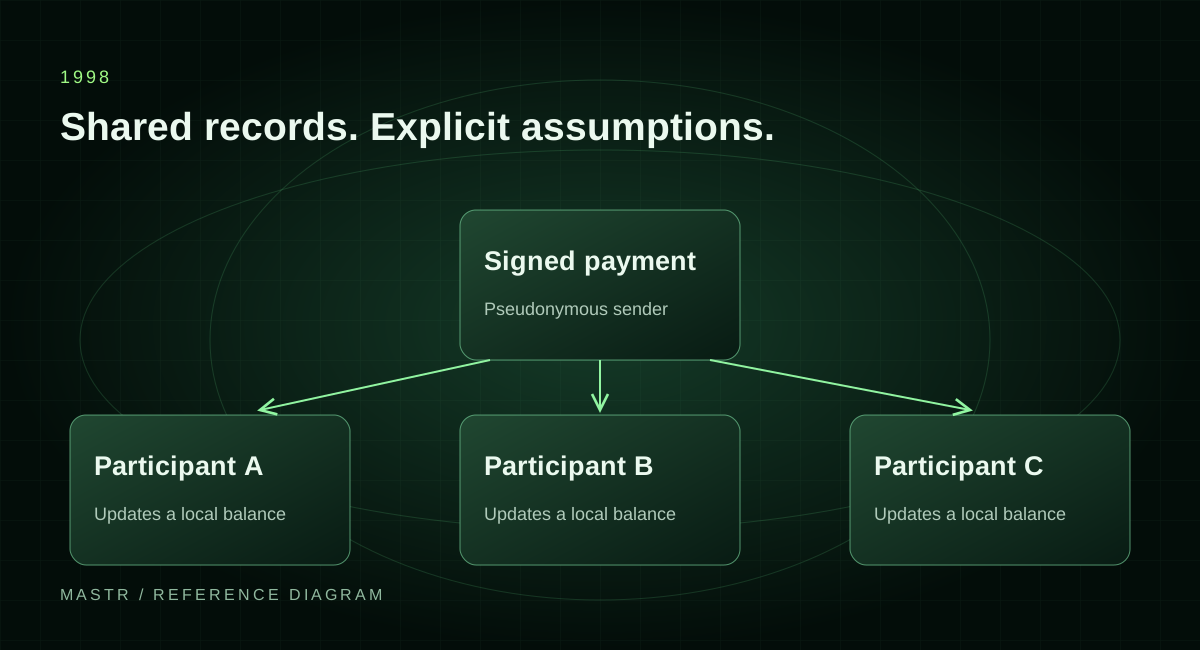
Wei Dai published b-money in November 1998. The text describes 2 protocols for maintaining money balances among participants identified by cryptographic pseudonyms. In the first, participants keep their own copies of a balance database and update it from signed messages. Dai explicitly calls this version impractical because of its demanding communication assumptions. The second moves bookkeeping to a subset of servers. [1]
Bookkeeping requires incentives
The server-based version introduces deposits and published commitments to account records. Participants are expected to check their balances and the overall money supply. The paper also recognises a difficulty in valuing the computations used to create money and proposes an alternative auction process. These are design questions about incentives, information and coordination, rather than claims that a running network had already solved them. [1]
A precursor is not a deployed chain
Bitcoin cites b-money among its references, but the proposals should remain separate entries in a historical account. A signed instruction can express an authorised payment while leaving another question unanswered: how do independent participants settle conflicting instructions into a shared history? Read Bitcoin’s transaction-ordering mechanism alongside Dai’s account-keeping proposals to understand the difference. [2]
How to use this reference
When a modern project claims to have invented decentralised money, ask which part it means: pseudonymous ownership, issuance, shared bookkeeping, settlement or contract enforcement. Those are distinct mechanisms. This comparison is an editorial reading method, not a claim that b-money anticipated every later blockchain feature. The primary text matters because its explicit assumptions are more informative than a retrospective slogan about being “before Bitcoin”.