
Structure de marché
Constant-product pools: where price impact comes from
A pool equation makes the execution price depend on the size of the trade relative to available reserves.
Les enquêtes et les fiches de référence sont publiées en anglais. La navigation est disponible en sept langues.
Personnes et projets
A numerical example
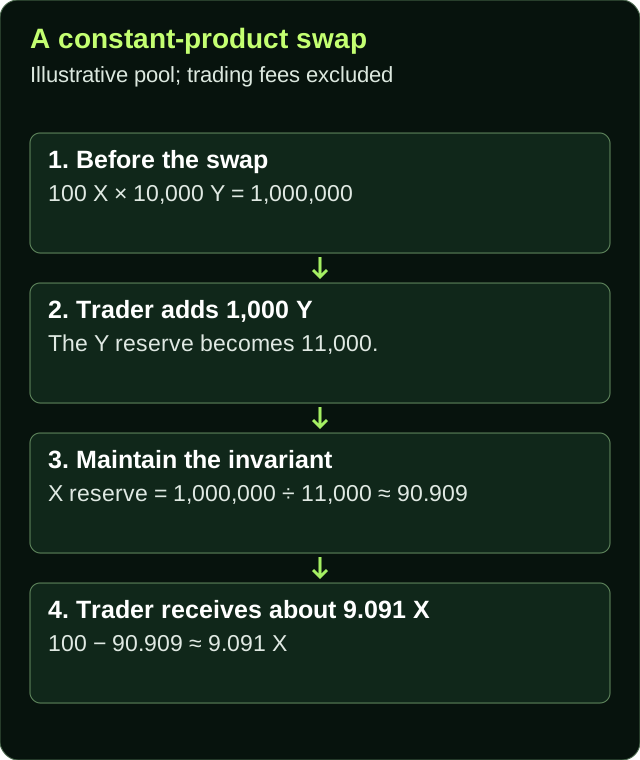
Consider a simplified pool with 100 units of token X and 10,000 units of token Y. Ignoring fees, the constant product is 1,000,000. A buyer who adds 1,000 Y leaves 11,000 Y in the pool. The X reserve must become approximately 90.909, so the buyer receives about 9.091 X.
The average execution price is therefore about 110 Y per X, although the initial marginal price was 100. The trade itself changes the inventory ratio. A large market-cap figure elsewhere does not change this pool's available reserves.
Fees and real implementations
Real pools incorporate fees and may use different invariants, concentrated ranges or hooks. The simple equation is a teaching model, not a quote for every decentralised exchange. A production quote must use the actual pool state and implementation.
Slippage tolerance limits what the transaction accepts relative to its quote; it does not make the price impact disappear. Active ranges explain why total deposited value can be misleading, and MASTR's ANSEM research applies that distinction to reported liquidity and volume.