Réseaux et infrastructure
Zcash Orchard: reading the reported vulnerability and its limits
Over the last week, the entire zcash:native narrative was hit by one issue: a critical bug in Orchard, Zcash’s shielded privacy pool.
 MASTR
MASTRPremière publication 3 min · 547 mots
Original publication · 5 Jun 2026. Figures, claims and opinions reflect the original publication date.
Les publications originales sont en anglais. La navigation est disponible en sept langues.
#Zcash is going through the kind of crisis that separates real privacy infrastructure from marketing mythology.
Over the last week, the entire zcash:native narrative was hit by one issue: a critical bug in Orchard, Zcash’s shielded privacy pool.
The vulnerability was found on May 29 by Taylor Hornby during an audit for Shielded Labs. It was serious because it touched the monetary integrity of the shielded pool itself.
In the worst case, the bug could have allowed counterfeit ZEC to be created inside Orchard without normal public detection, because Orchard is designed to hide transaction details by default.
Privacy protects users, but when something breaks inside a private pool, you cannot inspect it the way you would inspect a transparent chain.
You can look for evidence. You can analyse behaviour. You can assess probability. But you cannot simply open the ledger and prove, with full certainty, that nothing ever happened in the past.
The bug was privately confirmed, infrastructure operators were coordinated, Orchard transactions were temporarily disabled through an emergency soft fork, and NU6.2 restored Orchard with a corrected circuit.
The Foundation says there is no evidence of exploitation, no detected unauthorised value creation, no user funds lost, and no privacy failure.
Technically, that matters. The network did not collapse. The fix was not slow. The response was far more professional than what we usually see in this industry.
But markets do not only price the fix. They price the doubt.
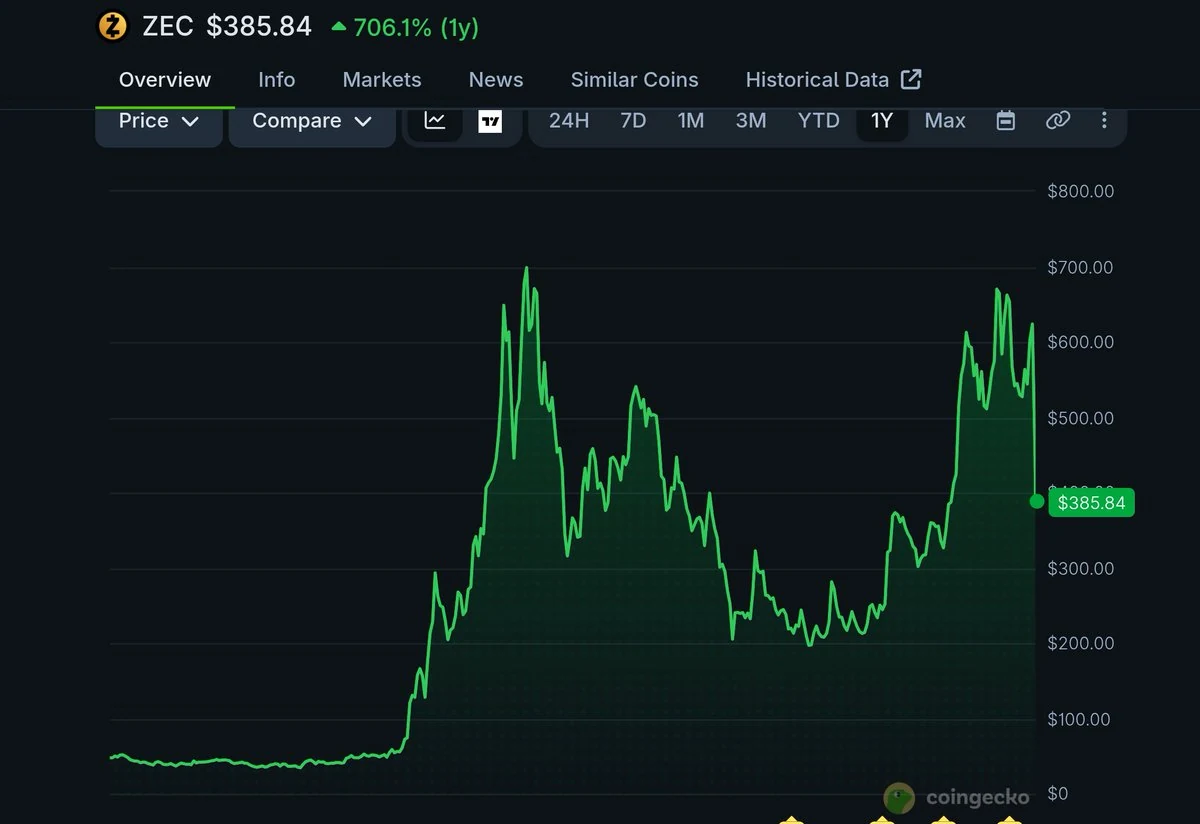
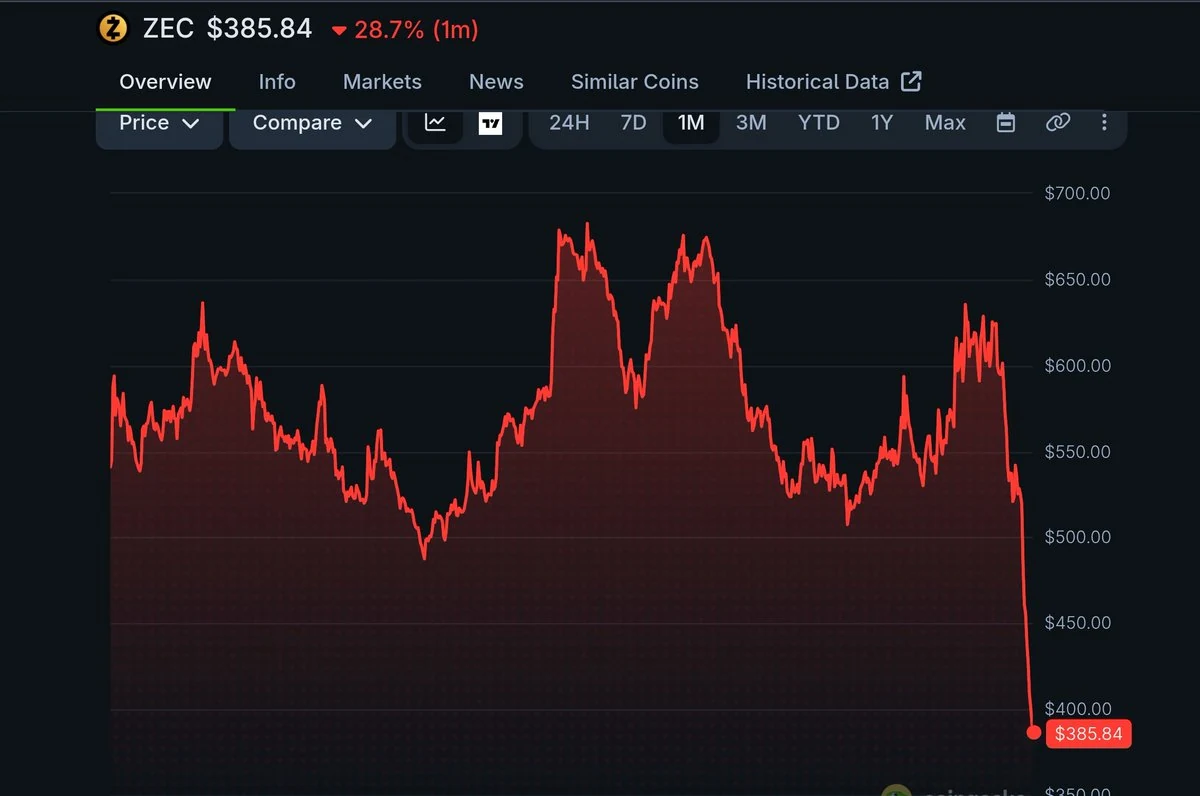
That is why ZEC sold off so violently after the public disclosure.
The panic was not really about Orchard being broken today. The panic came from the realisation that Orchard had carried a counterfeiting class vulnerability for years, and that nobody can now produce a perfect cryptographic receipt proving it was never abused before the patch.
In a privacy coin, that is not a small footnote. That is the centre of the entire trust model.
Long term Zcash supporters are pointing at the responsible disclosure, the fast engineering response and the fact that no exploitation has been found.
Critics are pointing at the much bigger issue: if one of the most serious privacy projects in crypto can carry this kind of bug for years, then most people are wildly underestimating the risk hidden inside advanced cryptographic systems they barely understand.
Both sides have a point, but only one side is allowed to ignore uncertainty. The market is not ignoring it.
The next real test for Zcash is not another bullish thread, another privacy slogan or another institutional narrative.
The next real test is whether the ecosystem can move toward supply integrity verification in a way that preserves privacy while proving that counterfeit Orchard value does not exist.
Shielded Labs is already discussing a new shielded pool with turnstile accounting for exactly that reason. That is the only serious path out of this mess.
So the situation right now is simple:
Zcash survived the technical failure, but it now has to survive the credibility damage. The bug appears fixed. The chain is running. No exploit has been proven.
But the burden has shifted. Zcash now has to prove, as far as cryptography allows, that its monetary base can still be trusted after years of hidden risk.
For a privacy coin, that is the hardest possible stress test.