

MASTR · CRYPTO & WEB3
Stablecoins: the token, the reserves and the redemption queue
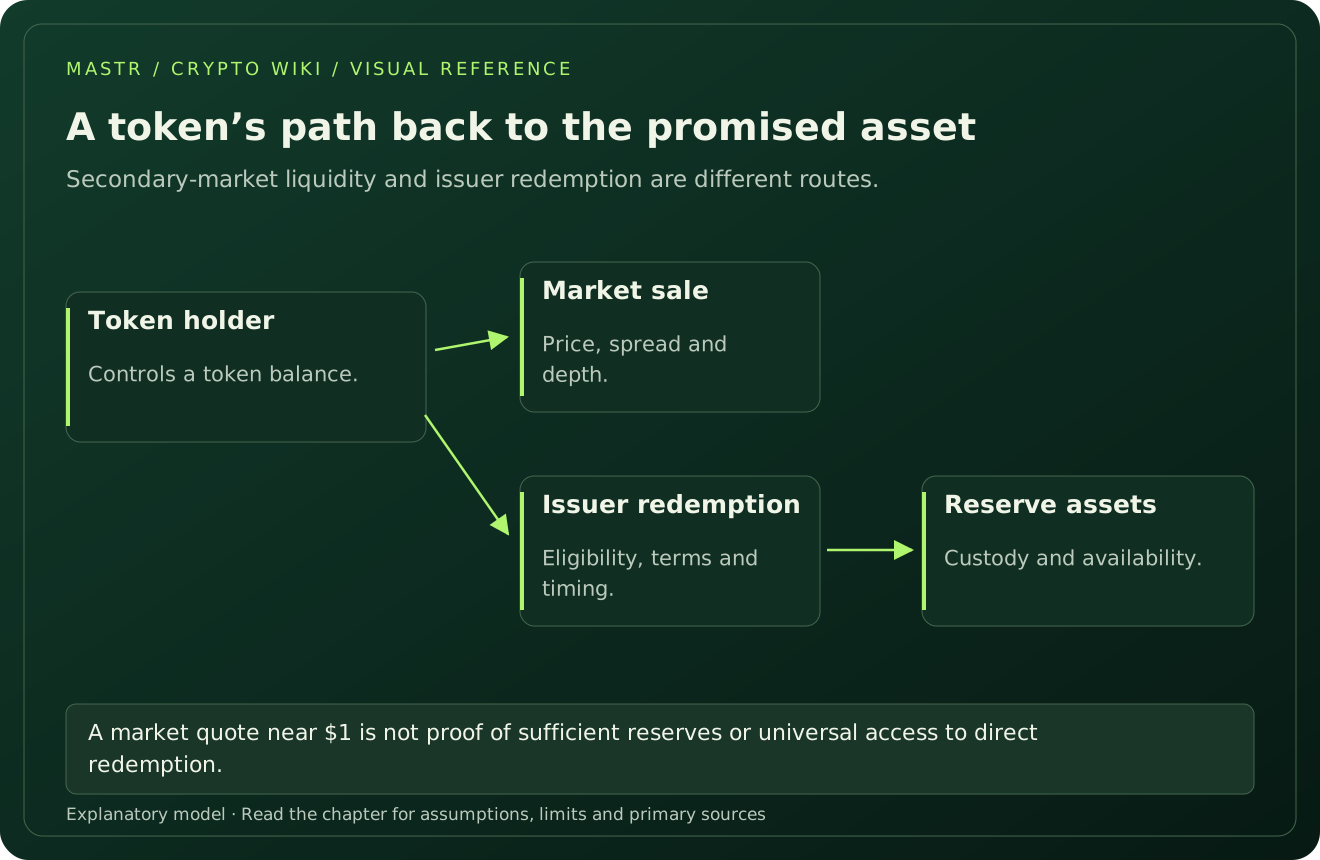
A price target is not a complete description of the claim. Follow the route from token holder to the assets that are meant to support redemption.
I capitoli e i grafici tecnici sono in inglese. La navigazione è disponibile in sette lingue.
Who can redeem, into what, and under which conditions?
A stable price requires a mechanism
Stablecoins pursue a reference value through different structures. Some depend on an issuer and offchain reserves; others use onchain collateral and liquidation rules; some rely heavily on incentives and an endogenous token. These mechanisms should not be combined into one generic safety label. A token trading near one dollar today says little about the claim a holder could enforce during stress.
Reserves and access are different questions
For an issuer-backed token, identify the reserve assets, their custodians, the timing of disclosures and any restrictions on redemption. A retail holder may trade through an exchange rather than hold a direct redemption account. That creates an additional intermediary and a different exit path. Market liquidity can disappear over a weekend even when reserve assets have not vanished. Conversely, active trading does not prove that reserves are sufficient or unencumbered.
The March 2023 banking episode
Circle reported that $3.3 billion of USDC reserves were at Silicon Valley Bank during the bank’s failure in March 2023. Its subsequent announcement described removal of that reserve risk following the US authorities’ depositor-protection action. The episode illustrates how an onchain token can inherit a banking dependency. It does not mean that the USDC smart contract stopped executing, nor that every stablecoin has the same reserve structure.
Onchain collateral has another failure path
A collateralised protocol must value its collateral and sell or otherwise manage it when positions become unsafe. Oracle freshness, liquidation capacity and collateral correlation all matter. If a stablecoin is used as collateral for another stablecoin, a shock can travel between them. A collateral ratio observed before stress is not a guarantee about the price or availability of liquidation during stress.
Keep the measures separate
The number of tokens issued, the market capitalisation, the reserve value and immediately available redemption cash are distinct quantities. A mint transaction alone does not prove new unbacked money creation. It needs the issuer’s minting process and reserve context. Likewise, a burn can reflect redemption, inventory management or another documented process. Good research reconciles the onchain action with the relevant offchain record instead of turning every large transaction into a conclusion.
Esempio spiegato
A holder can sell 1,000 tokens for 980 dollars in a stressed secondary market even if an eligible institutional customer can later redeem them at par. The difference can reflect timing, eligibility, fees and risk. It should not automatically be described as the same loss for every holder.
Domande da ricordare
- Map the redemption route.
- Check eligibility and timing.
- Distinguish minting from evidence of reserve backing.