

Smart accounts and governance
ERC-7579: wallet modules are part of the authority map
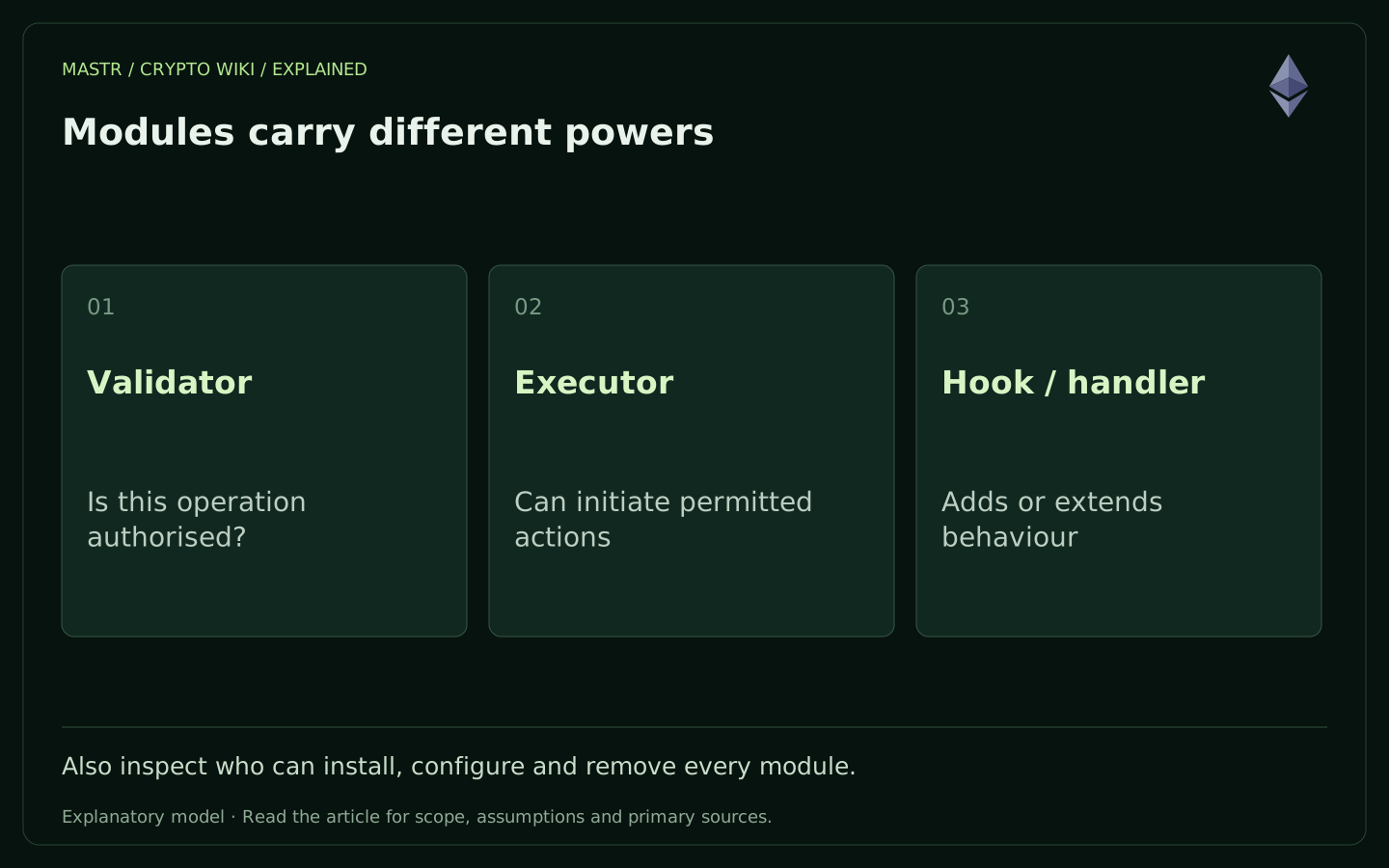
Validators, executors and hooks have different powers inside a modular smart account.
Article text and technical graphics are in English. Navigation is available in seven languages.
Reference guides
Interoperability has a narrow meaning
ERC-7579 defines minimal interfaces for modular smart accounts. Its goal is compatibility between account and module implementations, not certification of every module’s behaviour. A common interface makes installation and interaction more consistent; the installed code still determines what the wallet can authorise and execute. 1
Separate the module roles
Validators participate in deciding whether an operation is authorised. Executors can invoke execution through the account’s supported route. Fallback handlers extend how particular calls are handled. Optional hooks can add checks around execution. Combining these under one generic ‘plugin’ label loses the most important question: which capability is being granted, and under what restrictions?
Installation and removal matter
A permission review needs to include who can install modules, remove them, change their configuration or replace account implementation logic. Removing an interface from a dashboard does not by itself prove that on-chain authority was revoked. Conversely, a module with useful spending limits can be undermined by another unrestricted execution path. Inspect the whole account rather than evaluating each icon in isolation.
A practical account inventory
Document deployed account and module addresses, roles, limits, recovery authorities and any time delays. Check whether the client can clearly explain these relationships after its backend disappears. A signature request to install a module can change future authority without immediately transferring tokens. Users should be able to distinguish that permission change from a routine login or payment. ERC-4337’s operation flow is related infrastructure, not an automatic explanation of every installed module. 2
Worked example
A wallet has a validator requiring owner approval and an executor permitted to carry out a limited recurring action. The review must check that the executor’s limits are enforced and that no other path bypasses them. Listing only the owner key gives an incomplete account of control.