

Names, identity and web content
IPNS: a stable name for content that can change
A signed pointer solves updating, while availability and key custody remain separate jobs.
Article text and technical graphics are in English. Navigation is available in seven languages.
Reference guides
Why immutable content needs naming
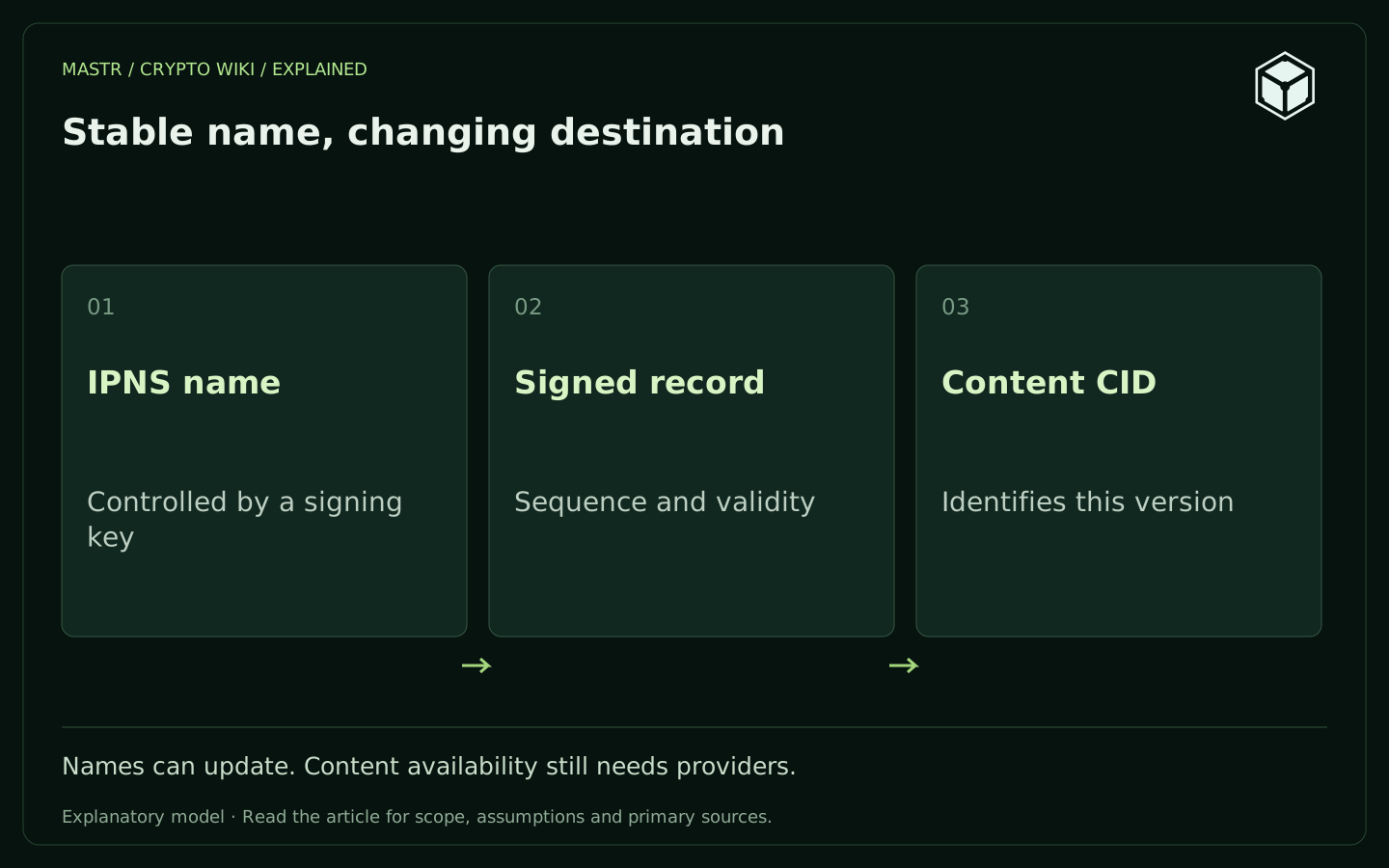
An IPFS content identifier identifies content according to its encoding and hash. Changing the content generally changes its CID. IPNS adds a naming layer: a stable name can resolve through a signed record to a current content path. Readers can keep using the name while the publisher issues a new record pointing at a different version. 1
The signing key becomes important
The name’s authority is tied to the key that signs valid updates. A copied website and its correct CID do not give somebody permission to update another publisher’s IPNS record. Conversely, loss of the update key can prevent future changes; compromise can let someone publish a different valid pointer. Backing up content and protecting the naming key solve different problems.
Freshness, caching and availability
IPNS records include sequence and validity information, while caches can keep records for a stated TTL. Updates are not guaranteed to become visible everywhere at one instant. A valid signed record does not ensure that the referenced content is available from providers. The document must still be retained and served. A gateway’s response also has to be understood as part of the retrieval path, not as magic permanent storage.
How to preserve a historical citation
When citing changing material, record both the human-facing IPNS path and the resolved CID observed at the time. The name helps readers find the publisher’s current version; the CID identifies the version used in the research. If that version must remain readable, someone also needs to preserve its blocks. A verifiable identifier without accessible bytes is incomplete evidence.
Worked example
A research site publishes edition 1 at CID A, then updates its IPNS record to CID B for edition 2. An old citation that records only the IPNS name may now open edition 2. Recording CID A preserves which version was cited, but keeping edition 1 available still requires storage.