

Bitcoin: recovery and Lightning
Lightning inbound liquidity: why a funded wallet may still fail to receive
Receiving capacity depends on the direction of channel balances and the available route.
Article text and technical graphics are in English. Navigation is available in seven languages.
Reference guides
A channel has two sides
A Lightning channel allocates a shared funding output between its participants. Sending moves value towards the peer’s side; receiving needs value that can move towards yours. A channel can therefore have substantial total capacity and very little inbound capacity for its owner. Wallet balance and ability to receive are different questions. 1
A route is a chain of constraints
For a routed payment, each participating hop needs usable liquidity in the right direction, subject to channel policies and other limits. Your final hop can have enough inbound liquidity while an earlier hop cannot forward the chosen amount. Conversely, funding a new channel primarily from your own side often gives you outbound capacity rather than immediately creating equal receiving capacity. The exact usable amounts also reflect reserves and pending payments.
Liquidity services add another relationship
A wallet may arrange inbound capacity through a liquidity service, channel-opening mechanism or swap. This can improve usability but adds fees, availability dependencies and sometimes a different custody model. Inspect who controls the keys and what happens if the service is offline. The word ‘Lightning’ alone does not tell you whether the displayed balance is held in your own channel or credited by a custodian. 2
How to describe a failed receipt
Record the invoice amount, expiry and wallet’s reported failure rather than concluding that the network has no funds. Channels can be temporarily constrained by pending HTLCs or route selection. A retry may succeed under different conditions, but repeatedly opening channels without understanding balance direction can spend on-chain fees without solving the intended receiving problem.
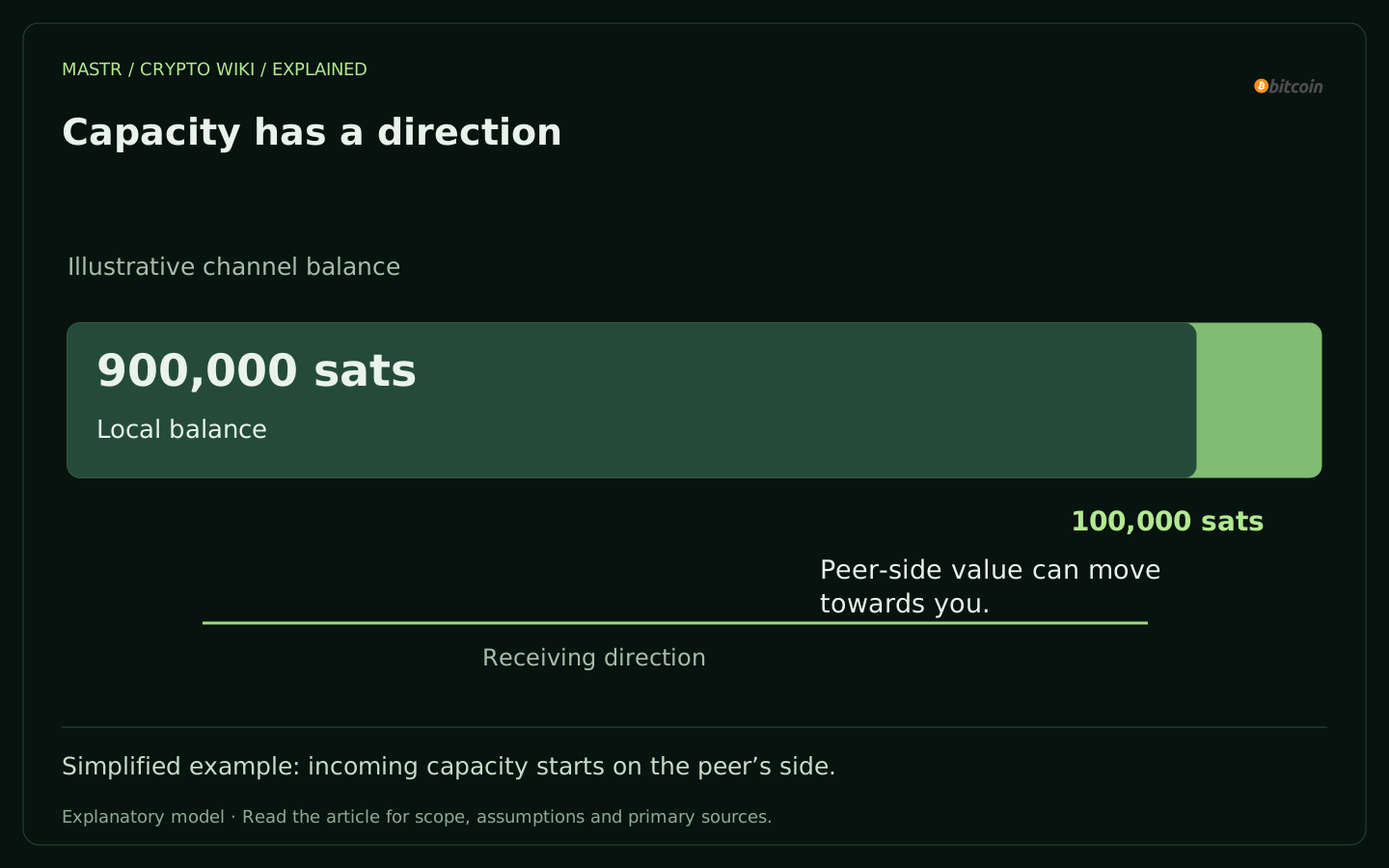
Worked example
Ignore reserves and fees for this simplified example. A 1,000,000-sat channel allocates 900,000 sats locally and 100,000 to the peer. It can support much more outgoing than incoming value through that channel. Total capacity of 1,000,000 sats does not mean either direction can carry that full amount.