

Liquidity, prices and pool rules
Uniswap v4 hooks: a shared exchange core, different pool behaviour
The hook contract belongs in the explanation of the pool, not in a footnote.
Article text and technical graphics are in English. Navigation is available in seven languages.
Reference guides
A pool can call additional logic
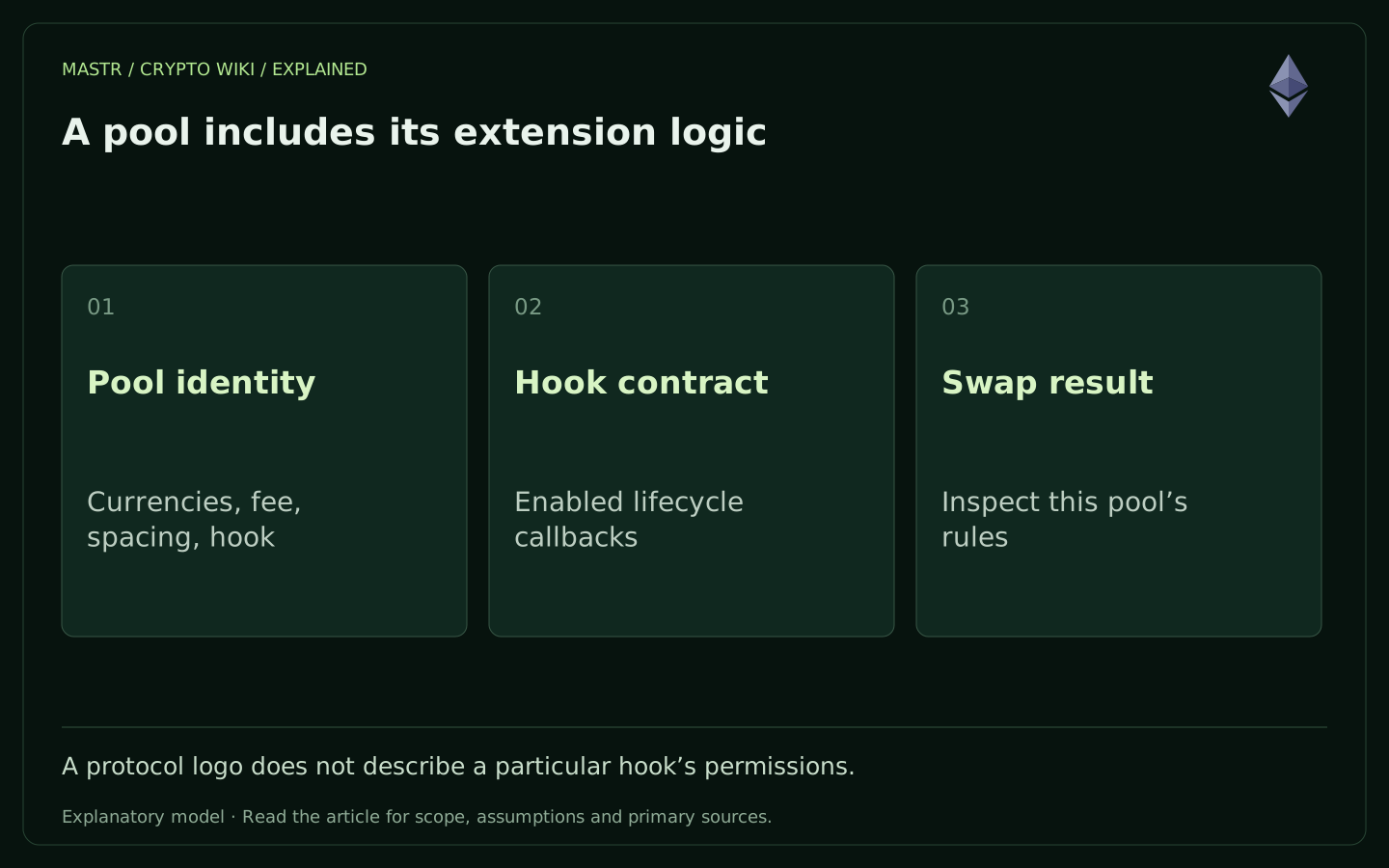
Uniswap v4 allows a pool to attach a hook contract that participates at specified points in its lifecycle, including around swaps and liquidity changes. Each pool has one hook address, while a hook may serve multiple pools. Enabled permissions determine which callbacks are used. A pool using the Uniswap infrastructure can therefore have behaviour that another pool does not share. 1
Same token pair is not the same market
Pool identity includes more than the 2 currencies. Fee configuration, tick spacing and hook address help distinguish pools. An interface that only displays token logos can hide meaningful differences between the routes it proposes. Additional logic can support useful customisation, but must be understood as code with its own assumptions and permissions. 2
Review the deployed implementation
A familiar project name or a hook’s advertised purpose does not establish the behaviour of the deployed contract. Review the actual address, verified source where available, relevant permissions and any administration or upgrade arrangement. A hook that changes fees or execution conditions should be described in the pool’s documentation and transaction review. Do not confuse a hook on an exchange pool with a Token-2022 transfer hook; they belong to different systems.
What an explanatory screenshot should show
Include the chain, pool identifier, currencies and hook address alongside any fee display. A decorative protocol logo is not evidence about a specific pool. When writing a research finding, separate what the protocol permits from what this deployed hook actually does. If its source or controls cannot be established, state that limitation instead of inferring safety from the core protocol’s reputation.
Worked example
Two pools trade the same assets. One has no custom hook; the other uses a hook that adjusts its fee under documented conditions. Comparing only their token symbols misses part of the execution rule. The route’s concrete pool configuration is the relevant object.