Networks & infrastructure
Institutional entry and the control of access
BlackRock, #Fidelity and #Vanguard together manage over $23 trillion. That’s more than 20× the total crypto spot market.
 MASTR
MASTRFirst published 5 min · 967 words
Original publication · 9 Nov 2025. Figures, claims and opinions reflect the original publication date.
The original publications are in English. Navigation is available in seven languages.
What happens when institutions, states and big fiat players enter crypto?
Is the excitement really justified and what everyone refuses to acknowledge?
Here is a fact-based version in one long, brutal tweet. 👇
Crypto was built by outsiders.
Now the insiders are buying the whole arena.
Adaption.
Integration.
---
🔺 Chapter 1: #Bitcoin Becomes Wall Street Property
#BlackRock, #Fidelity and #Vanguard together manage over $23 trillion.
That’s more than 20× the total crypto spot market.
BlackRock’s BTC ETF became the fastest-growing ETF in US history, adding over 300,000 BTC under custody, more than any country on earth outside the US.
Miners produced ~450 BTC/day.
ETFs absorbed 10× that during peak inflows.
BTC is no longer priced by retail sentiment.
It’s priced by institutional demand curves.
---
🔺 Chapter 2: Governments Don’t Ban Crypto. They Buy It.
El Salvador uses Bitcoin as legal tender.
Several US states now hold $BTC in treasury reserves.
Hong Kong approved spot ETFs before the US approved ETH ETFs.
UAE and Singapore built fully regulated crypto frameworks.
China controls 60–70% of the ASIC production chain.
Crypto is no longer “anti-state.”
States are quietly absorbing it.
Once a government owns an asset, it regulates to protect itself, not you.
---
🔺 Chapter 3: Exchange Power Shifts to Legacy Finance
2024–25 saw the most dramatic shift in crypto liquidity ever recorded:
• #Binance ’s dominance dropped under heavy enforcement pressure
• Coinbase’s liquidity shifted to ETF custodians
• 15–20% of all BTC trading volume moved to regulated products
• USDT markets saw extreme deviations during liquidation events, over 100 Binance pairs dropped 10–100% lower than secondary exchanges
That’s not decentralisation anymore.
That’s consolidation.
Retail is no longer price discovery.
Retail is reaction.
---
🔺 Chapter 4: Mining Centralisation
Bitcoin mining used to be thousands of players.
Now it’s a triangle of power:
• US miners control ~38% of hashrate
• China-linked hardware firms dominate chip supply
• Kazakhstan + US + Russia = ~70% of global hashrate
• Public miners like Marathon and Riot report double-digit hash growth every quarter
Add regulatory pressure, OFAC enforcement, and energy lobbying and you get political miners, not ideological miners.
Censorship resistance becomes optional.
---
🔺 Chapter 5: The Regulatory Takeover
MiCA, SEC rules, MiFID frameworks, most were influenced or co-written by:
• BlackRock
• State Street
• Fidelity
• US banking associations
The same firms selling ETFs are helping define the “legal version” of crypto.
DeFi takes the hit:
• KYC creeping into DEX operations
• Capital limits for stablecoins
• Mandatory disclosures for token teams
• Custody requirements only billion-dollar firms can meet
Regulation creates winners.
And those winners already wear suits.
---
🔺 Chapter 6: The Liquidity Drain
Institutions hate decentralised liquidity.
They prefer controlled, predictable rails.
Since 2024:
• Over $15B moved from exchanges into ETFs
• Altcoin market depth collapsed up to 70%
• Wash-trades dominate many small-cap volumes
• Real retail buyers are at multi-year lows
• Forced liquidations skyrocketed due to shallow liquidity
Institutions don’t need your conviction.
They need your volatility.
---
🔺 Chapter 7: The Forced Seller Era (Integrated Section)
People think institutions only buy.
They don’t.
Institutions must sell:
• quarterly profit cycles
• balance sheet resets
• risk-adjusted portfolio rules
• ETF rebalancing
• tax optimisation
• shareholder pressure
BlackRock and Fidelity both reported realised BTC gains during multiple quarters in 2024–25.
That means they sold, heavily.
You didn’t always see the sales because they happen via:
• OTC desks
• dark pools
• block trades
• internal liquidity networks
Retail sees “sideways chop.”
Institutions see harvest season.
And here’s the hard truth:
The cycle retail thinks we’re in is already over.
This market isn’t a bullrun anymore,
it’s an institutional extraction phase:
• lower retail inflows
• thinner order books
• ETF outflows moving prices
• altcoins nuking from shallow depth
• market makers running neutral books
• volume looking high but being mostly synthetic
When big players take profits, the market doesn’t crash,
it bleeds slowly, quietly, relentlessly.
Retail keeps waiting for a “cycle peak.”
Institutions already locked their gains.
---
🔺 Chapter 8: States Weaponise Crypto
Crypto is now a political tool:
• US politicians run memecoins for voter harvesting
• China uses mining economics for energy balancing
• EU forces surveillance-grade KYC into wallets
• Russia uses stablecoins for sanctions evasion
• The US Treasury runs blockchain analytics at intelligence-agency scale
Crypto became geopolitics.
And geopolitics always wins over ideology.
---
🔺 Chapter 9: The Narrative Hostile Takeover
Institutions don’t adopt narratives.
They overwrite them.
Before: “Not your keys, not your coins.”
Now: “ETF exposure.”
Before: “Freedom tech.”
Now: “Regulated digital assets.”
Before: “Open networks.”
Now: “Compliant infrastructure.”
Crypto didn’t mature.
It was repackaged.
---
🔺 Final Chapter: The Truth
When institutions and states enter crypto:
• They buy the liquidity
• They write the rules
• They own the custody
• They shape the mining
• They influence the prices
• They steer the narratives
• They absorb the innovation
• They sideline the builders
• They use retail as exit liquidity
Crypto isn’t being destroyed.
It’s being restructured for those who can afford to control it.
I’m bullish,
but only on the builders, the researchers, the watchdogs, the people who still care about the original mission.
Everything else is just TradFi
wearing blockchain camouflage.
— $MASTR

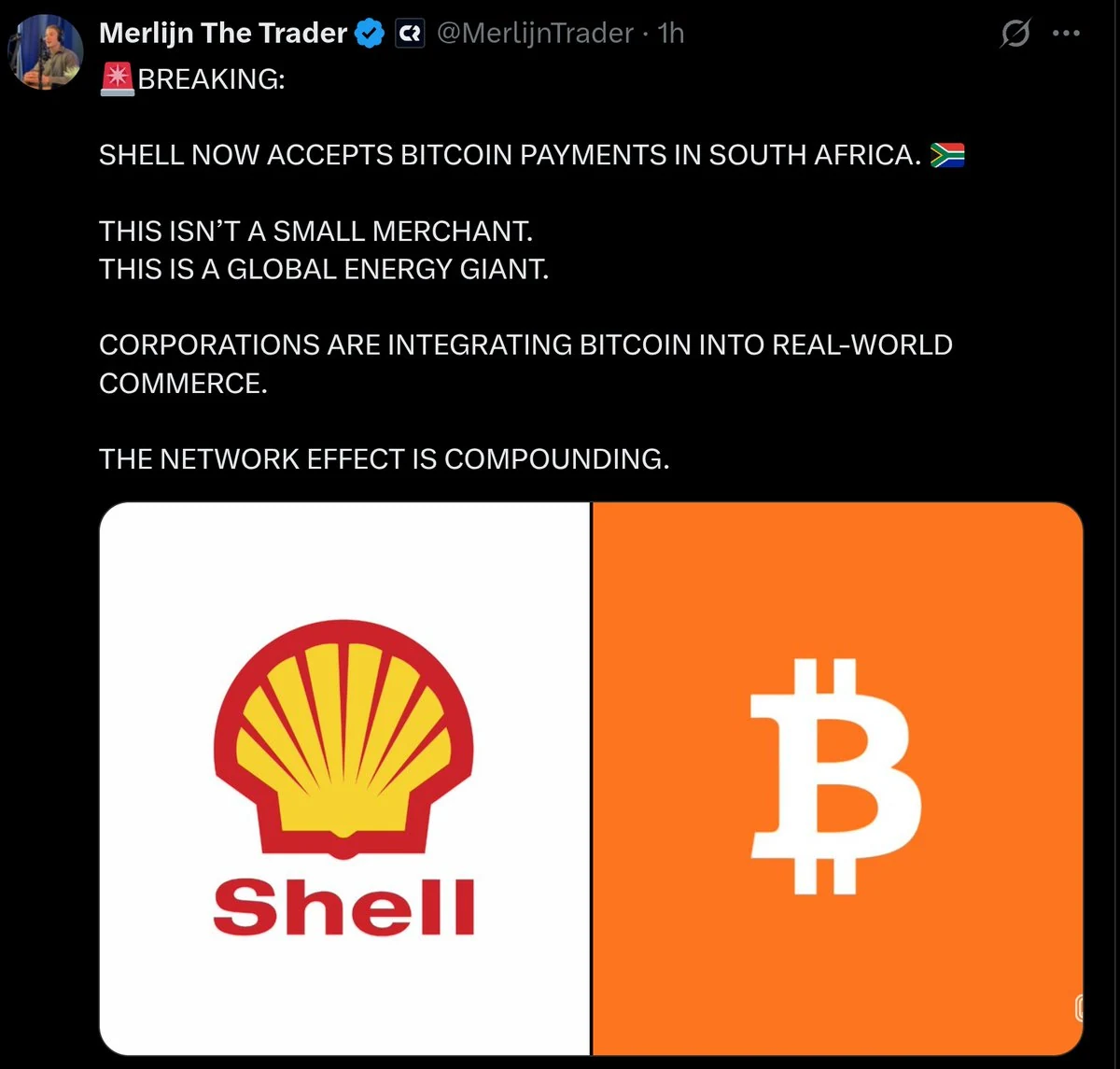
To add to this, a tweet from @TedPillows
OGs are selling while institutions are buying.
Sad but true.
And everyone here is cheering, hyped, and acting like it’s all great.
@TedPillows And to anyone still thinking this is “bullish because institutions are buying”, here’s the part nobody wants to hear:
OGs are selling into strength.
Institutions are accumulating because they can control the rails.
Retail is cheering because they don’t understand the game.
It’s… https://t.co/IcCvFaKvcq