Research methods
Why single-cause explanations fail in complex systems
This is not a philosophical position or a rhetorical warning, but an empirical observation repeated across economics, geopolitics, systems engineering, psychology, and especially crypto markets.
 MASTR
MASTRFirst published 5 min · 997 words
Original publication · 23 Dec 2025. Figures, claims and opinions reflect the original publication date.
The original publications are in English. Navigation is available in seven languages.
Why Easy Answers Fail First in Complex Systems.
Something for people who like to read and want more than "100x", "GM", and "next ticker" tweets.
Easy answers to complex situations are almost always wrong.
This is not a philosophical position or a rhetorical warning, but an empirical observation repeated across economics, geopolitics, systems engineering, psychology, and especially crypto markets.
Whenever reality becomes non linear, adaptive, reflexive, and adversarial, simplified explanations collapse. Complexity punishes shortcuts with precision.
Human cognition is optimized for environments that no longer exist. We seek clarity, certainty, and narrative closure. We want clean causes, single villains, and rules that always work.
We prefer models that promise stability and explanations that feel complete. This instinct is efficient in simple systems. In complex systems, it becomes a liability.
Complex systems share structural properties regardless of domain. They are nonlinear. Small inputs can trigger disproportionate outcomes.
Feedback loops amplify both success and failure. Outcomes emerge from interactions, not isolated variables. Prediction accuracy decays rapidly over time. Control exists only at the margins.
Financial markets are complex systems by definition. Crypto markets are extreme versions of them.
Crypto compresses technological innovation, financial speculation, social coordination, adversarial behavior, and regulatory uncertainty into a single environment that operates continuously, globally, and without circuit breakers.
This density of interacting forces makes simple explanations especially attractive and especially dangerous.
In crypto, the demand for easy answers is constant. New participants arrive seeking asymmetric upside. Influencers promise certainty in exchange for attention. Charts are reduced to lines and arrows. Complex risk profiles are hidden behind slogans like fundamentals, community, utility, decentralization, transparency.
None of these concepts are wrong. They become wrong when treated as sufficient explanations.
The idea that a single metric explains price action is false. The idea that one on chain indicator predicts cycles is false. The idea that decentralization alone guarantees safety is false. The idea that audits eliminate risk is false. The idea that transparency prevents fraud is false.
Reality is layered, conditional, and context dependent.
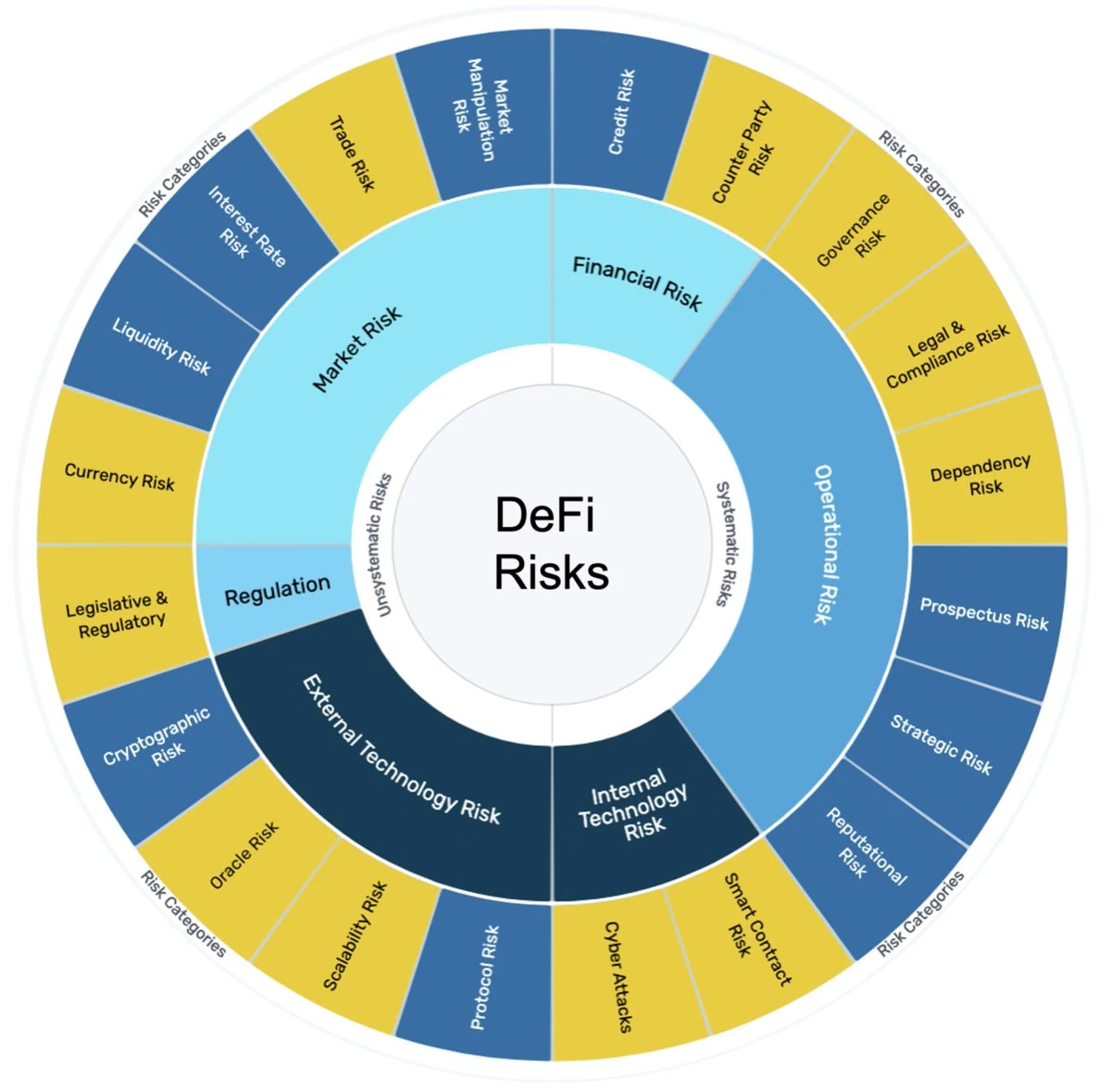
Consider security. A smart contract can be formally correct and still unsafe. Economic incentives can be exploited without violating code. Governance mechanisms can be captured through social coordination. Consensus can be manipulated by narrative pressure.
Infrastructure dependencies can fail outside the protocol layer. Human operators can be coerced, compromised, or simply make mistakes.
Consider decentralization. A system can be decentralized at the protocol layer and centralized at the liquidity layer. It can be censorship resistant in theory and fragile in practice. It can survive technical attacks while failing socially. It can be trustless in execution and trust based in governance.
Consider regulation. Clear rules reduce uncertainty while reshaping incentives. Overregulation pushes activity into opaque jurisdictions. Underregulation invites abuse and erodes trust. There is no stable equilibrium. The system adapts continuously to the rules imposed on it, often in unintended ways.
Easy answers ignore tradeoffs. Complex systems are nothing but tradeoffs.
Crypto culture often rewards confidence over accuracy. People who say maybe are ignored. People who say it depends are dismissed. People who say this is complicated do not go viral. Certainty is rewarded even when it is unjustified.
But complexity does not disappear because it is inconvenient. It accumulates silently until it overwhelms naive models. When that happens, explanations fail first, then strategies, then participants.
This is why cycles repeat. Not because people forget history, but because they misunderstand it. They extract slogans instead of mechanisms. They remember outcomes but ignore conditions. They copy conclusions without understanding constraints.
One of the most persistent errors in crypto is the belief that technology alone fixes human behavior. Code removes certain classes of trust and introduces new assumptions. Assumptions about rational actors. About honest majorities. About stable incentives. About social coordination under stress.
When those assumptions break, no amount of cryptography saves the system.
This is not an argument against crypto. It is an argument for intellectual discipline.
Mature thinking in complex environments follows different rules.
First. Reject single cause explanations. If something failed, multiple interacting factors were involved.
Second. Separate description from prediction. Explaining the past does not grant the ability to forecast the future.
Third. Distinguish robustness from optimization. Systems optimized for best case performance fail under stress. Robust systems accept inefficiency in exchange for survivability.
Fourth. Treat narratives as signals, not truths. Narratives move markets. They do not explain them.
Fifth. Accept uncertainty as permanent. Risk cannot be eliminated. It can only be redistributed, delayed, or obscured.
In crypto, the most dangerous phrase remains this time is different. The second most dangerous is this is obvious.
Easy answers feel empowering. They reduce cognitive load. They offer certainty in an environment defined by uncertainty. That psychological relief is precisely why they spread faster than careful analysis.
But complexity demands humility.
Long term builders understand this. They design systems that degrade gracefully. They assume adversaries exist. They expect incentives to be gamed. They plan for human error. They accept slower growth in exchange for resilience and longevity.
Speculators who survive multiple cycles learn the same lesson under pressure. Models break. Correlations invert. Liquidity disappears. Counterparties fail. Infrastructure cracks precisely when it is needed most.
The survivors are not those with the smartest answers. They are those with the fewest illusions.
Crypto is not simple. It is not safe. It is not predictable. It is not fair.
It is powerful precisely because it operates in complex, contested, adaptive environments where incentives collide and assumptions are continuously tested.
Anyone offering easy answers in such a domain is either unaware of the system they are describing or intentionally selling certainty.
The real edge is not information. It is epistemic discipline. Knowing what you do not know. Knowing where models fail. Knowing when to stop trusting your own explanations.
Complex situations do not reward certainty. They reward caution, adaptation, and respect for uncertainty.
In crypto, as everywhere else, the absence of easy answers is not a weakness.
It is the clearest signal that you are finally engaging with reality.