

流动性、价格与资金池规则
Aave health factor: a moving buffer, not a safety rating
Collateral prices, debt growth and configured thresholds determine the liquidation boundary.
文章正文和技术图表为英语,导航提供 7 种语言。
参考指南
The ratio being measured
Aave’s health factor compares collateral value adjusted by liquidation thresholds with total debt value. With several collateral assets, their values and thresholds contribute to the numerator. The result is an account-position metric, not a general score for Aave or for the borrowed asset. A value below 1 makes the position eligible for liquidation under the applicable market rules. 1
Loan-to-value and liquidation threshold differ
The maximum borrowing allowance and the liquidation threshold are separate parameters. Borrowing within the initial allowance does not ensure the position remains above the liquidation boundary. Collateral can fall, debt can accrue interest, the borrowed asset can appreciate or parameters can change. Correlation between assets affects the path, but correlation is not a guarantee.
Liquidation is an execution process
An eligible position can be liquidated by a participant repaying debt and receiving collateral under the protocol’s rules, including any liquidation bonus. The fraction that can be liquidated depends on the deployed version, configuration and position state. Do not copy one market’s close-factor assumptions into every Aave deployment. A threshold crossing and the actual liquidation transaction are related but distinct events. 2
How to read the number responsibly
Record the chain, market, collateral assets, debt assets, oracle basis and observation time. A stable-looking health factor can still conceal concentration in one asset or a shared price dependency. Stress a position’s assumptions conceptually rather than treating a single universal ratio as safe for everyone. Transaction congestion and costs can also make a last-minute response harder.
具体示例
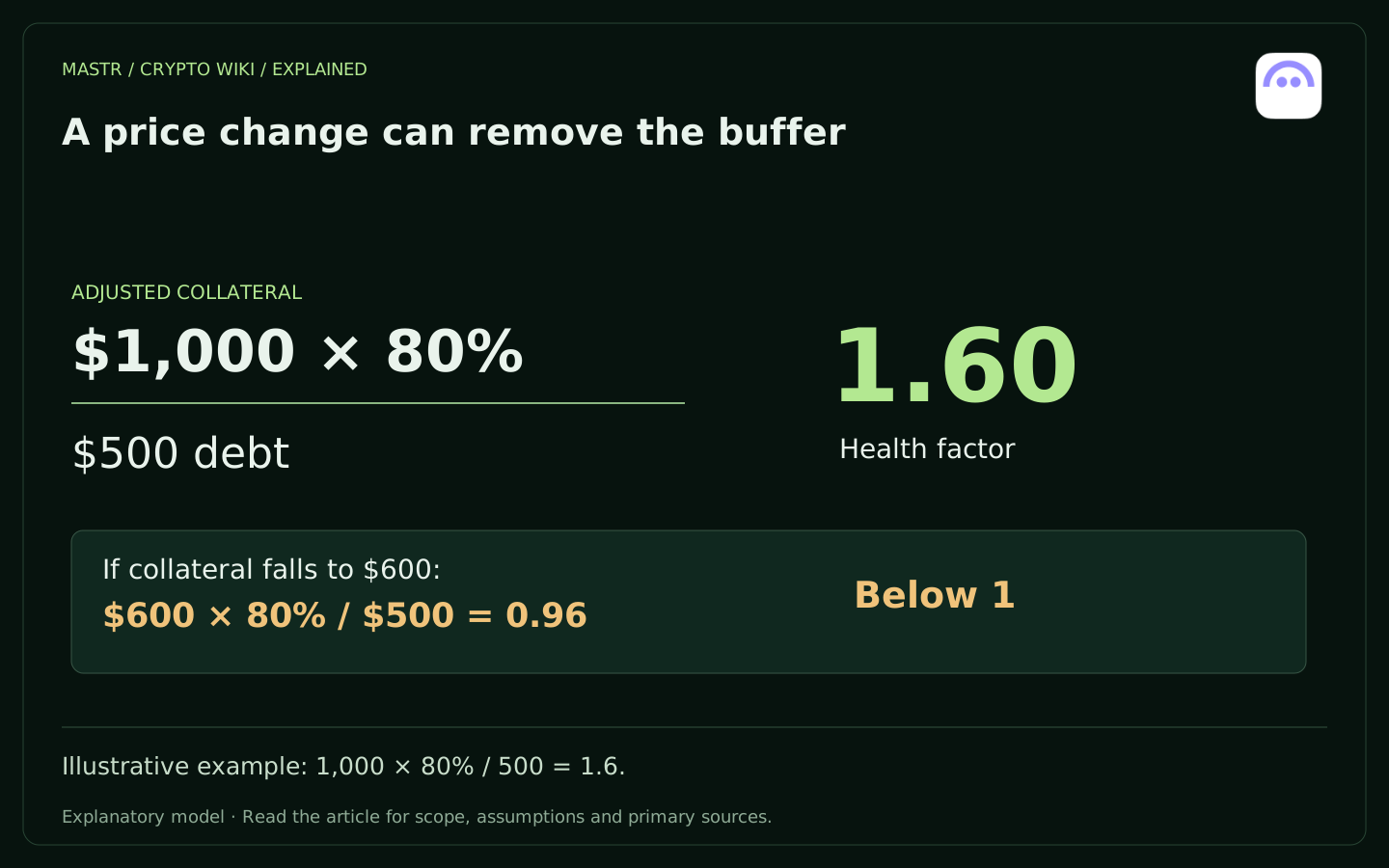
In a simplified position, $1,000 of collateral with an 80% liquidation threshold backs $500 of debt. The health factor is 1.6. If collateral value falls to $600 with everything else unchanged, it becomes 0.96. These illustrative values are not Aave market recommendations or current asset parameters.