
区块链基础
Bitcoin UTXOs: the outputs behind a wallet balance
Inputs consume earlier outputs; new outputs define who can spend the resulting amounts.
研究文章和参考条目以英语发布。导航提供七种语言。
人物与项目
A balance assembled from pieces
A Bitcoin wallet's balance is calculated from unspent transaction outputs it can spend. An input references a previous transaction and an output index. A valid spend consumes that output and creates new outputs with their own spending conditions. The wallet interface adds these pieces together for the user.
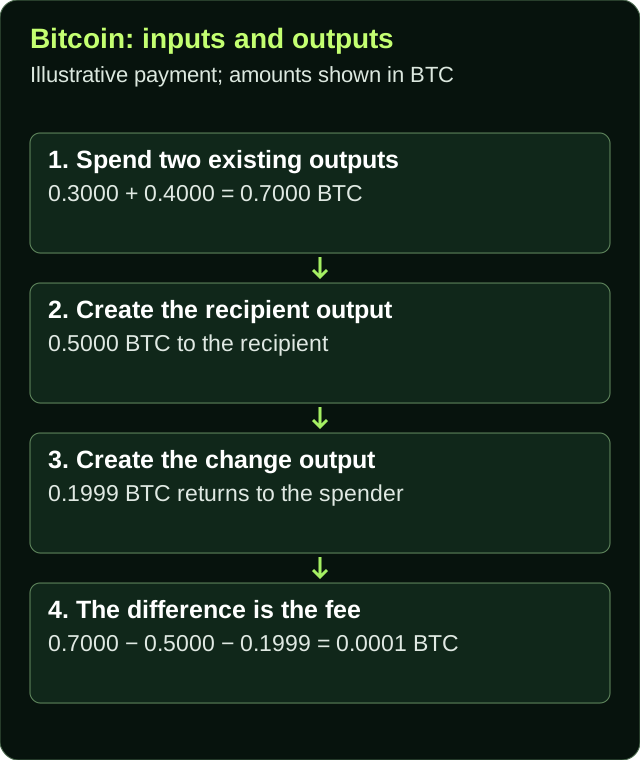
Suppose a wallet controls outputs worth 0.3 BTC and 0.4 BTC. To pay 0.5 BTC, it may spend both and create a 0.5 BTC recipient output plus a change output, with the difference allocated to the fee. There is no rule requiring the recipient to receive the sender's original outputs unchanged.
Why investigators care about change
A transaction can have several recipients, and one output may return change to the sender. Assuming that every output is a payment to another person distorts a money-flow diagram. Conversely, identifying a likely change output remains a heuristic unless additional evidence confirms it.
Attribution requires more than adding addresses to a cluster. Coin selection, collaborative transactions and service batching can complicate simple ownership assumptions. Transaction identifiers explain how references work, and reorganisations explain why a recent inclusion can change.