

Chains & networks
Layer 2: five separate questions
Settlement, proofs, data availability, sequencing and upgrades should not be compressed into one safety label.
研究文章和参考条目以英语发布。导航提供七种语言。
A layer-2 system can process activity away from Ethereum's base layer while relying on it for part of settlement or security. Implementations differ. Publishing a state commitment is not the same as publishing all the data needed to reconstruct that state.
Compare the components
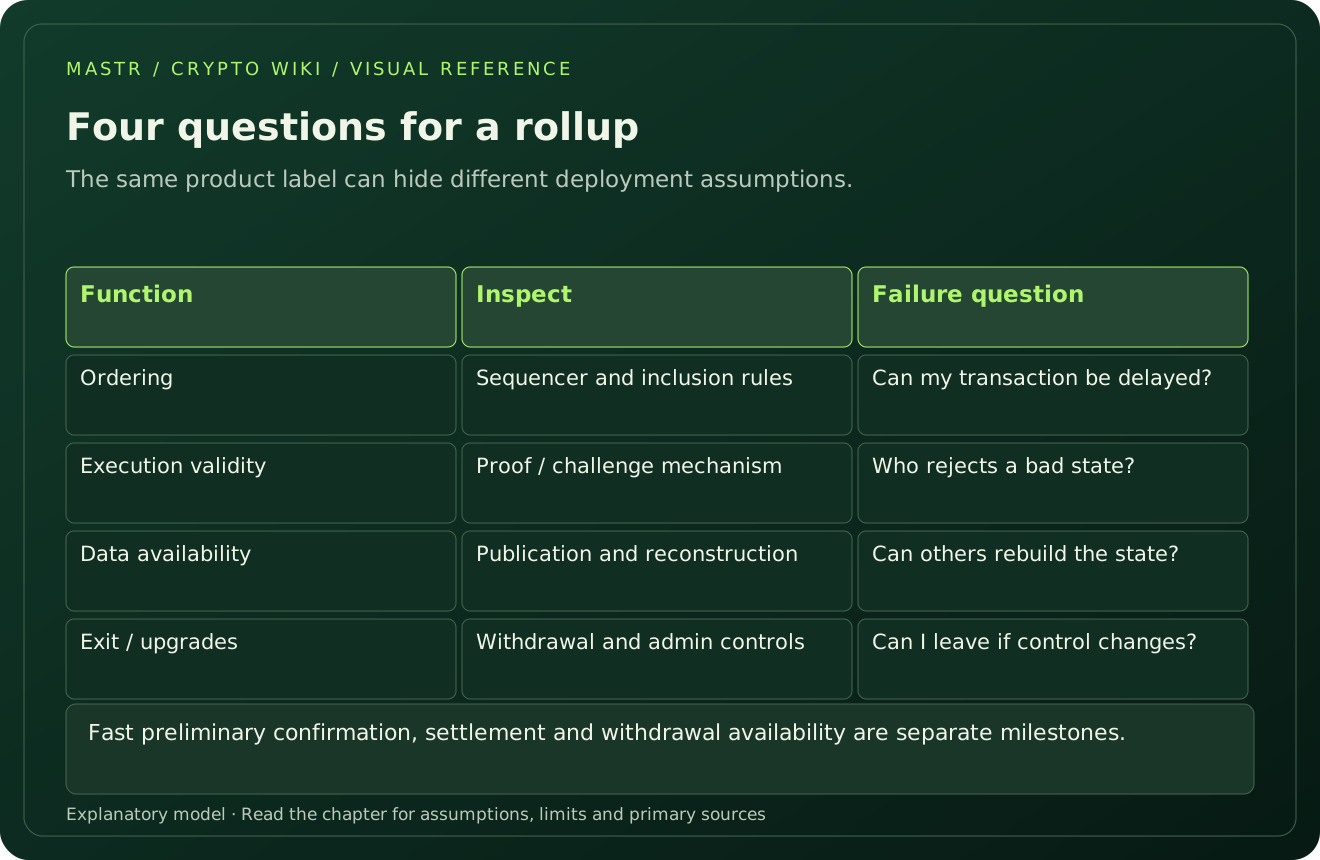
Ask where transaction data is available, how invalid claims are rejected, who orders transactions, who can change the contracts and how a user exits during an outage. A strong answer on one component does not settle the others.
For example, a functioning proof system may protect validity while a central sequencer delays inclusion. A bridge may require a waiting period even when the application presents an immediate confirmation. Administrative changes can alter assumptions after a review.
Check the current deployed configuration and the date of any risk assessment. A roadmap item is not an active protection. Arbitrum, Optimism and Base illustrate why chain-specific documentation matters.
来源
资料核对日期:2026年9月5日. Historical cases retain the date and legal status of the cited record.