政治与利益冲突
The DOGE Files: access, oversight and private interests
MASTR’s examination of DOGE access, government oversight and the business interests involved.
 MASTR
MASTR首次发表 7 min · 1,486 词
Original publication · 11 May 2026. Figures, claims and opinions reflect the original publication date.
原文为英语,导航提供七种语言。

Originally published as “The DOGE Files: How Elon Musk Got Access to the Government Machine Investigating His Empire”
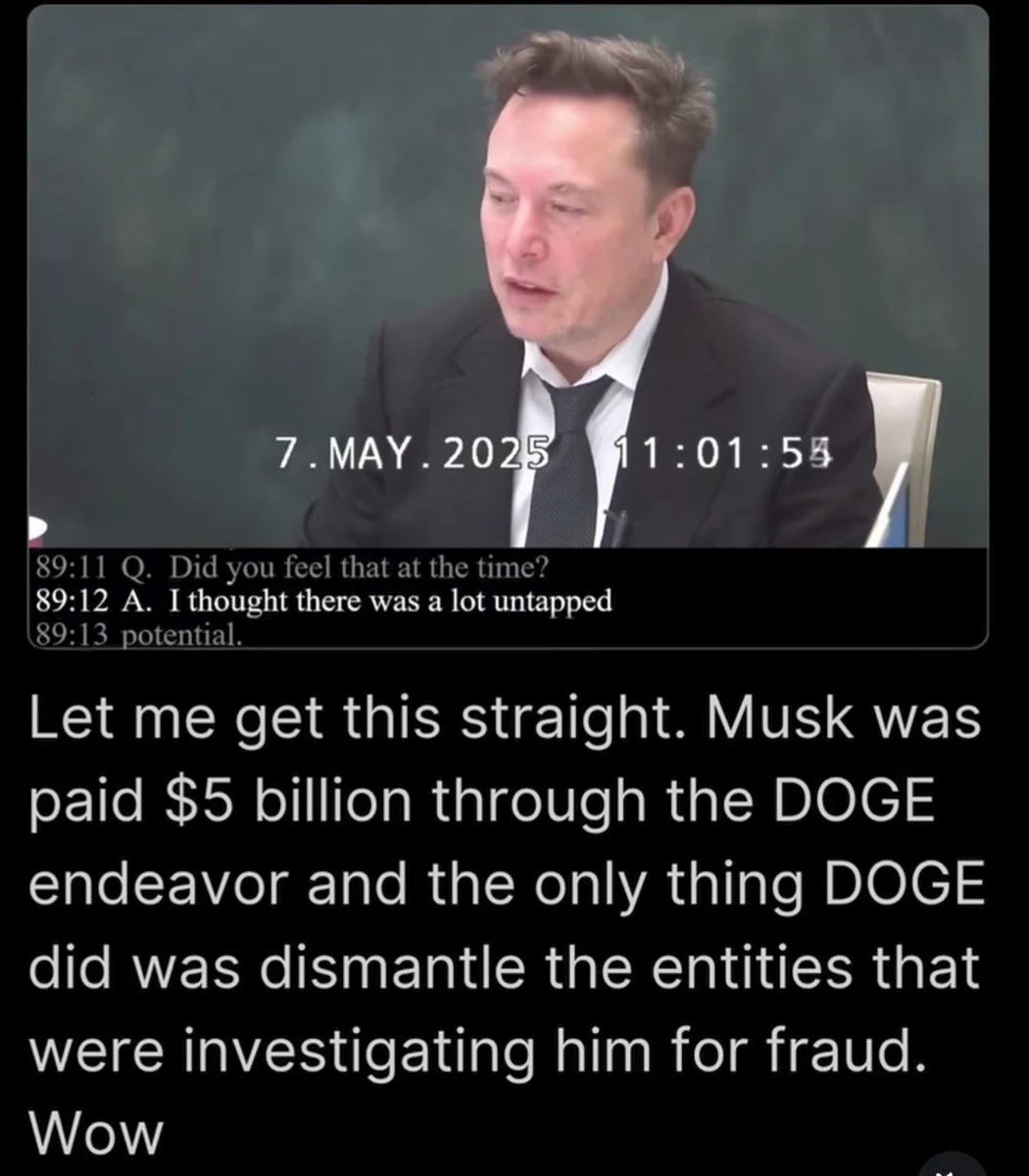
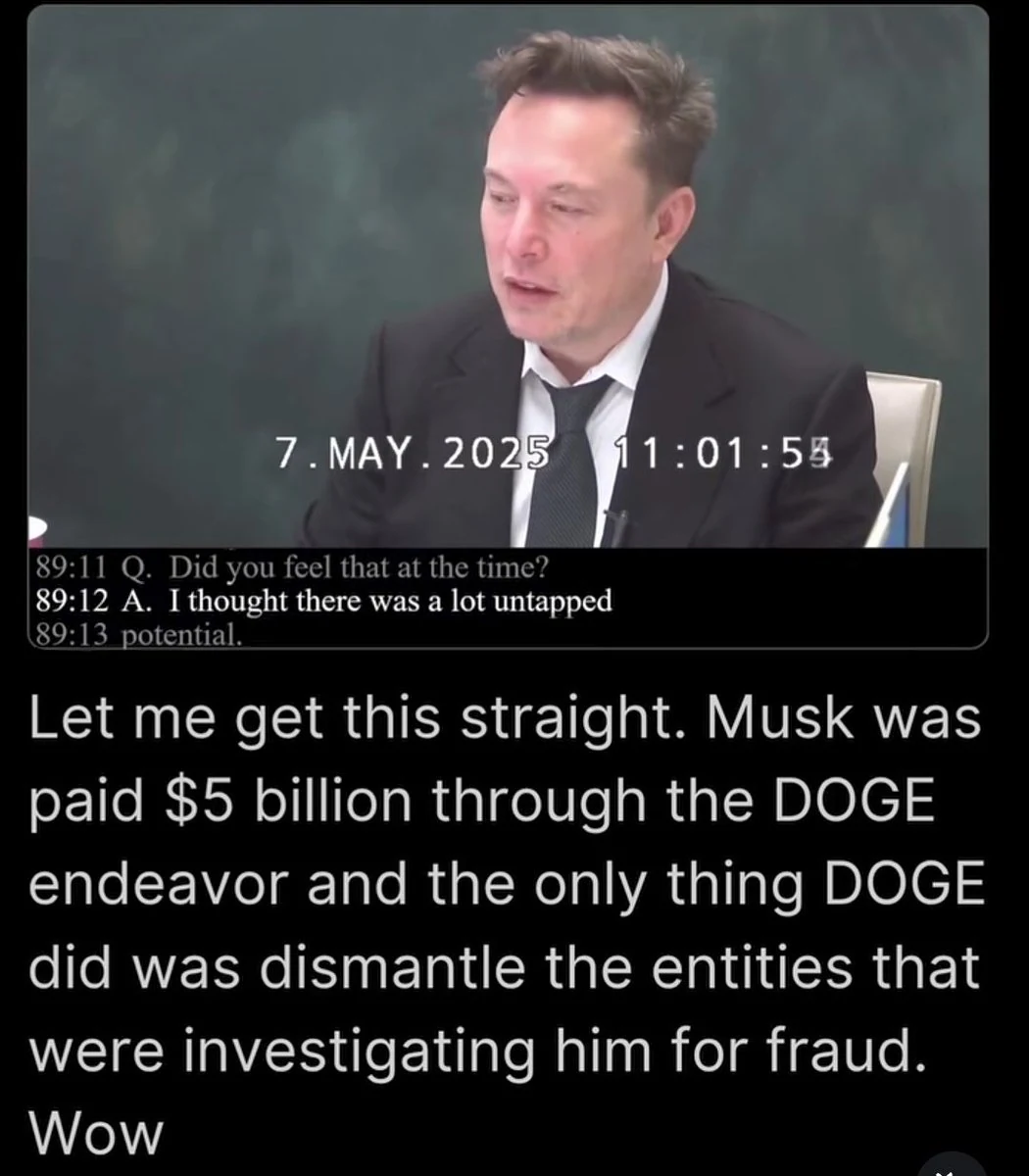
The viral screenshot is rough, but the core question is legitimate: what happens when the richest man in the world, whose companies depend on federal contracts, licenses, investigations, subsidies, defence procurement, securities rules, labour regulators, vehicle safety agencies and launch approvals, is placed close to the internal machinery of the state?
The correction first: there is no solid evidence that Musk was personally “paid $5 billion through DOGE.” That wording is too sloppy tbh..
The harder fact is almost worse. While Musk was politically embedded through DOGE, SpaceX received a projected 28 national security launch missions, about 60% of the most demanding Phase 3 Lane 2 missions, while the wider Space Force procurement package was worth about $13.7 billion. Separate reporting valued the SpaceX share at about $5.9 billion.
That is state power, defence dependency and private empire growth moving in the same bloodstream.
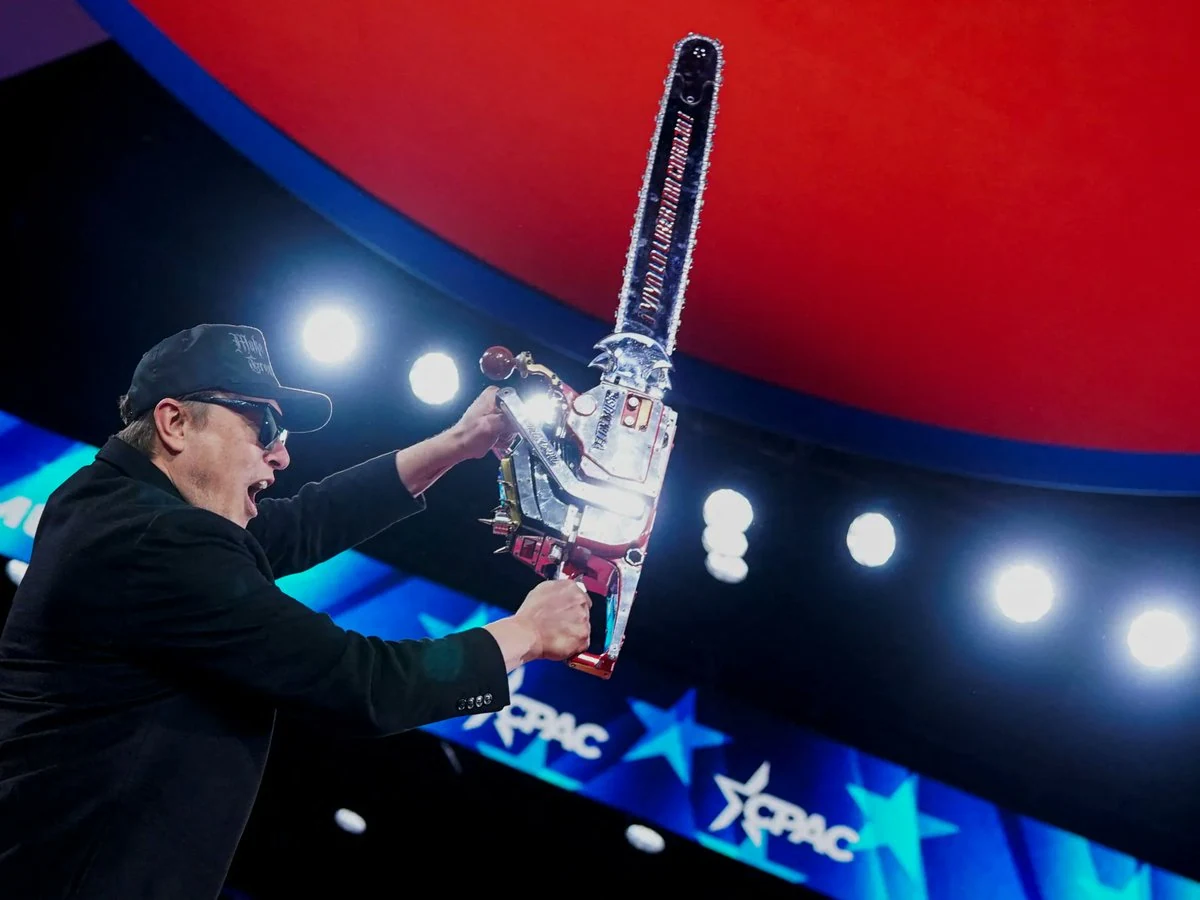
DOGE was created by Trump’s January 20, 2025 executive order. The order renamed the U.S. Digital Service into the U.S. DOGE Service and framed the project as a mission to modernize federal technology and software. Buried inside the bureaucratic language was the important part: agency heads were ordered to give DOGE teams “full and prompt access” to unclassified agency records, software systems and IT systems. That means DOGE was not merely a vibes based cost cutting brand. It was a formal access mechanism into government infrastructure.
Public Citizen found that Musk had a direct business interest in more than 70% of the agencies and departments targeted by DOGE. The conflict map includes NHTSA, which oversees Tesla and autonomous vehicle safety, CFPB, which could regulate X’s payments ambitions, the FDA, which regulates Neuralink’s implant technology, the Department of Defense, where SpaceX is a major contractor, and labour agencies that have handled complaints involving Musk companies.
A Senate Permanent Subcommittee on Investigations minority staff memo went further. It found that, as of January 20, 2025, Musk and his companies faced at least 65 actual or potential federal actions across 11 agencies. For 40 of those matters, staff estimated at least $2.37 billion in potential liabilities. The memo said that estimate excluded 25 additional matters that could not be quantified.
In plain English: while Musk was helping reshape government capacity, his own companies were exposed to billions in possible regulatory, legal and enforcement consequences from the same ecosystem of agencies.

The agency examples are absurdly direct.
NHTSA has investigated Tesla over Autopilot and Full Self Driving concerns, including crashes and recalls. During DOGE cuts, the agency responsible for vehicle safety saw staff reductions, including cuts affecting autonomous vehicle oversight. That is the exact area where Tesla’s future valuation narrative lives.
A weaker NHTSA does not need to “delete” an investigation to create value for Tesla. It only has to reduce expertise, slow scrutiny, lose institutional memory or make regulators afraid to act.
The CFPB conflict is just as ugly. X was moving toward payments. The CFPB is the consumer finance watchdog that could scrutinize large technology platforms entering financial services. Then DOGE moved on the CFPB, while Musk publicly posted “CFPB RIP.” Employees protested, watchdog reviews were opened, and lawmakers raised ethics concerns about whether the same person building a payments platform should be anywhere near the agency that could regulate it.
DOGE sought broad access to SEC systems, including sensitive communications and information related to investigations. At the same time, the SEC had sued Musk over his delayed disclosure of Twitter stock purchases. The SEC alleged he failed to timely disclose beneficial ownership after crossing the 5% threshold, allowing him to buy more than $500 million in shares before the market knew. In May 2026, the SEC said Musk’s revocable trust agreed, without admitting or denying the allegations, to a proposed $1.5 million civil penalty, subject to court approval. The SEC also said that if the court enters the judgment, it will dismiss Musk personally and resolve the case.
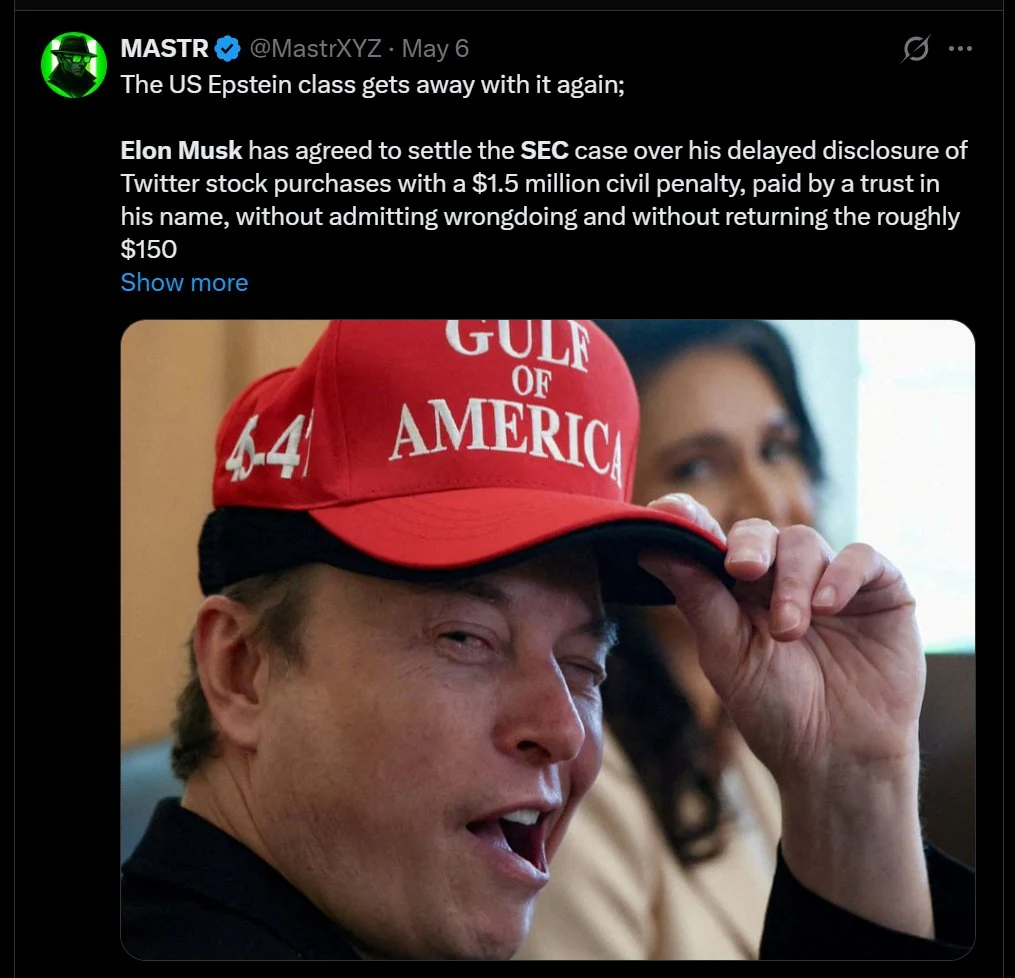
The numbers are obscene. The SEC had alleged the delayed disclosure saved him about $150 million. The proposed civil penalty was $1.5 million. No admission. No personal financial disgorgement in that proposed resolution. For a normal person, that would be life altering. For Musk, it is a rounding error. For the public, it is another lesson in how financial law can look terrifying on paper and strangely soft when it meets extreme power.
Then there is the data problem. Courts had to step in multiple times because DOGE access was not some harmless spreadsheet exercise. Federal judges blocked or restricted DOGE access to sensitive data at the Treasury Department, the Education Department, the Office of Personnel Management and Social Security systems.
These systems contain the kind of information that can define a human life: Social Security numbers, addresses, financial data, benefits, employment records, education data and other personal identifiers.

The Bureau of the Fiscal Service centrally disburses most federal payments and managed roughly $5.4 trillion in payments in fiscal year 2023, with an average daily cash flow of roughly $200 billion. Granting politically connected operators access to systems like that is not “efficiency” in any serious governance sense unless there is radical transparency, strict legal authority, auditability, cybersecurity control and conflict screening. Instead, the public got spectacle, slogans and lawsuits.
DOGE’s savings story also collapsed under scrutiny.
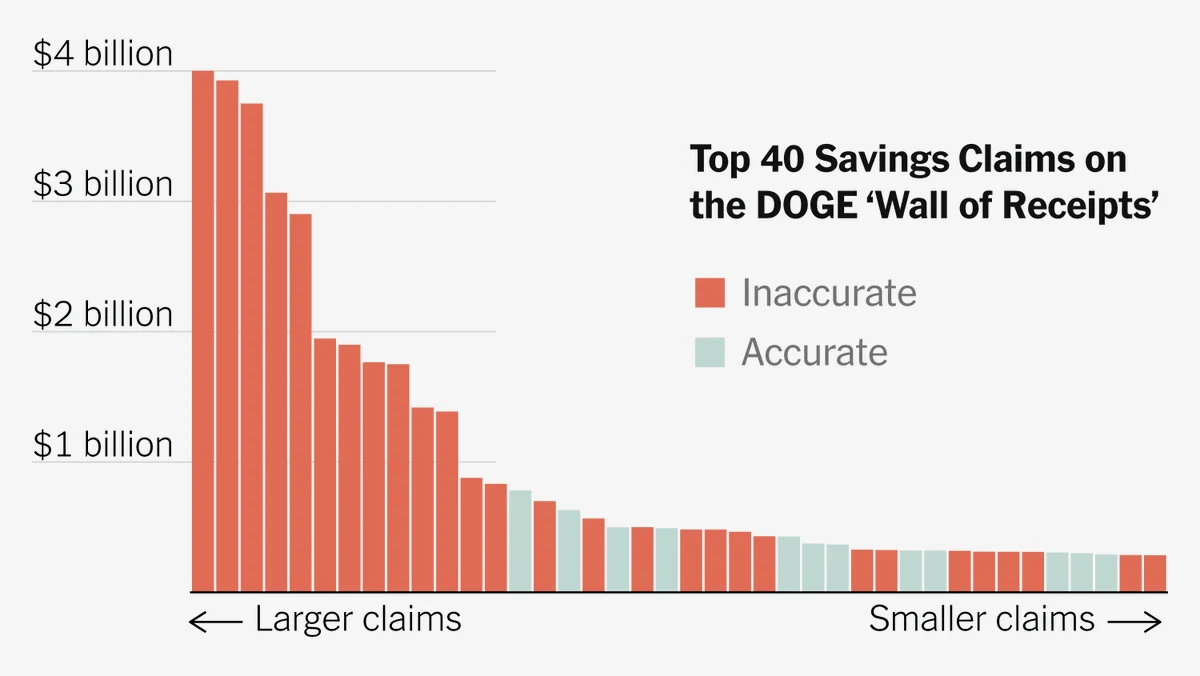
Government data showed that nearly 40% of the cancelled contracts reviewed were expected to produce no savings, often because the money had already been obligated or spent. Other analyses found inflated savings claims, including a case where an $8 million contract was reportedly presented as $8 billion. That is not elite operational discipline. That is ideological demolition with accounting errors attached.
The human and institutional damage was not theoretical. More than 260,000 federal workers left federal service in 2025 under Trump administration initiatives, according to later reporting citing the Office of Management and Budget.
That means regulators, analysts, inspectors, scientists, auditors, administrators and technical staff were pushed out while DOGE publicly claimed to be saving taxpayers money. The hidden cost is not just payroll. It is lost expertise, weakened enforcement, delayed services, broken oversight and a government less able to resist private pressure.
The NLRB had handled complaints involving Tesla and SpaceX. House Oversight Democrats later raised serious concerns about DOGE or DOGE associated personnel having access to NLRB or Department of Labor information because of Musk related conflicts. A whistleblower disclosure around NLRB data access intensified those concerns. If a private empire can get near the data systems of agencies handling complaints against that empire, the conflict is no longer abstract. It becomes structural.
The FAA and SpaceX? Keep reading...

The FAA regulates commercial space launch and reentry. SpaceX has clashed with FAA oversight, including launch licensing issues and proposed penalties. ProPublica warned in February 2025 that the fate of the FAA office regulating SpaceX could fall under the influence of Musk’s DOGE role. Again, the issue is not that one must prove a secret order was given. The issue is that the regulated party was given political proximity to the regulator’s structure, staffing and future.
By late 2025, DOGE had reportedly disbanded 8 months before its scheduled July 2026 end date, while former DOGE staff moved into other administration roles. That matters because it makes the whole project look less like a disciplined reform office and more like a temporary strike force: enter fast, gain access, break institutions, move personnel, claim savings, leave ambiguity behind.
The truly disturbing part is not one contract, one lawsuit, one agency or one headline. It is the combined architecture. Musk did not need a visible personal transfer marked “corruption” for the danger to be real. A conflicted billionaire only needs access, leverage, political cover, weakened regulators, intimidated civil servants, friendly procurement conditions, sensitive data visibility and a public narrative that frames every objection as defence of waste.
A private empire with massive exposure to government power was allowed near the machinery that audits, licenses, investigates, pays, regulates and disciplines that same empire. It was sold as efficiency, wrapped in meme culture, defended by fanboys and normalised by people who would scream tyranny if the same structure benefited someone they disliked.
If a democracy cannot clearly separate public authority from private wealth at this scale, it is just building an operating system for oligarchy.
Here is the list of billions Elon Musk and his companies have received from the US taxpayer.
Much of it also came during his infamous time at DOGE.
Many billions are still not precisely disclosed or impossible to fully trace publicly.
I will keep digging