
Crypto history
FTX and Alameda: customer money, privileged accounts and the bankruptcy
How the exchange funded its affiliated trading firm, why the risk engine did not protect customers and what later recovery percentages actually measured.
Research articles and reference entries are published in English. Navigation is available in seven languages.
People & projects
In this article
The money customers thought they held
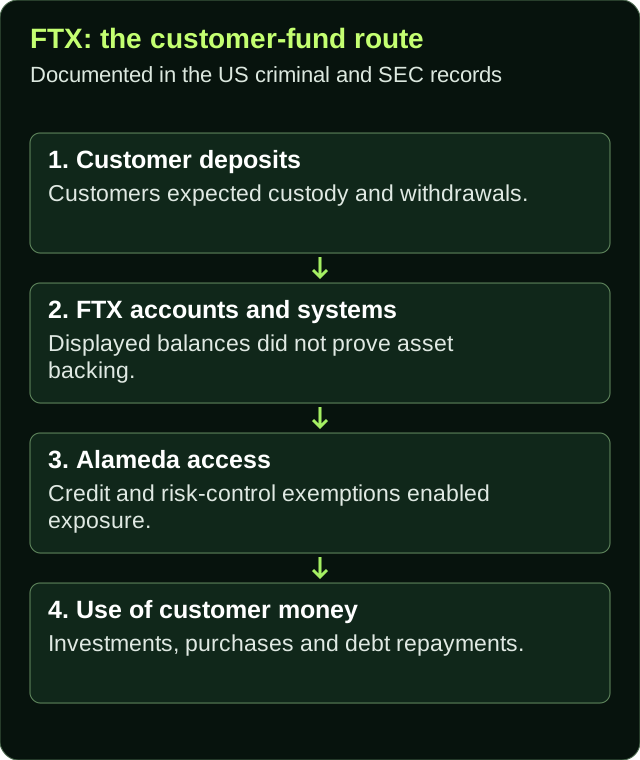
FTX combined an exchange, custody accounts and a trading brand that attracted both retail users and professional investors. Customers could see balances and open positions in the interface. Those balances depended on the company actually retaining the assets and honouring withdrawal requests. The interface could continue reporting an account value after the underlying money had been diverted.
The SEC's December 2022 complaint described undisclosed transfers of customer funds to Alameda Research, the trading firm also founded by Sam Bankman-Fried. It alleged that Alameda received a virtually unlimited credit facility funded by customers and exemptions from important risk controls. This mattered because ordinary traders could be liquidated while the affiliated firm accumulated an exposure that the platform permitted to grow.
The token and the balance sheet
The same complaint identified exposure to overvalued, illiquid FTX-affiliated tokens held by Alameda. A company can mark an inventory at the latest marginal trade price even when selling that inventory would overwhelm the market. When the collateral's reputation depends on the borrower or its exchange, a loss of confidence can reduce both the borrower's ability to repay and the value backing its debt.
That is the economic reason to examine market capitalisation, custody rights and related-party arrangements together. A large displayed valuation does not establish that assets can be converted into enough cash to meet withdrawals. Nor does a public risk-engine description establish which accounts are exempt from its rules.
The criminal record
On 28 March 2024, Bankman-Fried was sentenced to 25 years in prison after his conviction on 7 counts. The Justice Department described the theft of more than $8 billion from customers, alongside fraud against investors and Alameda's lenders. The sentencing account explained how customer money financed investments, political contributions, real estate and repayment of Alameda obligations. It also described altered code, false financial statements and backdated documents.
The conviction therefore addressed deliberate deception and misuse of money. The wider market decline helps explain the environment in which the problem surfaced; it does not replace the conduct established in the case. Individual colleagues, creditors and other proceedings have their own records and should not be assigned Bankman-Fried's legal outcome by association.
Why a recovery percentage can mislead
On 7 October 2024, the estate announced confirmation of its reorganisation plan. It projected approximately 119% of allowed claims for 98% of creditors by number, subject to the plan's conditions. These were bankruptcy-claim calculations, not a promise to return 119% of each customer's original bitcoin or ether. The announcement is a historical plan statement, not a present payment schedule.
Consider a hypothetical claim fixed at $10,000. A 119% cash distribution would be $11,900. If the coins originally deposited later trade at $30,000, the distribution still does not replace those coins. Lost access, time, taxes and an investor's alternative outcomes are separate questions. Calling every such payment a profit erases the difference between the claim's legal valuation and the asset the customer expected to own.
Read the linked estate record with the criminal account, then follow reserve reporting and financial dependencies for the controls that a provider review needs to examine.