

Reference / REFERENCE
A Web3 trust map: the chain is only one layer
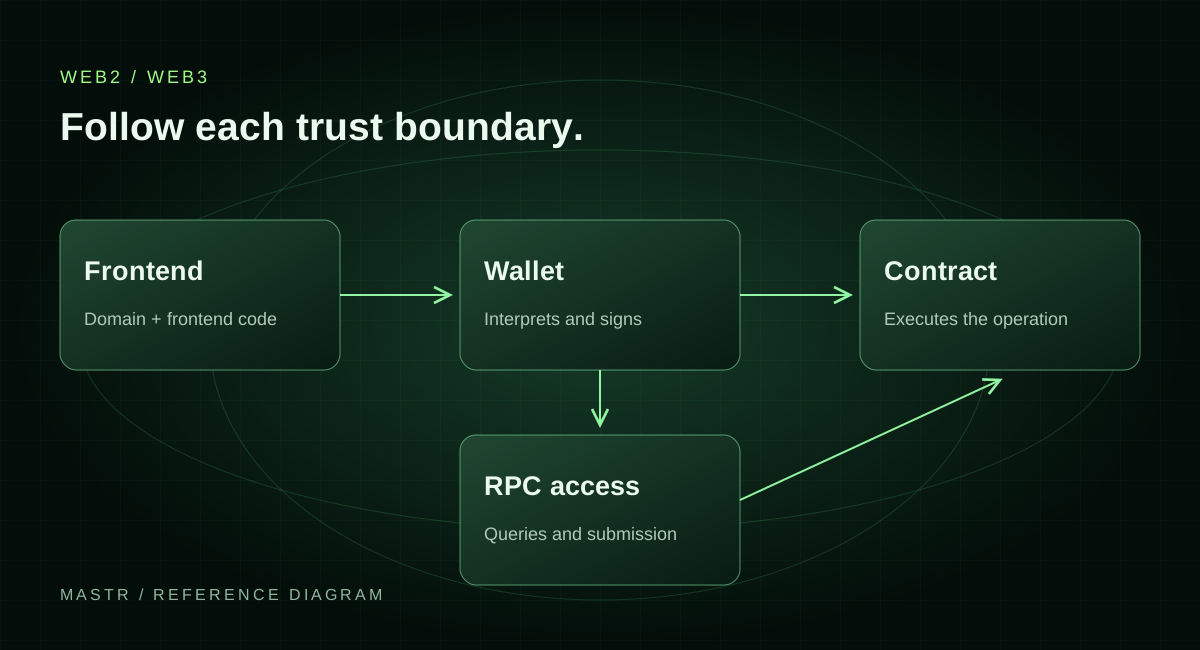
A decentralised protocol can still be reached through a centralised website, RPC service and software supply chain. Map the dependencies before judging the claim.
Reference text in English · Navigation in 7 languages
On this page
Begin at the interface
The word Web3 is commonly used for applications that connect users and digital ownership to decentralised networks. It is a broad description, not a security certification. A useful review starts with the actual route a user takes: a domain resolves, a browser loads code, a wallet interprets a request and a network processes a transaction. The decentralisation of one step does not automatically describe the others. [1]
Separate observation from authorisation
An RPC service provides a way to query a node and submit transactions. A wallet can rely on a remote service for what it displays without handing that service its signing key. These are different trust relationships. An incorrect balance response, an unavailable endpoint and an unwanted signed transaction are different failure modes and should not be combined into a vague claim that a wallet was “hacked”. [2]
Inspect the programme and its control
Smart contracts execute code and maintain state on a blockchain. Their public execution model does not establish that the interface requested the intended function, that an approval has an appropriate scope or that an application’s administration is decentralised. Read the called address and operation, then identify any relevant upgrade or administrative permissions in that particular system. Do not infer those permissions merely from a project calling itself a DAO. [3]
Draw the failure paths
For a practical review, write 1 row for each dependency: domain and hosting, frontend code, RPC access, wallet, contract and administration. Identify the operator, what it can change, what evidence is independently checkable and what fails when it disappears. This is a research framework, not a verdict about a named project. It prevents a secure chain from being used as a blanket endorsement of every service built above it.
Link the layers to the evidence
A browser screenshot can support a claim about what an interface showed. A signed transaction records a requested action. Execution records show what the network processed. Preserve all relevant layers when reconstructing an incident, including the observation time. The sources below explain the components; a case-specific allegation needs its own evidence.